





If you need to create a personal blog, a small business website, or a content-driven media platform, choosing the right content management system (CMS) can make the process of building a website efficient, flexible, and scalable. Among the many CMS platforms availableOpen Source CMSWith its advantages of being free, customizable, and having an active community, it has become a popular choice for beginners and developers.
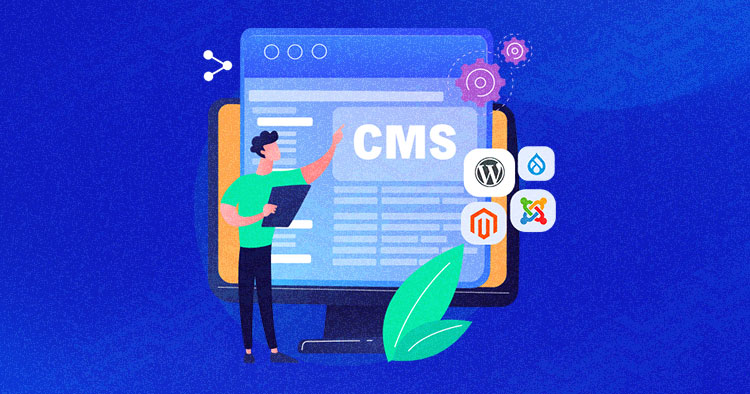
Which open source CMS is best for you? There is no standard answer, but rather a combination of your site building goalsto judge. In this article, we will start from the common needs of building a website, several mainstream open source CMS comparison, to help you quickly select the right platform for you.
I. Content-oriented blog or personal site: WordPress
Flexible costs for beginners to start
WordPress offers two versions:
- WordPress.com: Ideal for introductory learning, platform hosting, easy to operate, but with limited functionality.
- WordPress.org: Self-purchase of domain names and hosting is required, with a high degree of freedom to install any plug-ins and themes, and more scalable in the long term.
![图片[2]-如何选择适合你的开源CMS平台?完整对比指南](https://www.361sale.com/wp-content/uploads/2025/05/20250513100753429-image.png)
If you are just practicing or doing a hobby blog, WordPress.com is enough for you; if you have business needs, we suggest you to go directly to WordPress.orgThe
Open source flexibility and unlimited expansion
WordPress has a rich set ofTheme and Plugin Ecology. You can choose to match the look and feel style to your industry's needs, as well as quickly add contact forms, e-commerce functionality, appointment systems, and more with plug-ins that require little to no programming.
This."assemble on demand" architecture, making WordPress a highly customizable site-building platform for everything from blogs to SMB websites.
SEO and a solid foundation for security
WordPress has a clear internal structure that facilitates search engine crawling and works with Yoast SEO Plugins such as also further optimize content performance. Also, it supports automatic updates and third-party security plugins (e.g. Wordfence, Sucuri) to help you reduce security risks.
Good for the crowd:
- Blogger, self-publisher, contributor
- People who want to quickly build a personal portfolio website
II. Content portals with complex information architecture: Drupal
![图片[3]-如何选择适合你的开源CMS平台?完整对比指南](https://www.361sale.com/wp-content/uploads/2025/05/20250513101801585-image.png)
Recommended Reason:
- Flexible content modeling: Support for customizing content types, fields, categories and references for complex structured websites.
- Powerful Permission System: Subdivided roles and operational privileges for multi-departmental, multi-role collaborative management.
- Extended Module Specialization: The module is fully functional and suitable for advanced customization needs and API integration.
- Strong SEO skills: Built-in path control, metadata management module, more room for optimization.
- Mature security mechanisms: Widely used in government and high security, timely vulnerability response, stable and reliable official community.
- Stable and sustainable architecture: Although the initial development cost is high, it performs well in long-term operation and is easy to maintain and expand later.
Good for the crowd:
- Government, educational institutions, media platforms
- Technical team with advanced requirements for website structure
III. Visual editing + small and medium-sized websites: Joomla
![图片[4]-如何选择适合你的开源CMS平台?完整对比指南](https://www.361sale.com/wp-content/uploads/2025/05/20250513101853228-image.png)
Recommended Reason:
- Flexible content modeling: Support for custom post types and fields, suitable for displaying diverse content structures.
- Powerful Permission System: Built-in multi-tier role privilege management for multi-user collaboration sites.
- Extended Module Specialization: Functional components and modules are clearly delineated for easy targeted enhancement of site capabilities.
- SEO Competence: Supports key features such as friendly URLs, metadata management, and content structure optimization.
- Mature security mechanisms: The core is updated and stable, supporting two-factor authentication and rich security plug-ins.
- Stable and sustainable architecture: Stable performance in the medium and long term, suitable for enterprise stations and functional portal projects.
Good for the crowd:
- Small and medium-sized enterprises official website
- Users with some experience in building websites
Fourth, e-commerce oriented website building: Magento or WooCommerce(based on WordPress)
![图片[5]-如何选择适合你的开源CMS平台?完整对比指南](https://www.361sale.com/wp-content/uploads/2025/05/20250513103645274-image.png)
Magento(suitable for large e-commerce companies):
- Comprehensive functionality: order management, inventory control, promotional tools and more.
- Highly customizable: suitable for long term operation of a technical development team.
WooCommerce (for lightweight e-commerce):
- Based on WordPress: the interface is familiar and quick to get started.
- Plugin-rich: WooCommerce has a mature extension ecosystem, covering everything fromProduct display, shopping cart, checkout process to inventory management, invoice automationand a host of other features.
Good for the crowd:
- e-commerce entrepreneur
- Brand official website + e-commerce function combined site
V. Minimalist, static-first projects: Ghost or Hugo
![图片[6]-如何选择适合你的开源CMS平台?完整对比指南](https://www.361sale.com/wp-content/uploads/2025/05/20250513102319175-image.png)
Ghost (focused on content creation):
- Minimalist writing experience with Markdown support.
- Fast, clean backend for content-driven platforms.
Hugo (static CMS):
- No database is required and generation is extremely fast.
- Ideal for blogs, documentation projects, with a focus on performance and deployment efficiency.
Good for the crowd:
- Technical bloggers, engineers
- Web projects requiring rapid deployment and low resource utilization
VI. How do you determine which one is best for you?
You can think about it in five ways:
| dimension of consideration | Recommended CMS |
|---|---|
| Want to build a blog or official website quickly | WordPress |
| Need for complex content structure and permission control | Drupal |
| Want multi-language support with flexible modules | Joomla |
| Website focuses on e-commerce functionality | Magento / WooCommerce |
| Want the ultimate in lightness and speed | Hugo / Ghost |
summarize
There is no "best CMS", only "the most suitable CMS". Clearly build the purpose of the station, understand the characteristics of each platform, is the key to selecting the appropriate open source CMS. Beginners can start fromWordPressStart, gradually understand the logic of CMS operation, advanced and then switch to more professional platforms such as Drupal or Magento according to demand.

Link to this article:https://www.361sale.com/en/53639/The article is copyrighted and must be reproduced with attribution.










![表情[wozuimei]-光子波动网 | WordPress教程、Elementor教程与故障修复](https://www.361sale.com/wp-content/themes/zibll/img/smilies/wozuimei.gif)

![表情[baoquan]-光子波动网 | WordPress教程、Elementor教程与故障修复](https://www.361sale.com/wp-content/themes/zibll/img/smilies/baoquan.gif)

 简体中文
简体中文  English


No comments