







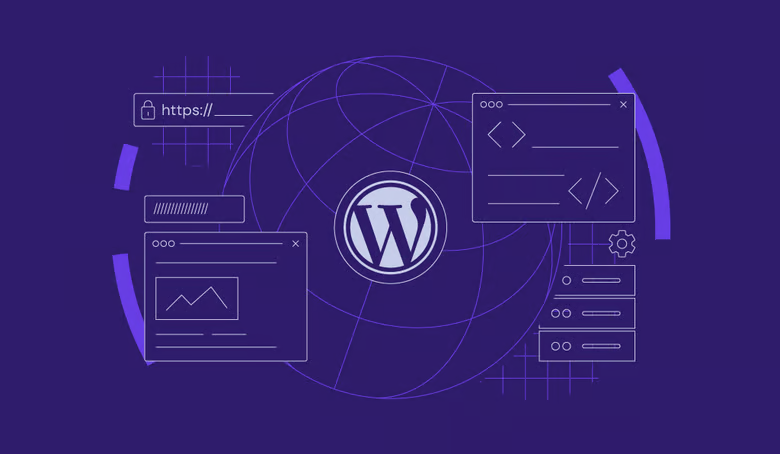
In today's world, many businesses choose to use multiple domain names to expand their markets, reach different audiences or for brand protection. For those who use WordPress For webmasters building websites, it is important to configure multiple domain names wisely and do a good job of SEOthat helps improve search rankings, control content consistency and conversion paths.
In this article, we will look at common scenarios and detail WordPress SEO highlights and practical tips for multi-domain deployments.
Common scenarios for multiple domain names
- Multilingual site deployment
As:example.com(Master),example.fr(French-speaking station),example.de(German-speaking station)
Suitable for multinationals or global brands - Market segmentation or regional coverage
As:us.example.com,eu.example.com,cn.example.com
Localized content for different regions - Brand protection or event promotion
Registering domain names with similar spelling or jump pages for placing advertisements
Multi-Domain Name Frequently Asked Questions
- weighting is decentralized: Outbound links and trust are scattered to different domains, affecting ranking improvement
- Jump Confusion::301Improperly set /302 redirects may cause crawling problems
- Language version not identified: hreflang tags not used, affecting multilingual indexing
- High management burden: Back-office decentralization, content updates are prone to inconsistency
- duplicate content: Multiple domains displaying similar content may be judged by search engines as duplicate pages
![Picture [2]-WordPress multi-domain settings for SEO optimization method of full analysis](https://www.361sale.com/wp-content/uploads/2025/06/20250620095206952-image.png)
WordPress Multi-Domain Configuration
1. Using WordPress Multisite
- be in favor ofsubdomain, subdirectory or bind a separate domain name
- Unified backend management, plugins and themes can be shared, suitable for multi-site operations with similar structure
Commonly used plugin recommendations:
- Domain Mapping System
- WP Multisite Domain Mapping
![Picture [3]-WordPress multi-domain settings for SEO optimization method of full analysis](https://www.361sale.com/wp-content/uploads/2025/06/20250620095409166-image.png)
2. Standalone WordPress installation
- Separate deployment for each domain WordPress
- Fully independent content, autonomous and flexible, suitable for highly differentiated sites
SEO Optimization Tips
1. Use of Canonical tags
When the same content exists on multiple domains, it can be inserted in secondary pages <link rel="canonical" href="https://主站链接">, specify the standard page to prevent search engines from misjudging it as plagiarism.
2. Using 301 redirects
If a domain is only used to jump to the main site, you should configure the 301 Permanent Redirect, directing weights to the main domain.
Optional Tools:
- Redirection plug-in
- Configure the rules in the .htaccess file
![Picture [4]-WordPress multi-domain settings for SEO optimization method of full analysis](https://www.361sale.com/wp-content/uploads/2025/06/20250620102304851-image.png)
3. Configure hreflang tags
For different language versions, hreflang tags need to be added to each page. For example:
WPML,Polylang Plugins such as support automatically adding this tag.
4. Managing internal linkages
It is not recommended to frequently cross-link the content of multiple sites, so as not to make it difficult for search engines to determine the primary and secondary structure of the page. If necessary, you can use nofollow control link attribute.
![Picture [5]-WordPress multi-domain settings for SEO optimization method of full analysis](https://www.361sale.com/wp-content/uploads/2025/06/20250620102108973-image.png)
5. Separate submission of site maps
Generate sitemap.xml for each domain and submit it separately in the respective Google Search Console property.
Commonly used plug-ins:
- Yoast SEO
- Rank Math
![Picture [6]-WordPress multi-domain settings for SEO optimization method of full analysis](https://www.361sale.com/wp-content/uploads/2025/06/20250620101941178-image.png)
![Picture [7]-WordPress multi-domain settings for SEO optimization method of full analysis](https://www.361sale.com/wp-content/uploads/2025/06/20250620102009326-image.png)
6. Content differentiation
It is recommended to design different content for different domain names. Including language style, product description, activity information, etc., to avoid simple copy of the main site content.
7. Use of structured data
Uses consistent Schema.org standards to help search engines recognize page structure and improve presentation quality. Company information, articles can be tagged,FAQ, products, etc.
summarize
WordPress Support a variety of multi-domain deployment methods, in the process of operation need to pay attention to content consistency, link management and weight integration. Through rational planning of redirection paths, set labeling rules and content structure, multi-domain sites can form a benign synergy to enhance brand coverage and search engine friendliness.
Multi-domain deployment is not a simple copy and paste, but rather the creation of a system that coordinates operations. If there is content maintenance with SEO Planning requirements can be combined with specialized plug-ins, analysis tools and site map mechanisms for efficient management.

Link to this article:https://www.361sale.com/en/61258/The article is copyrighted and must be reproduced with attribution.













![Emoji[wozuimei]-Photonflux.com | Professional WordPress repair service, worldwide, rapid response](https://www.361sale.com/wp-content/themes/zibll/img/smilies/wozuimei.gif)

![Emoticon[baoquan] - Photon Wave Network | Professional WordPress Repair Services, Worldwide Coverage, Rapid Response](https://www.361sale.com/wp-content/themes/zibll/img/smilies/baoquan.gif)


 简体中文
简体中文  English
  日本語
日本語  Français
  Español


No comments