






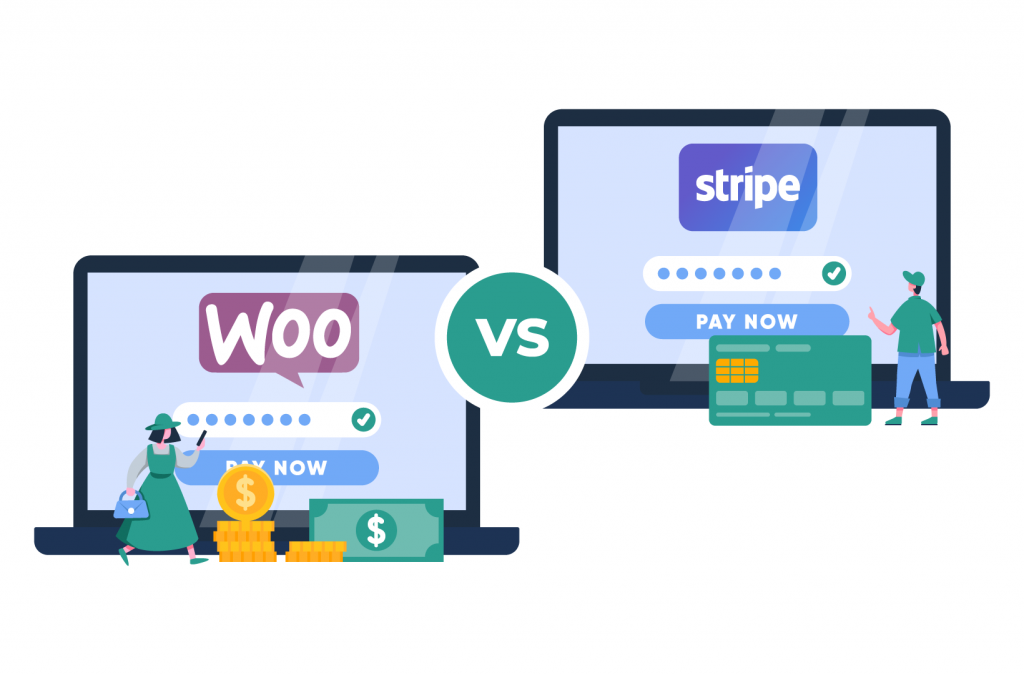
Still struggling with which payment method to use for your indie site? Then you are in the right place! Different payment methods are not only related to account security, handling fees, but also directly affect the user experience and conversion rate. For the majority of cross-border sellers, the most common payment methods are Stripe, PayPal and Credit Cards.. They have their own advantages and disadvantages and are suitable for sellers of different sizes and stages. In this article, we will break down the features of the three one by one, and provide you with selection suggestions in combination with practical scenarios.
![Image[1]-Cross-border sellers must see! Stripe, PayPal, credit card payment depth comparison!](https://www.361sale.com/wp-content/uploads/2025/09/20250923143944474-image.png)
I. Stripe: A Popular Choice for Cross-Border E-Commerce
Stripe is a fast-emerging payment platform in the cross-border e-commerce space in recent years, especially favored by small and medium-sized sellers and SaaS companies due to its flexible API and global coverage. Known for its "developer friendliness" and "efficient settlement", it is the first choice for emerging cross-border sellers.
![Picture [2]-Cross-border sellers must see! Stripe, PayPal, credit card payment depth comparison!](https://www.361sale.com/wp-content/uploads/2025/09/20250923144551220-image.png)
vantage
- Lower opening threshold
- It is more friendly to individual sellers and small teams, and the registration process is simpler than traditional payment companies.
- Multi-currency and multi-channel support
- Accepts over 135 currencies, including credit cards, Apple Pay, Google Pay, and more.
- Reasonable settlement cycle
- Usually around 7 days, even 2-3 days in some countries.
- Developer Friendly
- Provides complete APIs and plug-ins that work seamlessly together. WooCommerceThe platforms are Shopify, Magento, and others.
drawbacks
- High handling fees
- For every successful online transaction, the commission is charged at 2% plus $0.30 per order. For face-to-face (non-online) credit card transactions, the commission is 2.7% , plus $0.05 per order. There is also an additional currency conversion fee for cross-border collections.
- Strict compliance and risk control
- Account freezes are easily triggered for high-risk categories (health care, adult products, etc.).
- Not fully open in some countries
- Chinese sellers need to register an overseas company or use an agent, adding extra costs.
Second, PayPal: the old cross-border payment kingpin
As the earliest international payment tool to enter the Chinese market, PayPal has more than 400 million active users worldwide. Its biggest advantage is its high visibility and wide popularity, which has almost become the standard for cross-border e-commerce payment collection. Whether it is a small seller or a large independent station, PayPal can bring a natural sense of user trust.
![Picture [3]-Cross-border sellers must see! Stripe, PayPal, credit card payment depth comparison!](https://www.361sale.com/wp-content/uploads/2025/09/20250923145022876-image.png)
vantage
- Wide user coverage
- With hundreds of millions of active accounts worldwide, it is one of the most familiar payment methods for cross-border consumers.
- Good payment experience
- Buyers only need email and password to complete the payment, no need to enter cumbersome card number information.
- Safeguard mechanisms for buyers and sellers
- Buyers have the security of "paying first and then claiming their rights", and sellers are also protected by uploading logistics information.
- Flexible withdrawals
- You can bind bank cards, funds can be transferred out quickly, support multi-currency such as US dollars, euros, pounds.
drawbacks
- Higher handling fees
- PayPal charges 2.99% plus $0.49 per transaction. For transactions made through online checkout on a merchant's website, PayPal charges $3.49% plus $0.49 per transaction. Higher than Stripe and credit cards.
- Vulnerable to triggering the freezing of funds
- Risk control is strict, especially for new accounts or large transactions, which are often frozen for 21 days or more.
- Difficult for sellers to defend their rights
- Buyer protection is stronger than seller protection, and in the event of a malicious dispute, the seller may be passive.
Third, the credit card payment: independent station just need basis
Credit card payment is one of the most basic and common payment methods in cross-border e-commerce. card organizations such as Visa, MasterCard, etc. are widely used around the world, and buyers are extremely receptive to this method. For independent websites, opening credit card payment means that they can directly interface with the bank channel, thus enhancing their professionalism and brand image.
![Picture [4]-Cross-border sellers must see! Stripe, PayPal, credit card payment depth comparison!](https://www.361sale.com/wp-content/uploads/2025/09/20250923145828666-image.png)
vantage
- High penetration rate
- Visa, MasterCard, American Express, etc. are used almost globally.
- Mature user habits
- In the European and American markets, most consumers are used to paying directly by credit card, with a high conversion rate.
- Various settlement channels
- Standalone sites can be accessed through bank acquiring, third-party payment providers or Stripe/PayPal Access to credit cards.
- Highly flexible
- Supports subscription payment, installment payment and other modes suitable for SaaS or high unit price products.
![Picture [5]-Cross-border sellers must see! Stripe, PayPal, credit card payment depth comparison!](https://www.361sale.com/wp-content/uploads/2025/09/20250923151045495-image.png)
drawbacks
- High access threshold
- Applying directly for bank acquiring requires a business license, compliance qualifications and a longer review cycle.
- Risk and denial issues
- Cross-border transactions are prone to chargebacks, requiring sellers to provide more risk control measures.
- Wide variation in handling fees
- Different acquirers and channelizers have obvious differences in rates, and negotiating power determines the cost.
- Example: UnionPay local channel: Handling rate approx. 0.38%-0.6%TheVisa/MasterCard International: usual handling rates 2%-3.5%. Overall payment costs are significantly higher when customers pay primarily with international credit cards.
IV. Summary of the three comparisons
| payment method | Suitable for people | vantage | drawbacks |
|---|---|---|---|
| Stripe | Startup Sellers/Cross-border Independent Sites | Easy integration, multi-currency support, powerful APIs | High handling fees, strict risk control, restrictions in some countries |
| PayPal | Essential for cross-border e-commerce | Wide user coverage and high buyer trust | High handling fees and risk of freezing funds |
| credit cards | For sellers in the European and American markets | High penetration, good conversion rate, flexible payment | High access thresholds and high risk of denials |
V. Recommendations for independent station selection
![Picture [6]-Cross-border sellers must see! Stripe, PayPal, credit card payment depth comparison!](https://www.361sale.com/wp-content/uploads/2025/09/20250923150927282-image.png)
- Sellers who are just starting out
- We recommend Stripe or PayPal, which are easy to use and can quickly set up a payment environment.
- If the target market is in Europe and the United States, you can prioritize the allocation of credit card acquiring.
- Small and medium-sized stand-alone stations
- Stripe + PayPal A combination that covers buyer habits and ensures multi-channel collections.
- It is recommended to add a windfall control plugin to avoid compromising the safety of your funds due to refunds and rejections.
- Established Brand Sellers
- Configure a standalone credit card acquiring channel, combined with Stripe/PayPal for backup.
- It also interfaces with localized payment methods (e.g., Alipay, WeChat Pay, Klarna, etc.) to increase conversion rates.
reach a verdict
Stripe, PayPal , credit cards, they are not everything. Webmasters should combine the target market, type of goods, transaction size and security of funds to make a decision when choosing.
The optimal solution is usually a combination ofThe following are some examples: PayPal to build buyers' trust, Stripe to improve the flexibility of multi-currency payments, and credit cards to improve the conversion rate in the European and American markets. This reduces risk and improves the overall payment experience, laying a solid foundation for the growth of independent sites!

Link to this article:https://www.361sale.com/en/77386/The article is copyrighted and must be reproduced with attribution.

















![Emoji[wozuimei]-Photonflux.com | Professional WordPress repair service, worldwide, rapid response](https://www.361sale.com/wp-content/themes/zibll/img/smilies/wozuimei.gif)

![Emoticon[baoquan] - Photon Wave Network | Professional WordPress Repair Services, Worldwide Coverage, Rapid Response](https://www.361sale.com/wp-content/themes/zibll/img/smilies/baoquan.gif)


 简体中文
简体中文  English
  日本語
日本語  Français
  Español


No comments