






One of the most common errors during website access is "403 Forbidden". Instead of indicating that the page does not exist, as "404 Not Found" does, it tells you clearly:The server understands the request, but refuses to provide access. This type of problem often confuses users - obviously the web page exists, why is it not open? This article will explain in detail the meaning of 403 error, common causes, troubleshooting ideas and effective solutions.
![Image[1]-403 Error Code|Reasons for denial of access and repair guide](https://www.361sale.com/wp-content/uploads/2025/10/20251030165830248-image.png)
I. What does 403 error mean
When you visit a URL in your browser, the browser sends a request to the server. When the server receives the request, it returns different status codes depending on the access rights and file configuration. If the returned403 Forbidden, meaning that the server refuses to execute the request, i.e:
- The server understands your request, but does not allow you to view the content;
- The page itself exists, but you don't have enough access;
- The request method (GET, POST, etc.) does not match the server requirements.
![Image[2]-403 Error Code|Reasons for denial of access and repair guide](https://www.361sale.com/wp-content/uploads/2025/10/20251030165947618-image.png)
In other words.403 error is a sign of "permission denied".The problem is not a "lost page" problem.
II. Common manifestations of the 403 error
Different servers or site architectures may display slightly different prompts, for example:
![Image [3]-403 Error Code|Reasons for denial of access and repair guide](https://www.361sale.com/wp-content/uploads/2025/10/20251030170308776-image.png)
- HTTP Error 403 - Forbidden
![Image [4]-403 Error Code|Reasons for denial of access and repair guide](https://www.361sale.com/wp-content/uploads/2025/10/20251030170450506-image.png)
- You don't have permission to access this resource.
![Image[5]-403 Error Code|Reasons for Web Page Denial and Repair Guide](https://www.361sale.com/wp-content/uploads/2025/10/20251030170422428-image.png)
- Access Denied
![Image[6]-403 Error Code|Reasons for denial of access and repair guide](https://www.361sale.com/wp-content/uploads/2025/10/20251030170228147-image.png)
- Permission Denied
Although the wording is different, they both essentially indicate that access is blocked.
III. Main causes of the 403 error
1. Incorrectly set file or directory permissions
On most servers (e.g.Apache(Nginx, IIS), file permissions are central to controlling access. If a web file's access permissions are set too strict, the server will automatically deny external access.
Example:
- The directory does not have "read" permissions;
- The file owner is set incorrectly;
- Permission inheritance is broken in the site root directory.
2. .htaccess file is not properly configured
For sites using Apache servers..htaccess Files are one of the common culprits. If the rules in them are written incorrectly, they may outright block legitimate access.
Examples of common errors:
Deny from all
This line of code will disable everyone from accessing the directory or page.
3. IP or region blocked
![Image [7]-403 Error Code|Reasons for denial of access and repair guide](https://www.361sale.com/wp-content/uploads/2025/10/20251030171634130-image.png)
Some websites block specific IP addresses or country regions through firewalls or CDNs to prevent malicious access. If your IP is on the blocked list, it will also trigger a 403 error.
4. Missing index files
A home page file is usually required in a web directory (e.g. index.html maybe index.php). If this file is missing, the server may also return a 403 error when the default page is not found.
5. CDN or security plug-in interception
When using a CDN (such asCloudflare) or security plug-ins (such as Wordfence), the system will block access and return a 403 status if it detects suspicious traffic or request anomalies.
6. Request methodology restricted
Some APIs or servers only allow specific request methods, such as only accepting GET and not POST. if the access method does not match, it will also be rejected by 403.
![Image[8]-403 Error Code|Reasons for Web Page Denial and Repair Guide](https://www.361sale.com/wp-content/uploads/2025/10/20251030171855194-image.png)
IV. Steps for troubleshooting 403 errors
1. Checking document permissions
Log in to the server or host panel to view file and directory permissions. Common recommended settings:
- Directory permissions:
755 - File Permissions:
644
Modification method (Linux command example):
chmod 755 /var/www/html
chmod 644 /var/www/html/index.html
2. Check the .htaccess file
recognize .htaccess The file does not contain a directive to block access. The file can be temporarily renamed, for example to .htaccess_bak, then refresh the page to test.
3. Checking IP blocking
If a firewall is used,Security Plug-insor CDN, log into the corresponding backend to check if there is IP blacklisting. Clear the block or add the local IP to the whitelist and try again.
4. Checking the default home page file
Ensure that the site root directory contains index.html maybe index.php etc. file. If not, you can create a simple test page manually.
5. Checking server logs
Viewing the server's error log can help quickly pinpoint the cause of a problem. For example:
/var/log/apache2/error.log
/var/log/nginx/error.log
The logs usually show the words "permission denied" or "access forbidden".
6. Check security plug-ins or CDN settings
If the site uses Cloudflare, a firewall, or a security protection plugin, try disabling these features before refreshing the page. If it returns to normal, the security policy is too strict.
V. Special cases under different platforms
1. WordPress
![Image [9]-403 Error Code|Reasons for denial of access and repair guide](https://www.361sale.com/wp-content/uploads/2025/10/20251030173914681-image.png)
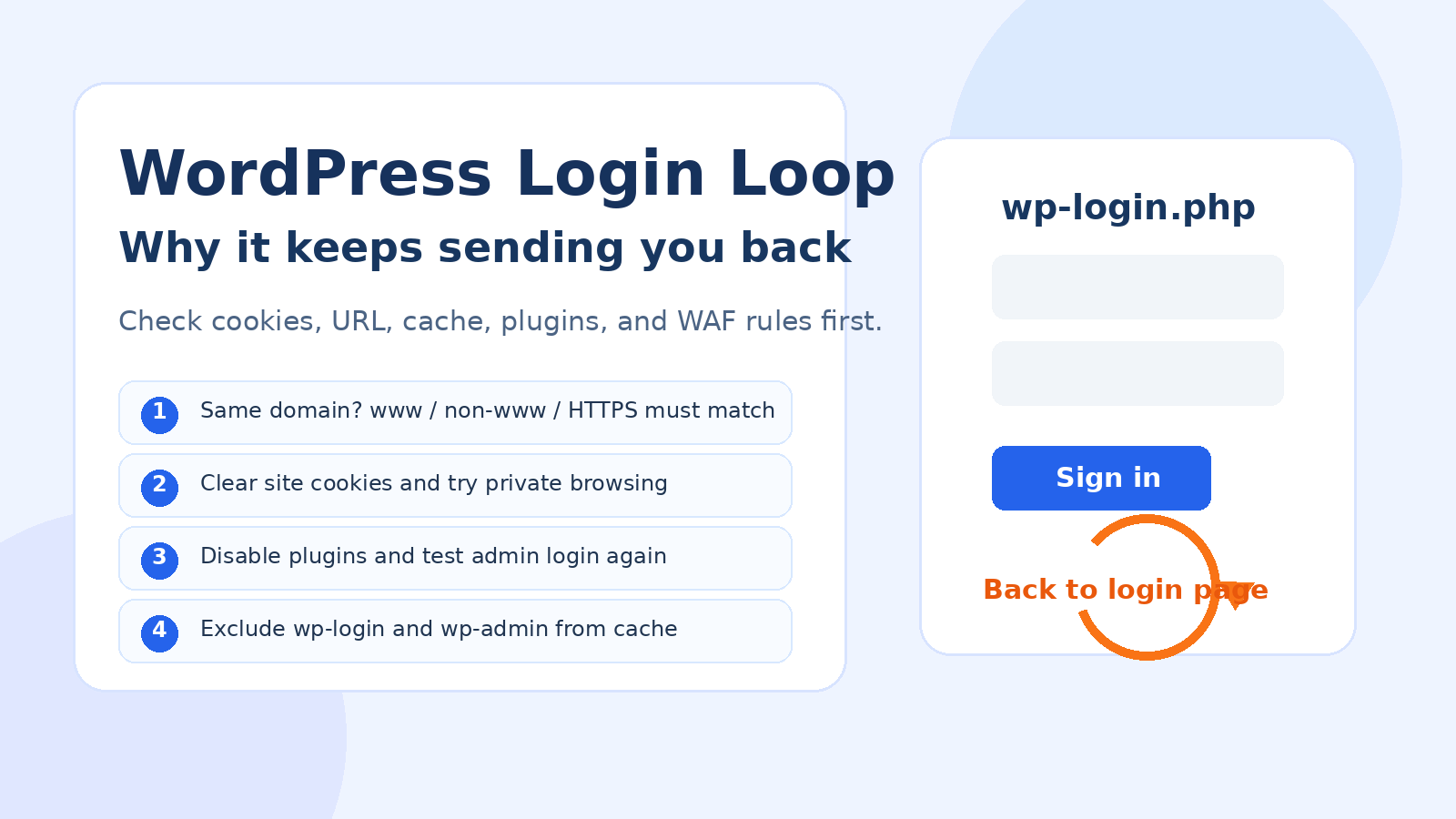
WordPress sites often trigger 403s due to plugin conflicts, file permissions, or .htaccess rule errors.
Settlement Recommendations:
- Deactivate recently installed plug-ins;
- Re-generate the fixed link settings;
- probe
wp-content/uploadsPermissions.
2. Nginx
![Image [10]-403 Error Code|Reasons for Web Page Denial and Repair Guide](https://www.361sale.com/wp-content/uploads/2025/10/20251030173833772-image.png)
On Nginx servers, 403 errors are often caused by insufficient directory permissions or configuration file root Path error.
probe nginx.conf::
location / {
    root /usr/share/nginx/html; index index.html index.htm; { root /usr/share/nginx/html; }
    root /usr/share/nginx/html; index index.html index.htm;
}
Ensure that the path matches the actual location of the file.
3. Apache
![Image [11]-403 Error Code|Reasons for Web Page Denial and Repair Guide](https://www.361sale.com/wp-content/uploads/2025/10/20251030174159505-image.png)
In Apache servers, 403 errors are often associated with the .htaccess file or file owner permissions are relevant. May try to add it in the configuration:
Require all granted
</Directory
VI. Recommendations for the prevention of 403 errors
- Regular backups
.htaccessand configuration files; - Set reasonable permission rules to avoid using
777Permissions; - Keep CDN, firewall whitelists up to date;
- Configure a clear error page for the website so that users can see friendly alerts;
- Prepare for rollbacks before updating your system or plugins.
VII. Conclusion
A 403 error is a common but easily overlooked problem in website management. It does not mean that something is wrong with the website, butserver (computer)Access is denied for security or privilege control reasons. As long as you master the idea of troubleshooting - checking step by step from permissions, configurations, and protection policies - most problems can be solved in a short period of time. For SEO practitioners and site administrators, regular testing of site accessibility is an important part of safeguarding the health of the site and search engine inclusion.
Link to this article:https://www.361sale.com/en/79476/The article is copyrighted and must be reproduced with attribution.








![Emoji[wozuimei]-Photonflux.com | Professional WordPress repair service, worldwide, rapid response](https://www.361sale.com/wp-content/themes/zibll/img/smilies/wozuimei.gif)

![Emoticon[baoquan] - Photon Wave Network | Professional WordPress Repair Services, Worldwide Coverage, Rapid Response](https://www.361sale.com/wp-content/themes/zibll/img/smilies/baoquan.gif)

 简体中文
简体中文  English
  日本語
日本語  Français
  Español


No comments