






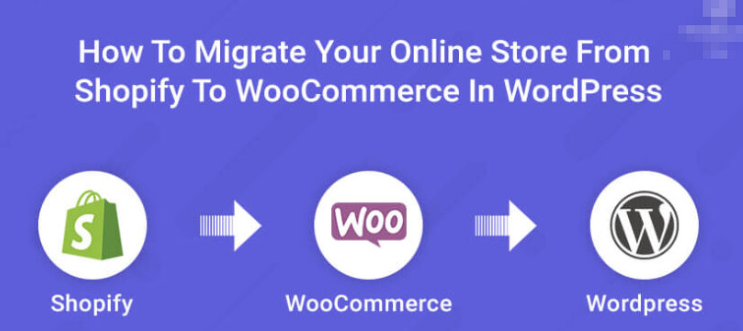
HeadlessThe architecture refers to separating the content management (CMS) from the front-end presentation layer and connecting the two through APIs to achieve higher performance, flexibility and scalability. In this area.Headless WordPress together with Headless Shopify are the two most commonly mentioned platforms. One is content-focused and the other is e-commerce-focused, so who is more flexible and suitable for your project? This article will provide you with a comprehensive analysis from multiple dimensions.
![Image[1]-Don't Pick! Headless WordPress vs Shopify Who's the Real King?](https://www.361sale.com/wp-content/uploads/2025/10/20251031151345143-image.png)
I. Differences in core concepts
WordPress and Shopify have different starting points, which determines the difference in their performance under the Headless architecture.
1. WordPress: content-centric open architecture
WordPress Essentially a content management system (CMS) that supports multiple types of content (articles, pages, custom fields, etc.) that developers can use through the REST API maybe GraphQL (e.g. WPGraphQL) Get the data.
In Headless mode, WordPress provides complete content control and structure customization space, suitable for websites that need flexible content layout, complex classification and multi-end content output.
Advantage:
- Integration with any front-end framework (React, Next.js, Vue, Nuxt, etc.)
- Extremely strong content management skills
- Huge plugin ecosystem with freely expandable functionality
2. Shopify: a closed-loop system with e-commerce at its core
Shopify The core of the company is e-commerce. Its Headless version is available through Storefront API Provides interfaces for products, shopping carts, orders, etc.
Headless Shopify lets developers customize the front-end interface while maintaining robust e-commerce logic such as inventory management, checkout, secure payments, and more.
Advantage:
- E-commerce function is perfect, API interface is stable
- Officially hosted with guaranteed security and performance
- Built-in multi-channel selling capabilities (web, mobile, social media)
Summarize the comparison:
- WordPress is Strong on "Content Flexibility"
- Shopify is strong on "e-commerce functionality integrity"
II. Front-end flexibility and development freedom
1. Headless WordPress: a great deal of freedom
![Image [2] - Don't Choose! Headless WordPress vs Shopify Who is the Real King?](https://www.361sale.com/wp-content/uploads/2025/10/20251031150203389-image.png)
In the WordPress Headless architecture, the front-end is completely independent and developers can use any modern framework, such as Next.js or Gatsby, to render data through the API. This model is perfect forCustomized websites, branded portals or content-driven e-commerce. Developers are free to define:
- Page Layout and Animation
- SEO Tagging and Rendering Strategies (SSR/ISR)
- Multilingual Content Presentation
Drawbacks: The development workload is relatively large, requiring front- and back-end collaboration and deployment management.
2. Headless Shopify: Restricted but Efficient
![Image [3] - Don't Choose! Headless WordPress vs Shopify Who is the Real King?](https://www.361sale.com/wp-content/uploads/2025/10/20251031150238189-image.png)
Shopify, while supportingHeadlessdevelopment, but some features still rely on the official ecosystem (e.g. checkout process, payment security). It is more suitable for e-commerce brands that want to go live quickly and still maintain a customizable front-end. Through the Storefront API or Hydrogen framework (Shopify's official React framework), developers can flexibly customize the interface, but certain e-commerce logic can't be completely free to modify.
Conclusion:
- WordPress takes more liberties with front-end design
- Shopify is more stable in terms of feature integration and security
III. SEO and content management capabilities
![Image [4]-Don't Pick! Headless WordPress vs Shopify Who's the Real King?](https://www.361sale.com/wp-content/uploads/2025/10/20251031150522309-image.png)
1. Natural SEO Benefits of WordPress
Headless WordPress allows for extremely fast loading speeds through static rendering (such as Next.js) and supports fully customizable SEO strategies.
Combined with RankMath or Yoast SEO plugin, it can be flexibly configured:
- Title & Description
- Open Graph data
- Canonical tags and sitemaps
For content-based websites, WordPress usually outperforms Shopify in terms of SEO.
2. Shopify's e-commerce optimization capabilities
Shopify in e-commerceSEOOn the performance is good, supporting structured data, automatic generation of product schema, mobile optimization and so on. However, in Headless mode, developers need to manually configure SEO components, which is slightly more complex than the traditional mode.
Conclusion:
- If the focus is on content and blogging type SEO → go with WordPress
- If the focus is on product and sales page optimization → choose Shopify
IV. Scalability and ecosystemsPerformance and Maintenance Costs
| comparison dimension | Headless WordPress | Headless Shopify |
|---|---|---|
| ecosystems | Plugins and themes are rich and extend freedom. | The official App system is well developed but closed. |
| scalability | Supports plug-ins such as ACF, WPGraphQL, etc. for flexible customization of content structure. | Extensible but limited by API, more fixed functionality. |
| dexterity | The front end is fully customizable for content-based or branded websites. | Focus on e-commerce logic with less design freedom. |
| Performance and Maintenance | Dependent on front-end frameworks and hosting platforms that need to be maintained in-house. | Officially hosted CDN for stable and maintenance-free performance. |
| Costs and Scenarios | Low cost for developers and content-oriented sites. | High cost for standardized e-commerce and fast-launching brands. |
V. Final conclusions: choices depend on objectives
- If you value content production, brand storytelling, SEO and customizability → go for Headless WordPress!
- If you focus on eCommerce conversions, payment experience, platform security → go for Headless Shopify!
Headless WordPress is an infinitely scalable authoring platform and Headless Shopify is a secure and efficient e-commerce engine. That's why many organizations opt for a "hybrid architecture": a front-end that usesHeadless WordPressShowcasing content and brand storytelling, and using Headless Shopify on the back end to process orders and checkout, this approach balances the advantages of both. Flexibility doesn't mean complexity, it means finding the combination of technologies that works best for your business. Which side you choose depends on functionality, but also on the story you want your website to tell and the business goals you want to achieve!

Link to this article:https://www.361sale.com/en/79554/The article is copyrighted and must be reproduced with attribution.













![Emoji[wozuimei]-Photonflux.com | Professional WordPress repair service, worldwide, rapid response](https://www.361sale.com/wp-content/themes/zibll/img/smilies/wozuimei.gif)

![Emoticon[baoquan] - Photon Wave Network | Professional WordPress Repair Services, Worldwide Coverage, Rapid Response](https://www.361sale.com/wp-content/themes/zibll/img/smilies/baoquan.gif)


 简体中文
简体中文  English
  日本語
日本語  Français
  Español


No comments