





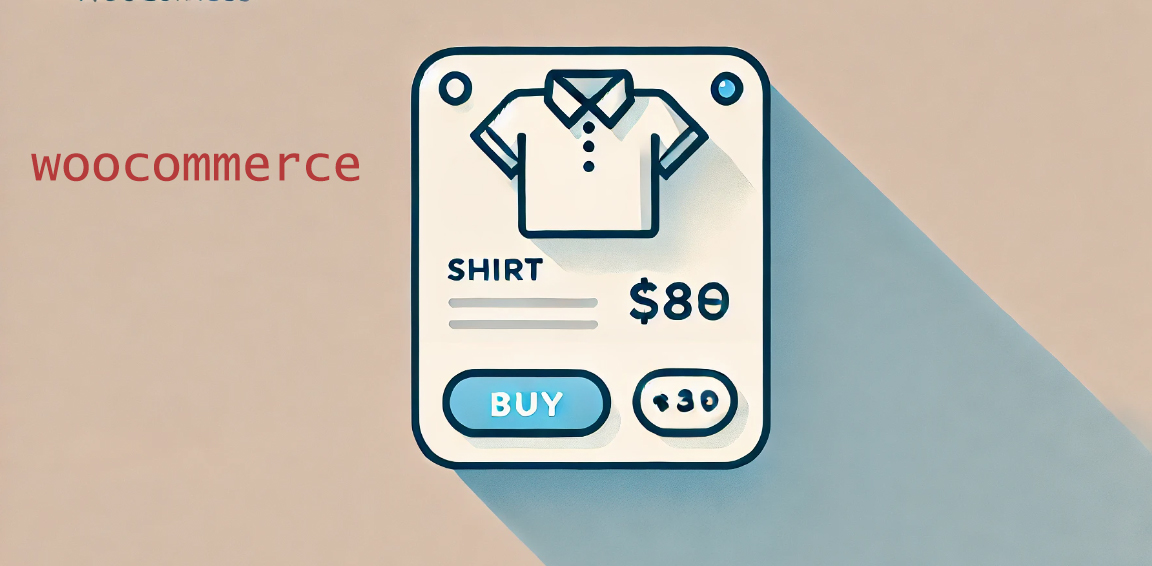
WooCommerce provides powerful e-commerce features for WordPress websites, and one of the key features is the "Add to cart"Add to Cart" button. By customizing the "Add to Cart" URLs, you can create a more convenient shopping experience for your users. This article will dive into how to create and use these custom URLs so that users can add products directly to the cart andAutomatic redirection to specific pages when necessary(math.) genussuch as a shopping cart page or checkout pageThe
![Image[1] - How to Create WooCommerce "Add to Cart" Custom URL: Detailed Guide - Photonwave.com | Professional WordPress Repair Service, Global Reach, Fast Response](https://www.361sale.com/wp-content/uploads/2024/08/2024080803132643.png)
Why should I use a customized "Add to Cart" URL?
Using a custom "Add to Cart" URL, you can achieve several important features:
- Enhancing the shopping experience: Smooth the buying process by reducing the number of steps a user has to click through.
- Increase Conversion Rate: Reduce barriers in the shopping process and direct users to the shopping cart or checkout page to increase the likelihood of a purchase.
- Flexibility in marketing and promotion: Enhance promotions by embedding these URLs in marketing emails, social media or advertisements that directly direct users to add specific products to their shopping cart.
Second, find the product ID
Before creating a custom "Add to Cart" URL, you need to find the Product ID of the product in WooCommerce, which is the unique identifier used by WooCommerce to identify each product. Below are the steps to find the Product ID:
- Go to WooCommerce Product List: Log in to the WordPress backend and navigate to "WooCommerce > Products".
- Find Product ID: Hover over the title of the product for which you want to get the ID. The product ID will be displayed below the product title, usually in the format "ID: 123".
![Image [2] - How to Create WooCommerce "Add to Cart" Custom URL: Detailed Guide - Photon Flux | Professional WordPress Repair Service, Global Reach, Fast Response](https://www.361sale.com/wp-content/uploads/2024/08/2024081308490463.png)
Creating customized "add to cart" URLs for simple products
Simple products are the most common type of product and they do not involve variant options such as size or color. To create a custom "Add to Cart" URL for a simple product, use the following format:
https://example.com/?add-to-cart=PRODUCT_ID&quantity=QUANTITY- PRODUCT_ID: Replace it with the ID of the simple product.
- QUANTITY: Specifies the quantity that the user adds to the cart. If this part is omitted, the default quantity is 1.
typical example: If there is a simple product with product ID 123 and the user adds 3 products to the cart, the URL will look like this:
https://example.com/?add-to-cart=123&quantity=3IV. Creating customized "add to cart" URLs for variable products
Variable products allow users to select different attributes, such as size, color, or material, before purchasing. To create a custom URL for a variable product, you need to know the ID of the variant (variation ID), not the main ID of the product.
- Find variant ID: To edit a variable product, go to the "Variants" section and find the ID of the specific variant (e.g. for a blue T-shirt, the ID is162125).
![Image [3] - How to Create WooCommerce "Add to Cart" Custom URL: Detailed Guide - Photon Flux | Professional WordPress Repair Service, Global Reach, Fast Response](https://www.361sale.com/wp-content/uploads/2024/08/2024081308595572.png)
- Creating custom URLs::
https://example.com/?add-to-cart=VARIATION_ID&quantity=QUANTITY- VARIATION_ID: Replace with the ID of the specific variant.
- QUANTITY: Specifies the number of items to add to the cart.
typical example: If you want the user to add an ID of162125of blue t-shirts to the shopping cart in the quantity of2The URL is as follows:
https://example.com/?add-to-cart=162125&quantity=2V. Create customized "Add to Cart" URLs for grouped products
![Image [4] - How to Create WooCommerce "Add to Cart" Custom URL: Detailed Guide - Photon Flux | Professional WordPress Repair Service, Global Reach, Fast Response](https://www.361sale.com/wp-content/uploads/2024/08/2024081309104730.png)
Grouped Products consists of multiple simple products where the user can select the quantity of multiple sub-products and add them to the cart at once. When creating a custom URL for a grouped product, you need to specify separate quantities for each sub-product.
URL format::
https://example.com/?add-to-cart=GROUPED_PRODUCT_ID&quantity[SUB_PRODUCT_ID]=QUANTITY
- GROUPED_PRODUCT_ID: The primary ID of the grouped product.
- SUB_PRODUCT_ID: The ID of the subproduct.
- QUANTITY: The number of each sub-product.
typical example: Assuming the grouped product ID is 50, which includes two sub-products with IDs 101 and 102, and you want the user to add 1 sub-product 101 and 3 sub-products 102 to the shopping cart, the URL will be as follows:
https://example.com/?add-to-cart=50&quantity[101]=1&quantity[102]=3
VI. Redirection after adding to the shopping cart
By default, when the user clicks "Add to cart" button, the page will not be redirected and the user remains on the current page. To improve the efficiency of the shopping process, you can set up a custom URL that automatically redirects the user to the shopping cart page or checkout page after the product is added to the cart.
- Redirect to checkout page::
https://example.com/checkout/?add-to-cart=PRODUCT_ID&quantity=QUANTITYtypical example: I want the user to jump to the checkout page immediately after adding a product with ID 123 with the following URL:
https://example.com/checkout/?add-to-cart=123&quantity=1- Redirect to shopping cart page::
https://example.com/cart/?add-to-cart=PRODUCT_ID&quantity=QUANTITYtypical example: If the user jumps to the shopping cart page after adding a product with ID 123, the URL is as follows:
https://example.com/cart/?add-to-cart=123&quantity=1Seven, enable AJAX to prevent page reloading
In WooCommerce, it is possible to prevent the page from reloading when an item is added to the cart by enabling AJAX. This makes the user experience smoother as they won't be forced to redirect or refresh the page.
move::
- Go to WooCommerce Settings: Navigate to "WooCommerce > Settings > Products > General".
- Enabling AJAX: in "Add to cart behavior"section, check the box "Enable AJAX Add to Cart button (for archives)".
![Image [5] - How to Create WooCommerce "Add to Cart" Custom URL: Detailed Guide - Photon Flux | Professional WordPress Repair Service, Global Reach, Fast Response](https://www.361sale.com/wp-content/uploads/2024/08/2024081309180370.png)
When enabled, the page will not reload when the user adds items to the cart, thus keeping the shopping experience smooth.
VIII. Application scenarios using customized "Add to Cart" URLs
Customizing the "Add to Cart" URL is not just a technical trick, it can bring you a lot of benefits in practice. Here are some common application scenarios:
- Email Marketing: Insert directly in the email "Add to cart" link, users can click on it and add the item to their shopping cart directly without having to browse the product detail page.
- Social Media Promotion: Use these URLs in social media ads or posts to make it easier for users to take direct purchase actions.
- advertising campaign: Direct users to the checkout process via a link on the ad page, reducing intermediate steps and increasing the conversion rate of the ad.
- Product Recommendation: Embed these URLs in blog posts or testimonials to direct readers to quickly add recommended products to their shopping cart.
summarize
By using WooCommerce's custom "Add to cart"URLs that can significantly improve your website's user experience and conversion rates. Whether it's creating URLs for simple, variable or grouped products, or configuring redirects after adding a cart, these tips can make your WooCommerce store more flexible and efficient.

Link to this article:https://www.361sale.com/en/16707The article is copyrighted and must be reproduced with attribution.














![Emoji[wozuimei]-Photonflux.com | Professional WordPress repair service, worldwide, rapid response](https://www.361sale.com/wp-content/themes/zibll/img/smilies/wozuimei.gif)

![Emoticon[baoquan] - Photon Wave Network | Professional WordPress Repair Services, Worldwide Coverage, Rapid Response](https://www.361sale.com/wp-content/themes/zibll/img/smilies/baoquan.gif)


 简体中文
简体中文  English
  日本語
日本語  Français
  Español


No comments