






With the rapid development of front-end frameworks and the increasing demands of user experience, the traditional WordPress architecture is gradually becoming "bulky" and limited.Headless WordPress The birth of the concept has opened up a whole new dimension of freedom for developers. In this article, we'll take a closer look at the value, challenges, and true significance of this architecture from a developer's perspective.
![Images[1] - Still using traditional themes? Developers are quietly moving to Headless WordPress!](https://www.361sale.com/wp-content/uploads/2025/10/20251031161854927-image.png)
I. What is Headless WordPress?
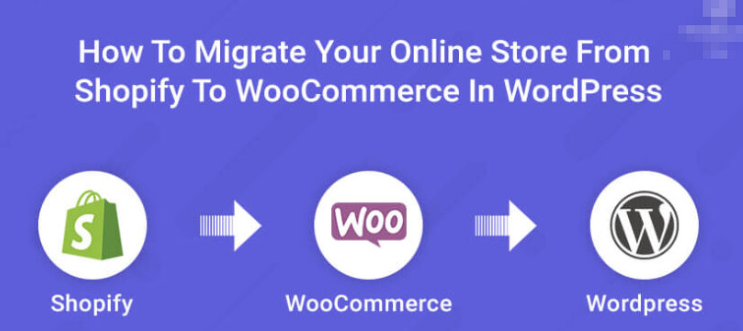
"Headless" means "headless", which in the context of website architecture meansFront-end and back-end separationTraditional WordPress takes care of both content management (backend) and page rendering (frontend). While traditional WordPress takes care of both managing content (backend) and rendering pages (frontend), Headless WordPress retains only the content management functionality.
In this model:
- The WordPress backend is only used as aContent Management System (CMS)The
- The front-end uses modern frameworks (such as React, Next.js, Vue, Nuxt.js) to build the page.
- The data is passed through the REST API maybe GraphQL Get.
This means that developers are no longer limited to WordPress The theme system that allows full control of the front-end technology stack and presentation.
Second, why developers increasingly favor Headless WordPress?
For developers, the appeal of Headless WordPress isn't just the "newness" of it, but the technical freedom and performance benefits it brings.
![Images [2] - Still using traditional themes? Developers are quietly moving to Headless WordPress!](https://www.361sale.com/wp-content/uploads/2025/10/20251031163733924-image.png)
1. Free choice of front-end technology stack
In traditional WordPress, front-end development is limited by PHP templates and theme mechanics. In the Headless architecture, you can use the React, Vue, Svelte You are free to build front-end interfaces with any framework, even in combination with modern tools such as TypeScript, Tailwind CSS, and so on.
This freedom allows for a more modern development experience, cleaner front-end code, and a more maintainable project structure.
2. Extreme performance and flexible rendering
Modern front-end frameworks enableStatic generation (SSG) or server-side rendering (SSR)This makes websites load faster and perform better in terms of SEO. This makes websites load faster and perform better in terms of SEO. Developers have the flexibility to choose the rendering method for different pages:
- Blog category pages are generated with static to improve access speed.
- Use SSR for news or e-commerce pages to keep them up to date in real time.
This is a level of freedom that is difficult to achieve with traditional WordPress.
3. Multi-platform content distribution
Developers can place WordPress act asContent HubThe company's content is exported to multiple platforms via APIs:
- Official website
- Mobile App
- applet
- Smart devices (e.g., TVs or in-car systems)
Publish content once and call it up on multiple ends at any time. This is extremely valuable for enterprise-level projects.
III. The Developer's Core Role in Headless WordPress
In traditional WordPress projects, front-end developers often just "change the theme" or "tweak the styles"; in Headless WordPress, front-end developers take the lead.
![Images [3] - Still using traditional themes? Developers are quietly moving to Headless WordPress!](https://www.361sale.com/wp-content/uploads/2025/10/20251031164438463-image.png)
1. Architecture designers
Developers need to plan:
- How to organize the front-end project structure
- Which framework to use (Next.js, Nuxt.js, Gatsby)
- API call method (REST or GraphQL)
- Rendering modes (SSR / SSG / ISR)
This means that developers have to have a full-stack mindset and no longer just write templates.
2. Data bridge builders
Developers need to design and implement the logic that flows data from WordPress to the front-end. For example:
const res = await fetch('https://yourdomain.com/wp-json/wp/v2/posts');
const posts = await res.json();
Together with the front-end state management (Redux, Pinia, Zustand) the page display is realized.
This data-driven development approach is more in line with modern front-end architecture concepts.
3. Guardian of performance and security
Due to the separation of the front and back ends, theWordPress The backend is isolated from the presentation layer for improved security. Developers can further optimize:
- Caching static resources with CDNs
- Using Incremental Static Regeneration (ISR) for Automatic Updates
- Anti-crawl and request limitation on the front-end
Developers are not only building functionality, they are taking control of overall site performance and security.
IV. Key points of technical realization
There are a few core steps that a developer needs to master in order to achieve a stable Headless WordPress project:
1. Enabling the API interface
WordPress provides a REST API by default, just visit:
https://yourdomain.com/wp-json/wp/v2/posts
You can get the article data. For a more flexible data structure, install the WPGraphQL plug-in (software component)The following are some examples of how you can use GraphQL to query your own queries.
![Images [4] - Still using traditional themes? Developers are quietly moving to Headless WordPress!](https://www.361sale.com/wp-content/uploads/2025/10/20251031164543380-image.png)
2. Front-end project initialization
Create a project with Next.js:
npx create-next-app headless-demo
exist getStaticProps in which the WordPress API is called for static content loading:
export async function getStaticProps() {
  const res = await fetch('https://yourdomain.com/wp-json/wp/v2/posts'); const posts = await res.json(); const posts = await
  const posts = await res.json(); return { props: { posts } }; { props: { posts }; }
  return { props: { posts } }; }
}
3. Rendering and optimization
Render the page with either the Markdown renderer or a React component to display the content. Rendering a page with the revalidate parameter allows the page to be updated automatically at regular intervals, achieving a balance between performance and real-time.
V. Challenges of Headless WordPress
even though Headless WordPress brings great flexibility, but also places greater demands on the developer:
- Steeper learning curve: Knowledge of front-end frameworks, API calls, and build tools is required.
- Editorial Experience Gap: The traditional WordPress visual editing experience is limited in a headless architecture.
- Increased deployment complexity: The front and back ends need to be deployed and maintained separately.
However, for developers who truly love code and performance optimization, these challenges are instead growth opportunities.
VI. The true meaning of front-end freedom
"Front-end freedom" means the right to choose the technology stack, but also the right to choose the technology stack.Emancipation of development conceptsHeadless WordPress lets developers break free from templates and embrace componentization, data-driven, and high-performance architecture. It allows developers to:
- Customize every interaction detail
- Precise control of SEO and rendering logic
- Building a scalable content system for the future
This freedom, not just the right to write code, but the possibility to redefine a website.
VII. Conclusion
From a developer's perspective.Headless WordPress It is a new technical architecture, but also a change in thinking. It allows the front-end from the "theme modifier" upgraded to "experience creator", so that WordPress from the "blog system" into "content engine". The future of the web belongs to developers who know how to utilize the Headless architecture to build flexible, efficient, and scalable content experiences. It is in this convergence of technologies that the true meaning of front-end freedom will be unleashed.

Link to this article:https://www.361sale.com/en/79572/The article is copyrighted and must be reproduced with attribution.











![Emoji[wozuimei]-Photonflux.com | Professional WordPress repair service, worldwide, rapid response](https://www.361sale.com/wp-content/themes/zibll/img/smilies/wozuimei.gif)

![Emoticon[baoquan] - Photon Wave Network | Professional WordPress Repair Services, Worldwide Coverage, Rapid Response](https://www.361sale.com/wp-content/themes/zibll/img/smilies/baoquan.gif)


 简体中文
简体中文  English
  日本語
日本語  Français
  Español


No comments