







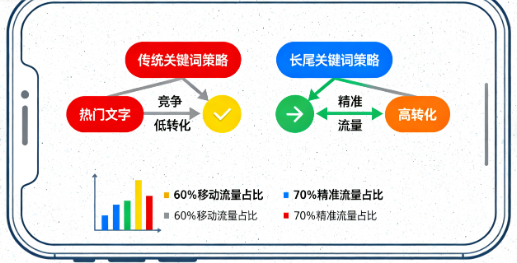
At a time when mobile search traffic accounts for more than 60%, many operators still choose keywords based on intuition, and as a result, they consume a lot of resources in the competition for popular terms, with little result.
The data show thatlong-tail keywordsWhile individual searches are not high volume, they can drive more than 70% of accurate traffic to a website. The key to changing this is to move from subjective judgment to objective data. Professional keyword software provides in-depth analysis dimensions that can help us target those mobile long-tail keywords with clear search intent and less competitive pressure.
Chapter 1: Establishing the Foundation: Understanding the Core Value of Mobile Long-Tail Keywords
Before starting data mining, it is important to clearly understand why long-tail keywords have irreplaceable value in mobile search scenarios.
1.1 The composition and characteristics of long-tail keywords
Long-tail keywords are not just long characters, the core is specificity.
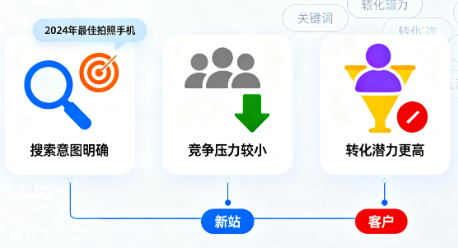
- Search intent is clear: For example, "best camera phone of 2024" is a much stronger purchase intent than "cell phone".
- Less competitive pressure: The sheer volume dilutes the competition and new or small sites have more opportunities.
- Higher conversion potential: The more specific a user searches, the clearer their goal and the more likely they are to become a customer.
1.2 New connotations given to mobile search behavior
The search habits of mobile users reinforce the importance of long-tail keywords.
- The popularity of voice search: Voice queries are closer to natural language and are usually complete questions, such as "Where is the Huawei phone repair center near me?".
- Integration of localized search: Local modifiers such as "neighborhood," "opening today," and "on XX Street" are closely tied to commercial intent.
- The need for immediacy is strong: Mobile users want to solve problems quickly, and their search terms include action instructions such as "how to", "solution", "steps", and so on.
Chapter 2: Tools in action: using the data analysis function to filter keywords
After mastering the theoretical foundations, we moved into a hands-on session to explore how to use specific data dimensions in the software to make decisions.
2.1 Interpreting the Balance of Search Volume and Difficulty Indices
Keyword software usually provides two core metrics:search volumerespond in singingKeyword DifficultyThe
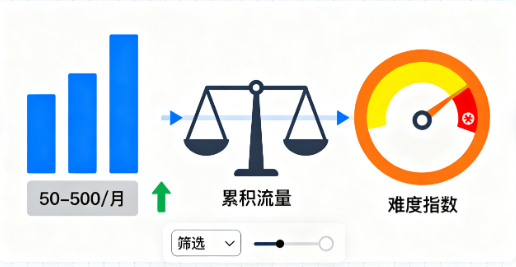
- A rational view of search volume: For long-tail terms, there is no need to pursue too high a search volume. A few dozen to a few hundred searches per month adds up to a sizable amount of traffic.
- The deeper meaning of the difficulty index: This score predicts the intensity of competition for ranking onto the first page of Google. Our goal is to find phrases that have the expected search volume, but have a low to medium difficulty score.
- Operational Thoughts: In the software's keyword analysis report, use the filtering function to filter out keywords that are too difficult and retain those that match the authority of your own website.
2.2 Analyze search intent and content format matching
This is the most crucial and overlooked step. Wrongly formatted content will not fulfill the user's search needs.
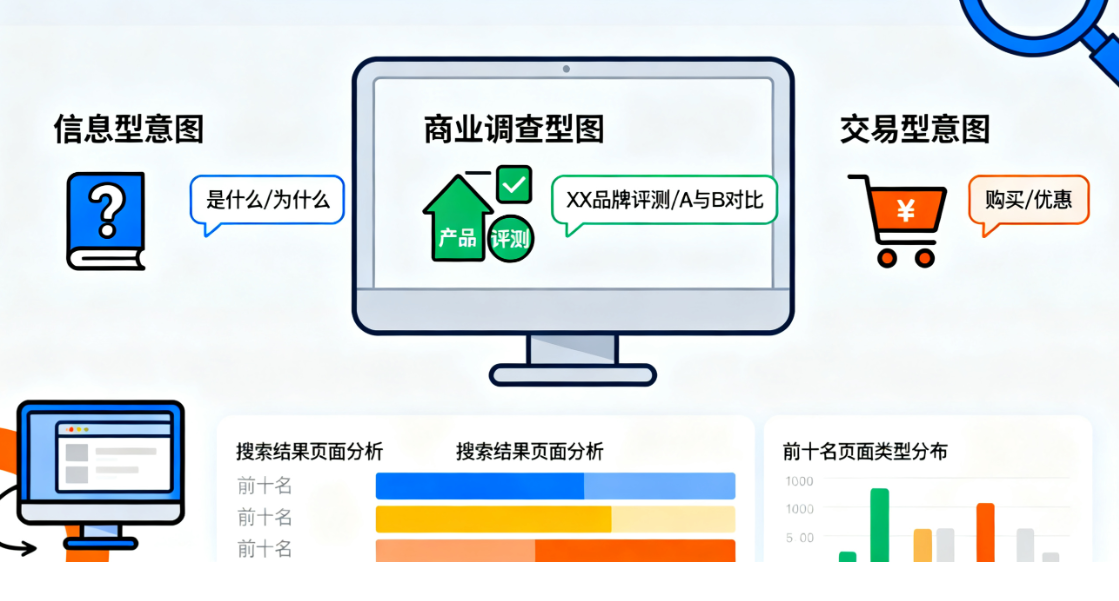
- Identify the type of intent:
- Informational Intent: Users seek knowledge, often with keywords such as "what", "why", "tutorial". The software may flag this type of intent in the results.
- Commercial investigative type intent: Users are considering a purchase and are comparing products, such as "XX Brand Review" and "A vs B".
- Transactional Intent: The user is ready to buy, e.g. "Buy", "Discount", "Price".
- Investigate the search results page: Use software to analyze the top ranking pages. If the top ten are all blog posts, it indicates that users expect informational content; if they are all e-commerce product pages, it indicates a strong transactional intent. Your content must match this.
2.3 Discovering Relevant Keywords and Problem Expansion
A good core keyword can spawn a content series.
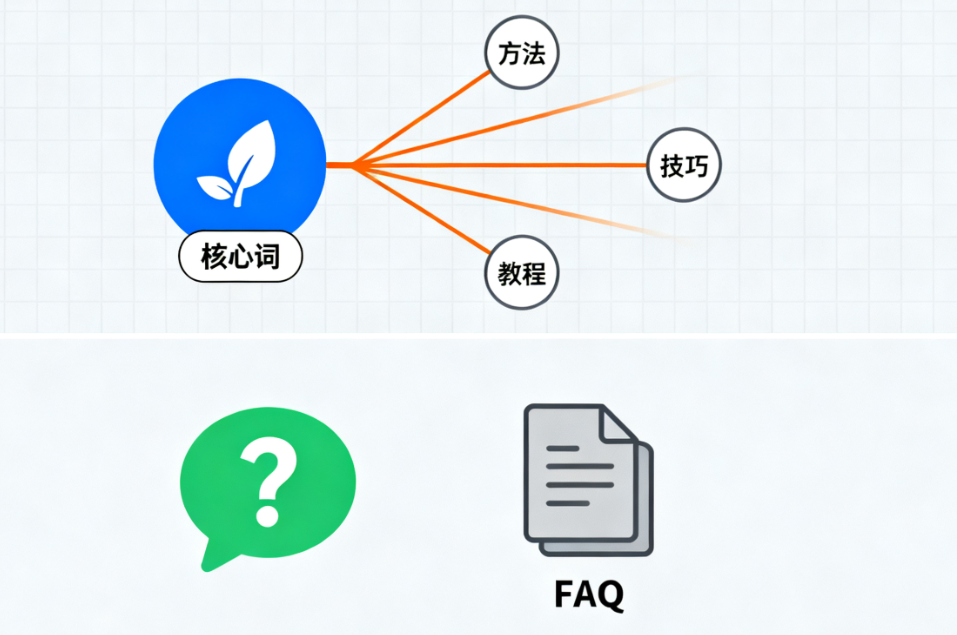
- Utilize the software's "Related Keywords" feature: Enter a seed keyword (e.g., "cell phone battery life"), and the software will provide a series of extensions (e.g., "ways to improve cell phone battery life", "cell phone battery maintenance tips").
- Mining for "problem" keywords: Many tools have specialized question queries that capture natural long-tail terms like "why does my phone run out of battery so fast". These questions are great fodder for building an FAQ section or a standalone article.
Chapter 3: Advanced Strategy: Locating Opportunities Not Covered by Competitors
Another powerful feature of data software is competitive analysis, which helps us identify gaps in the market.
3.1 Analyze competitors' keyword mapping
Know your enemy and know yourself in order to find a breakthrough.

- Function Utilization: Enter the website addresses of your main competitors into the software to see what keywords they are getting ranked for.
- Opportunity Identification: Focus on two types of words:
- Words that your competitors are ranking well for, but that you are not covering at all. This represents a gap in content.
- Keywords for which competitors are ranking in the 7th to 10th position. These are words that they may not have focused on optimizing for and are points of opportunity for you to launch an attack.
3.2 Implement keyword gap analysis
This is the core approach to finding a competitive route to differentiation.
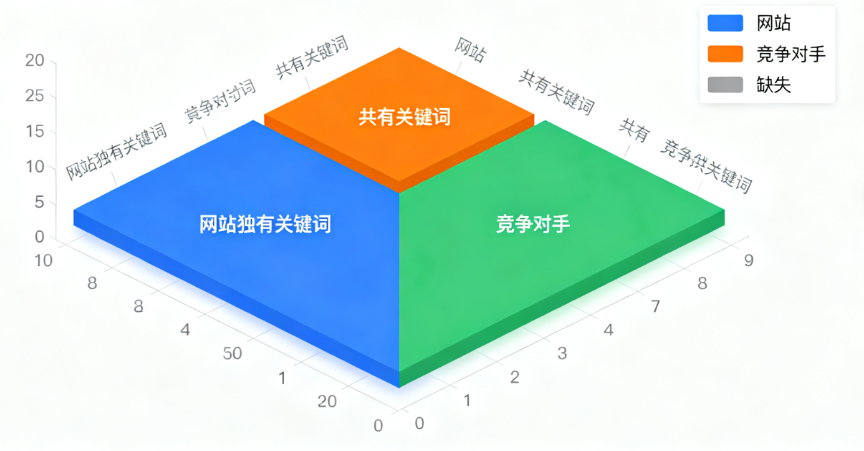
- Operational Processes: Put your website and several competitors' websites into the software's "Keyword Gap Analysis" feature.
- Data Interpretation: The software generates a matrix that clearly shows which keywords are common to your competitors that you don't have, and which are unique to you that your competitors don't have. Those "rivals have but you do not have" list, is the highest priority to expand the direction.
Chapter 4: Building a system: from keyword lists to content matrices
Once the keywords are collected, they need to be systematized to guide the actual content production.
4.1 Creating a mapping of keywords to topic clusters
Avoid creating fragmented content and instead build a network of topics that support each other.
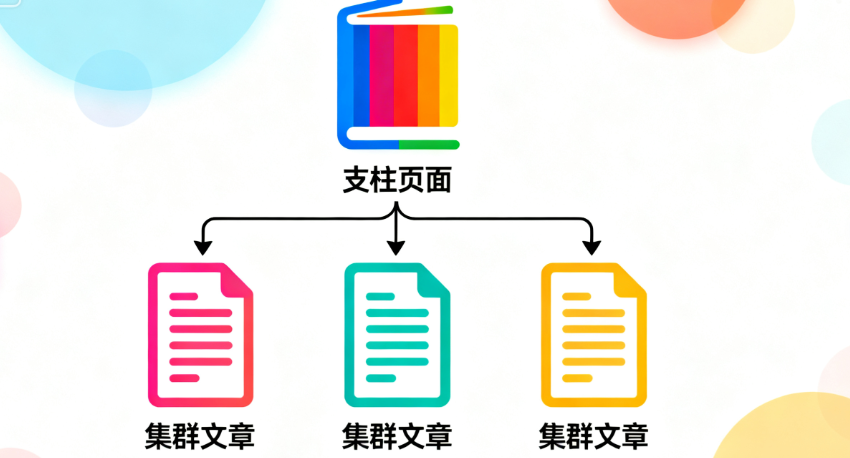
- Identify core themes: Group semantically similar keywords under a core topic. For example, all entries about "camera phones", "cell phone camera reviews", "cell phone photography tips" can be categorized under the topic "cell phone photography " theme.
- Planning content structure: Create a pillar page for the topic (a comprehensive overview of cell phone photography) and create multiple cluster articles around it (in-depth answers for each long-tail term). Internal linking ties these articles together and shows search engines that you're an authority on the topic.
4.2 Prioritization and implementation plan
Not all keywords found need to be created immediately.
- Evaluation Criteria: Consider search volume, difficulty, relevance to your business, and cost of content production.
- Create a content calendar: Fill future content publishing plans with high-priority keywords to ensure that resources are invested where they will have the highest return.
summarize
Relying on guesswork and intuition to choose keywords no longer meets the needs of the website. The precise positioning of mobile long-tail keywords is a work that combines insights into user behavior with rigorous analysis of data tools. By skillfully utilizing multi-dimensional data such as search volume, difficulty, intent analysis and competitive intelligence provided by keyword research software, we are guided to create content that highly matches users' needs and has strong competitiveness, winning sustained and stable high-quality traffic for our website in the mobile search field.

Link to this article:https://www.361sale.com/en/79865/The article is copyrighted and must be reproduced with attribution.














![Emoji[wozuimei]-Photonflux.com | Professional WordPress repair service, worldwide, rapid response](https://www.361sale.com/wp-content/themes/zibll/img/smilies/wozuimei.gif)

![Emoticon[baoquan] - Photon Wave Network | Professional WordPress Repair Services, Worldwide Coverage, Rapid Response](https://www.361sale.com/wp-content/themes/zibll/img/smilies/baoquan.gif)


 简体中文
简体中文  English
  日本語
日本語  Français
  Español


No comments