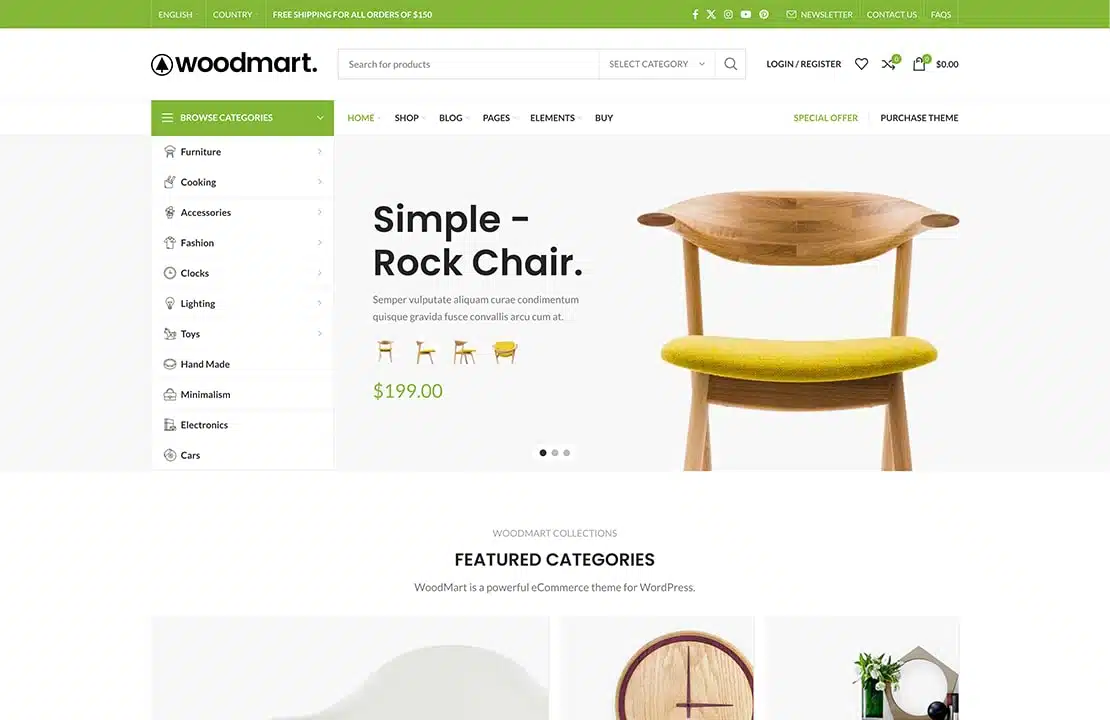





utilization WooCommerce When building an e-commerce website, theWoodMart It is a functional but performance sensitive theme. Common situation: the homepage and article pages perform normally, while theStore Pages & Category Pagesyet it becomes a major performance bottleneck. This is not WoodMart itself is "slow", but rather because such pages also carry theProduct presentation, screening, interaction and conversionIf the configuration is still configured in the normal page way, it is very easy to slow down the overall experience. This article is centered around WoodMart Store Page, Category Page Performance OptimizationsProvide a set ofLong-term maintenance availableThe hands-on program.
![Image [1] - Stop blaming WoodMart themes, store pages and category pages are the real performance killers!](https://www.361sale.com/wp-content/uploads/2025/12/20251222170921454-image.png)
First, why store pages and category pages must be optimized separately
1.1 Structural Characteristics of Store Pages / Category Pages
Both types of pages usually have, compared to regular content pages:
- Renders a large number of product cards at the same time
- Each card contains an image, price, button and JS behavior.
- always on Ajax Filtering, sorting or paging
- Significant structural differences between mobile and desktop
These characteristics dictate:Store pages and category pages are "high-complexity pages" and must have separate performance strategies.
1.2 Common but wrong optimization ideas
In real projects, the following misconceptions are often seen:
- Install only the caching plugin, do not change the page structure
- Only the home page is tested, not the category page
- Attributing performance problems to "too heavy a theme"
The truth is:80% The performance issues above come from the number of products, the structure of the cards and the way they are used interactively.
![Image [2] - Stop blaming WoodMart theme, store pages and category pages are the real performance killers!](https://www.361sale.com/wp-content/uploads/2025/12/20251222171715222-image.png)
II. Major Performance Bottlenecks in WoodMart Store Pages / Category Pages
2.1 Number of Products and DOM Size
In the default configuration:
- Possible 20-30 products on a single page
- Each product card contains multiple layers of DOM
- Bind multiple JS events at the same time
This will increase directly:
- DOM build time
- First rendering pressure
- Rolling and Interaction Costs
2.2 Additional overhead of Ajax functionality
WoodMart Commonly Used Ajax Features include:
- Category Filter
- Sort Toggle
- Infinite scrolling
These features come with an improved experience:
- Higher JavaScript execution time
- More frequent DOM redraws
- Risk of INP exceedance
The key is not "to use Ajax or not to use Ajax", but "whether to use it in the right scenario".
![Image [3] - Stop blaming WoodMart themes, store pages and category pages are the real performance killers!](https://www.361sale.com/wp-content/uploads/2025/12/20251222172004619-image.png)
2.3 Unharmonized image loading strategy
FAQs include:
- Inconsistent dimensions in product drawings
- First-screen images not recognized as critical content by browsers
- Loading desktop specification images on mobile
This type of problem directly affects the LCP and CLS.
III. Structural-level optimization (highest priority)
3.1 Control the number of products per page
this isMinimum cost, maximum benefitThe optimization point of the
Recommended range (experience value)
- Desktop: 12-16
- Mobile: 8-12
![Image [4] - Stop blaming WoodMart themes, store pages and category pages are the real performance killers!](https://www.361sale.com/wp-content/uploads/2025/12/20251222171817123-image.png)
operating path
WordPress Backend → WoodMart → Theme Settings → Shop → Products per page
In most projects, this alone will significantly improve loading and scrolling smoothness.
3.2 Streamline product card structure
Suggested for store pages / category pages:
- Close Hover Second Image
- Reduced animation and shadow effects
- Keep only the necessary buttons (add to cart, view details)
Principle: The store page is centered on "quick browsing and selection" rather than showing all the visuals.
![Image [5] - Stop blaming WoodMart themes, store pages and category pages are the real performance killers!](https://www.361sale.com/wp-content/uploads/2025/12/20251222171747921-image.png)
Fourth, the picture and LCP special optimization (core link)
4.1 Properly Understanding the LCP Elements of a Store Page
existWithout a first-screen banner(math.) genus
WoodMart LCP on the store page Usually the main image of the first product on the first screenThe
If present at the top of the page:
- Banner
- Slider
- Hero Block
Then the LCP may change to these elements, which need to be analyzed separately.
![Image [6] - Stop blaming WoodMart themes, store pages and category pages are the real performance killers!](https://www.361sale.com/wp-content/uploads/2025/12/20251222172520676-image.png)
4.2 Harmonize product image sizes and proportions
Recommended specifications are listed below:
| Page Type | sizes | proportions | specification |
|---|---|---|---|
| store page | 600 × 600 | 1:1 | WebP |
| category page | 600 × 600 | 1:1 | WebP |
| mobile | 480 × 480 | 1:1 | WebP |
Uniform sizing can significantly reduce the cost of layout calculations for browsers and reduce CLS risk.
4.3 Rational use of eager and lazy
Recommended Strategy:
- Only for 1-2 product images on the first screen.
loading="eager" - The rest of the products are harmonized
loading="lazy"
![Image [7] - Stop blaming WoodMart themes, store pages and category pages are the real performance killers!](https://www.361sale.com/wp-content/uploads/2025/12/20251222173119688-image.png)
Avoid:
- Set the whole page image to eager
- Full dependency on JS lazy loading
V. INP and Interactive Performance Optimization
5.1 Ajax Functionality Trade-Off Principles
Recommended Criteria for Judgment:
- Small number of products, simple screening → Ajax available
- High number of products, high traffic → Prioritize general pagination
Ajax is used inPlaces to enhance the experience instead of turning on all features by defaultThe
![Image [8] - Stop blaming WoodMart themes, store pages and category pages are the real performance killers!](https://www.361sale.com/wp-content/uploads/2025/12/20251222172613894-image.png)
5.2 Reducing Simultaneous JS Behavior
Avoid the following:
- Clicking on a filter triggers sorting at the same time
- Repeatedly triggers loading when scrolling
It can effectively reduce main thread blocking and improve INP.
5.3 Interaction Degradation on Mobile
Suggestions on mobile:
- Turning off Hover behavior
- Using Pagination Instead of Infinite Scrolling
- Streamline the number of filtering options
VI. CLS (layout stability) special optimization
6.1 Space must be reserved for product images
Make sure:
- Use of fixed ratio containers
- Placeholder before the image loads
This is the key to avoiding CLS.
![Image [9] - Stop blaming WoodMart themes, store pages and category pages are the real performance killers!](https://www.361sale.com/wp-content/uploads/2025/12/20251222172547982-image.png)
6.2 Filtering and Sidebar Stabilization Layout
- Not inserting filter modules after page load
- Filter button position fixed for mobile
- Avoid overall page displacement when expanding filters
VII. Monitoring and long-term maintenance
7.1 Recommended Test Page
- Store Page Home
- Category page with the highest number of products
- Desktop and mobile testing separately
7.2 Getting Core Web Vitals Right
![Image [10] - Stop blaming WoodMart themes, store pages and category pages are the real performance killers!](https://www.361sale.com/wp-content/uploads/2025/12/20251222170553545-image.png)
These optimizations can be:
- Significantly reduces the risk of CWV
- Effective in most programs
However, the actual results are still affected by factors such as servers, networks, and user devices.

Link to this article:https://www.361sale.com/en/83966The article is copyrighted and must be reproduced with attribution.












![Emoji[wozuimei]-Photonflux.com | Professional WordPress repair service, worldwide, rapid response](https://www.361sale.com/wp-content/themes/zibll/img/smilies/wozuimei.gif)

![Emoticon[baoquan] - Photon Wave Network | Professional WordPress Repair Services, Worldwide Coverage, Rapid Response](https://www.361sale.com/wp-content/themes/zibll/img/smilies/baoquan.gif)


 简体中文
简体中文  English
  日本語
日本語  Français
  Español


No comments