





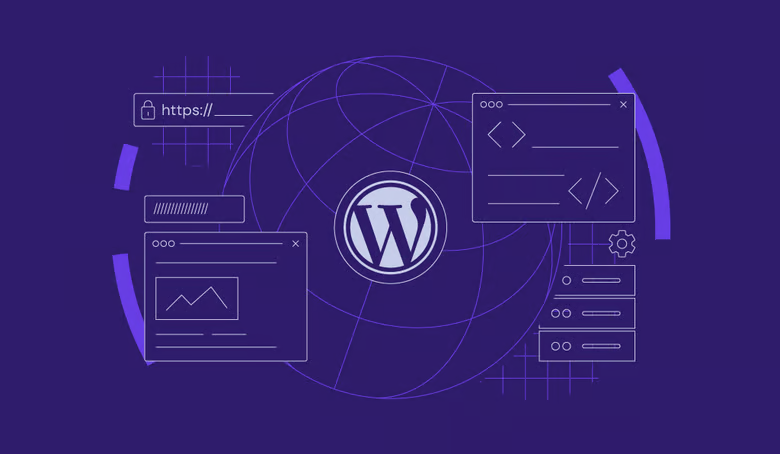
With the increasing demand for website security, theSSL(Secure Sockets Layer) certificates have become a must for every website. Especially for multi-domain websites using WordPress, SSL certificate management becomes especially important. Whether it is to protect user privacy, improve SEO rankings, or to enhance the credibility of your website, properly configuring and managing SSL certificates is essential. In this article, we will discuss WordPress SSL certificate management methods in multi-domain configuration, to help webmasters fully understand and solve the difficulties of SSL configuration in multi-domain environment.
![Image [1]- SSL Certificate Management in WordPress Multi-Domain Configuration](https://www.361sale.com/wp-content/uploads/2025/06/20250626103107236-image.png)
1. What is SSL Certificate?
SSL (Secure Sockets Layer)SSL certificate is a kind of encryption protocol, which protects the transmitted data by establishing an encrypted connection between the user and the server. ssl certificate can ensure that the data exchange between the user and the website can not be stolen or tampered by the third party. ssl certificate has become a sign of trust of the website, when the user visits the site with ssl certificate, the address bar of the browser will show "https" instead of "http", with a green lock symbol indicating that the website is secure. When users visit sites with SSL certificates, the browser address bar will display "https" instead of "http" with a green lock symbol, indicating that the site is secure.
with regards tomultidomainWordPress website, you need to consider the security of each domain name when managing SSL certificates to ensure that the security between different domain names or subdomains will not be affected.
2. SSL Configuration Challenges in Multi-Domain Websites
SSL certificate management is complicated when a website has multiple domains (e.g., a primary domain and multiple subdomains), or when multiple sites are running within a single WordPress site. The following are common SSL configuration challenges:
- Multiple SSL Certificate Management: Each domain name may require a separate SSL certificate, which increases administrative complexity.
- Subdomain SSL Configuration: If there are multiple sub-domains, managing the SSL certificates of each sub-domain may bring extra work.
- Certificate Renewal and Renewal: Each certificate has a validity period and regular renewal and management is a must, especially if multiple certificates are managed simultaneously.
3. How to configure SSL certificates for multiple domain names?
In WordPress multi-domain configuration, common SSL configuration methods include the following:
3.1 Single Domain SSL Certificate
Purchasing a separate SSL certificate for each domain name is the most common practice. Each domain name has a separate certificate for multiple independent sites. For each site, simply configure its own SSL certificate.
![Image [2]-WordPress SSL Certificate Management in Multi-Domain Configuration](https://www.361sale.com/wp-content/uploads/2025/06/20250626103550734-image.png)
vantage::
- Configuration is simple and each domain is managed independently.
- Each domain has a separate certificate that secures each site.
drawbacks::
- As the number of domains increases, the need to manage multiple certificates increases the maintenance effort.
- Certificate renewal and management is more complex, especially when multiple certificates come from different Certificate Authorities (CAs).
3.2 Multi-domain SSL Certificate (SAN SSL)
Multi-Domain SSL Certificate(SAN SSL, or Subject Alternative Name SSL) can provide a single certificate for multiple domains or subdomains. These certificates are available for multiple domains and can be centrally managed.
![Image [3]-WordPress SSL Certificate Management in Multi-Domain Configuration](https://www.361sale.com/wp-content/uploads/2025/06/20250626104258200-image.png)
vantage::
- One certificate protects multiple domains or subdomains, simplifying certificate management.
- Cost savings, SAN SSL is more cost-effective than purchasing separate certificates for each domain name.
drawbacks::
- Once a certificate is invalidated, all domains are affected.
- The configuration requires an exact list of all domains and subdomains to be protected.
3.3 Wildcard SSL Certificates
Wildcard SSL certificate allows to provide protection for all sub-domains under the main domain name. For example*.example.com can protect www.example.com,blog.example.com,shop.example.com etc. for all subdomains. Wildcard certificates are available for multiple subdomains under a single primary domain name.
![Image [4] - SSL Certificate Management Method in WordPress Multi-Domain Configuration](https://www.361sale.com/wp-content/uploads/2025/06/20250626104605977-image.png)
vantage::
- Providing unified certificates for all subdomains simplifies administration.
- Saves money and is more cost-effective than purchasing certificates for each subdomain individually.
drawbacks::
- Only for sub-domain protection, not for multiple different domains.
- If the certificate for the main domain is invalid, the security of all subdomains is compromised.
3.4 Let's Encrypt Free Certificates
Let's Encrypt is a free SSL certificate provider widely used for personal and small business sites. It supports automated certificate issuance and renewal and can provide free SSL certificates for multiple domains or subdomains.
![Image [5]- SSL Certificate Management Method in WordPress Multi-Domain Configuration](https://www.361sale.com/wp-content/uploads/2025/06/20250626104622795-image.png)
vantage::
- Free for webmasters on a budget.
- Automated management that can be easily configured and renewed.
drawbacks::
- Certificates are valid for a short period of time (usually 90 days) and need to be renewed periodically.
- May lack in some advanced features and support compared to other paid certificates.
4. Configuring SSL Certificates in WordPress
because of WordPress When configuring SSL certificates for a website, there are a few settings that need to be made in addition to obtaining the correct certificate:
4.1 Installing an SSL Certificate
- Obtain an SSL certificate through your hosting provider or certificate authority (CA) and install it on the server.
- For multi-domain configurations, ensure that the certificates for each domain or subdomain are installed correctly.
4.2 Configuring WordPress to use HTTPS
- Log in to the WordPress admin backend, go to Settings > General, and change the website address (WordPress address and site address) from
httpmodify tohttpsThe
![Image [6] - SSL Certificate Management Methods in WordPress Multi-Domain Configuration](https://www.361sale.com/wp-content/uploads/2025/06/20250626105503625-image.png)
- Make sure WordPress supports HTTPS request and that all content in the link (e.g., images, stylesheets, scripts, etc.) loads correctly.
4.3 Redirect HTTP to HTTPS
- exist
.htaccessfile to configure theredirectsThe HTTPS function, which automatically redirects all HTTP requests to HTTPS, is not available.
RewriteEngine On RewriteCond %{HTTPS} off RewriteRule ^ https://%{HTTP_HOST}%{REQUEST_URI} [L,R=301]![Image [7]-WordPress SSL Certificate Management in Multi-Domain Configuration](https://www.361sale.com/wp-content/uploads/2025/06/20250626105713578-image.png)
4.4 Optimizing Configuration with the SSL Plug-in
- You can use plugins such as Really Simple SSL to automatically detect and configure SSL settings. This plugin will help you fix any HTTP content that may be present in your website and ensure that all resources are loaded over HTTPS.
![Image [8]- SSL Certificate Management Methods in WordPress Multi-Domain Configuration](https://www.361sale.com/wp-content/uploads/2025/06/20250626105812562-image.png)
5. SSL Certificate Renewal and Management
SSL certificates usually have a validity period, usually 1 or 2 years. In order to avoid website security warnings caused by expired certificates, webmasters need to renew and update SSL certificates in time. For multi-domain websites, webmasters need to pay close attention to the expiration time of each domain name certificate to ensure that the certificate is renewed in time.
6. reach a verdict
exist WordPress In multi-domain configuration, SSL certificate management is a critical step to ensure website security and trust. By choosing the appropriate SSL Certificatetype, webmasters can manage the security of multiple domains more efficiently. During the configuration process, remember to update WordPress settings, make sure HTTPS links are working, and use plugins to simplify configuration and management.multidomain websiteSSL certificate management can be challenging, but proper configuration not only helps improve website security, but also enhances user trust and further boosts your website's SEO ranking.

Link to this article:https://www.361sale.com/en/63318The article is copyrighted and must be reproduced with attribution.















![Emoji[wozuimei]-Photonflux.com | Professional WordPress repair service, worldwide, rapid response](https://www.361sale.com/wp-content/themes/zibll/img/smilies/wozuimei.gif)

![Emoticon[baoquan] - Photon Wave Network | Professional WordPress Repair Services, Worldwide Coverage, Rapid Response](https://www.361sale.com/wp-content/themes/zibll/img/smilies/baoquan.gif)

 简体中文
简体中文  English
  日本語
日本語  Français
  Español


No comments