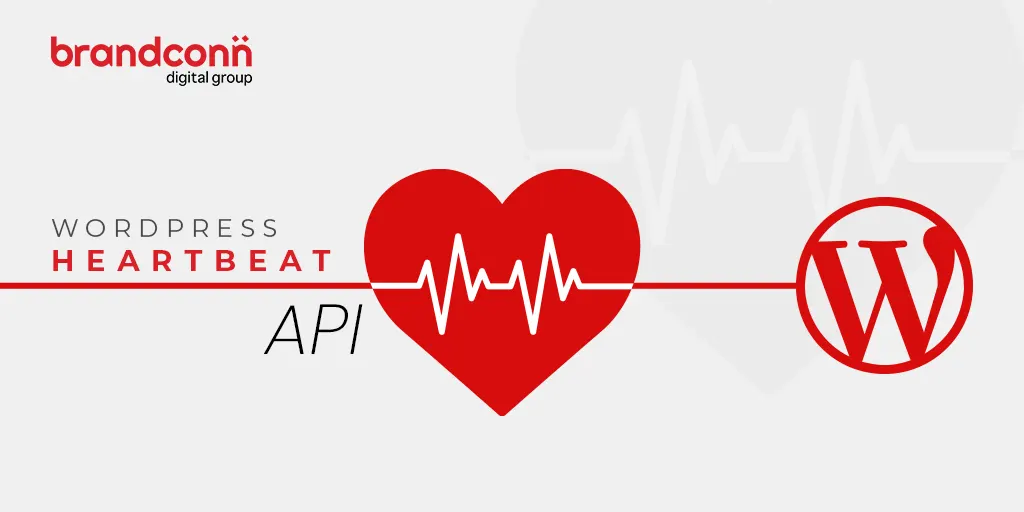
A lot of people ask."WordPress Heartbeat Control How to set it up to make the most sense" to solve a problem:Backend/Editor/Frontend Continuous Trigger admin-ajax.php Polling, leading to high CPUs, lagging in the background, and eating up host resourcesThe Heartbeat API was designed with good intentions, but with shared hosting, low-end servers, and multiple people opening background tabs at the same time, it can easily become "Invisible stressors". The Heartbeat API is passed through the /wp-admin/admin-ajax.php Requests are initiated periodically, and tabs will continue to run even if they are open and not moving, which may cause high loads.
First, let's get clear: what exactly is the Heartbeat API and why does it slow down the site?
1) Heartbeat What to do
Heartbeat API is one of the WordPress built-inBrowser-side Timed Polling MechanismThe first is to allow the back-end or front-end to realize "near real-time" interactions, for example:
Editor autosave (autosave)
Article editorial locking (post locking to avoid multiple overwrites)
Real-time notifications, queue handling, status refresh for certain plugins in the background
Its features are:You keep the page open, it keeps sending requests.The
2) Why it is often a performance bottleneck
Heartbeat is going admin-ajax.phpWhen:
Many tabs open in the background
Multiple editors online at the same time
The site has a lot of plug-ins, and each time AJAX processing is very heavy. And there it is.Massive POST/request pileupThis in turn leads to higher CPU usage and slower backgrounds.
II. The most rational set-up logic: separate control by "area" (key)
A reliable Heartbeat control tool (Heartbeat Controller / Heartbeat Control class plugin) usually allows you tosubregionalSet up three blocks:
Admin Dashboard
Post/Page Editor (Post/Page Editor)
Frontend
This is the core of "rationalization":Don't ban everything across the boardRatherKeep it where it's needed, slow it down or turn it off where it's not neededWP Rocket also makes it clear that disabling it completely may affect Heartbeat-dependent features.
III. 80% site common "most recommended configuration" (not easy to overturn)
Here's a configuration that targets that:Minimize requests while retaining key editor capabilities (autosave/lock)The
Recommended configuration (generic version)
Dashboard::Reduce / Modify until (a time) 120s or directly Disable
Dashboards don't need to be "refreshed every minute in real time" for most sites.
Here slowing down/disabling usually has the greatest benefit and least risk
Post Editor::Modify until (a time) 60s(30-60s for frequent multi-person collaborations; 60-120s for single-person stations)
Outright disabling is not recommended: it affects the autosave/edit lock experience, etc.
For your article/content site, 60 seconds is usually enough to stabilize it
Frontend: most cases directly Disable
Frontend Heartbeat tends not to be a necessity unless you have a need for real-time chat, real-time inventory/bidding, real-time notifications, etc.
A lot of tutorials/hosting advice also favors frontend disabling to reduce the load (except when the frontend requires dynamic functionality)
If you use WP Rocket: its "Reduce activity" will change the frequency fromEvery 1 minutefall toEvery 2 minutes, is a relatively sound compromise option.
IV. Fine-tuning to your site type (the key to being more "reasonable")
Scenario A: Single Content Site / Business Display Site (most common)
Dashboard: Disable or 120s
Editor: 60-120s
Frontend: Disable rationale: You hardly ever need a real-time refresh in the background, and editors are rarely grabbed by more than one person at a time.
Scenario B: Multi-Editor Media Station / Frequent Collaboration
Dashboard: 120s
Editor: 30-60s (30-60 is more recommended, don't stretch it too long)
Frontend: Disable rationale: Edit lock and autosave are more important, don't underfrequency the editor.
Scenario C: WooCommerce mall backend is busy (lots of orders/inventory/backend operations)
Dashboard: 120s (not recommended to disable all, slow down and observe first)
Editor (if blogging less): 60-120s
Frontend: Disable (unless the frontend has a strong real-time component) rationale: There may be a plugin in the background that relies on Heartbeat to do state refreshes, so it's safer to "slow down" rather than "disable" it all together.
Scenario D: Membership/Forum/Online Courses (with real-time notifications/chat at the front desk)
Dashboard: 120s
Editor: 60s
Frontend: do not disable, change to 60-120s rationale: Frontend real-time functionality may rely on Heartbeat, and a full shutdown will result in "notifications not updated/status not refreshed".
V. How to set up with plug-ins (landing steps)
The names of the different plugin interfaces vary slightly, but the logic is basically the same: for each region select the Allow / Disable / ModifyThe
An example of a common Heartbeat control plugin (similar path in VeeroTech's instructions):
Backstage Access:Settings > Heartbeat Control Settings
Select Dashboard / Post Editor / Frontend respectively:
Allow (default)
Disable
Modify
If you're using WP Rocket: in its Heartbeat settings, you can choose Reduce/Disable/Do not limit, and emphasize that "disabling completely may affect functionality".
Sixth, after the change must do the checklist (to avoid "seem to speed up, but actually buried mine")
1) Editor related
New article, stay 2-3 minutes: is it still saved automatically?
Multi-open two browsers to log into the same account to edit the same article: is the locking prompt normal?
Does the editor lag/save fail?
2) Performance validation (you want to see "fewer requests")
Open Browser Developer Tools (Network) Filtering admin-ajax.php maybe heartbeat
Compare before and after the modification: whether the frequency of requests is significantly reduced
Server side to see if CPU/load is back down (especially shared hosting)
VII. The most common misconceptions (where many people fall)
Misconception 1: Direct "site-wide disable"
Disabling all does drop requests, butMay break autosave, edit lock, and some plugin-dependent background refresh functionsTheWP Rocket It also explicitly warns that "complete disabling may affect functionality".
Myth 2: Look only at the frontend speed, ignore the background lagging
Heartbeat tends to "torture" mainly the backend and the editor; you should focus on that:
Dashboard slow down/disable
Editor Conservative Deceleration (Not One Size Fits All)
Myth 3: Expect a normal editing experience when the frequency is set too low (e.g. 300s+)
Too infrequent an editor can make autosave/locking sluggish, especially in collaborative sites.
VIII. Giving you the "final answer": what is the most reasonable default value?
If you ask me, without knowing your site type, to give aThe safest and least stepped onI'd go with the "reasonable defaults":
Dashboard: Disable (or 120s)
Post Editor: 60s
Frontend: Disable
If you're using WP Rocket: Preferences Reduce activity As a first step (risk)



























![Emoji[wozuimei]-Photonflux.com | Professional WordPress repair service, worldwide, rapid response](https://www.361sale.com/wp-content/themes/zibll/img/smilies/wozuimei.gif)

![Emoticon[baoquan] - Photon Wave Network | Professional WordPress Repair Services, Worldwide Coverage, Rapid Response](https://www.361sale.com/wp-content/themes/zibll/img/smilies/baoquan.gif)


 简体中文
简体中文  English
  日本語
日本語  Français
  Español


No comments