




In WordPress website performance optimization, image optimization often offers the highest return on investment. Converting images to WebP format significantly improves loading speeds. Core Web Vitals The basic approach. However, in practice, many webmasters find that even after implementing WebP, their PageSpeed scores remain largely unchanged. The reason often lies in...It remains unclear which metric WebP actually impacts and whether it was implemented correctly.The
In this article, we will look at the Core Web Vitals Based on the calculation logic, this section focuses on explaining the actual impact of converting images to WebP on various metrics and provides reproducible, correct usage methods.
![Image[1] - Why are Core Web Vitals still failing even after converting all images to WebP? The problem lies in this step.](https://www.361sale.com/wp-content/uploads/2025/12/20251220155247168-image.png)
1. What are Core Web Vitals? Why do images often become bottlenecks?
1.1 The Three Metrics of Core Web Vitals
| norm | Full name | Measuring Content | Ideal threshold | Relationship with the image |
|---|---|---|---|---|
| LCP | Largest Contentful Paint | Largest Contentful Paint | ≤ 2.5 seconds | It's usually just one big image. |
| INP | Interaction to Next Paint | User interaction response delay | ≤ 200 ms | Image decoding may indirectly affect |
| CLS | Cumulative Layout Shift | Page Layout Stability | ≤ 0.1 | Images without specified dimensions are a common cause. |
1.1.1 LCP (Largest Contentful Paint)
- Meaning: On the pageTime taken for the largest visible content element to complete rendering
- Ideal value: ≤ 2.5 seconds
- On WordPress pages, the LCP elementIt is very common for images, for example:
- Homepage Banner
- Article header image
- Product Main Image
![Image[2] - Why are Core Web Vitals still failing even after converting all images to WebP? The problem lies in this step.](https://www.361sale.com/wp-content/uploads/2025/12/20251220155301341-image.png)
1.1.2 INP (Interaction to Next Paint)
- Meaning:Delay between user interaction (clicks, input) and the page's visual response
- Ideal value: ≤ 200 ms
- primarily influenced by JavaScript Execution and Main Thread Occupancy affect (usually adversely)
![Image[3] - Why are Core Web Vitals still failing even after converting all images to WebP? The problem lies in this step.](https://www.361sale.com/wp-content/uploads/2025/12/20251220155623540-image.png)
1.1.3 CLS (Cumulative Layout Shift)
- Meaning:The degree to which layouts shift unexpectedly during page loading
- Ideal value: ≤ 0.1
- Common questions related to images include:
- No width or height has been set.
- Expand the layout after images load
![Image [4] - Why are Core Web Vitals still failing even after converting all images to WebP? The problem lies in this step.](https://www.361sale.com/wp-content/uploads/2025/12/20251220160509328-image.png)
1.2 Why Do Images Have Such a Significant Impact on Core Web Vitals?
On most WordPress sites:
- Image resources typically account for a significant portion of a page's size. 50%–80%
- LCP elements are often a single image.
- Both image downloading and decoding consume network and main thread resources.
Therefore, whenever images load slowly or are excessively large,LCP will be the first to bear the brunt, while INP may also be indirectly affected.The
| Image issue | direct impact | Indirect impact |
|---|---|---|
| Image file size is too large | LCP slowing down | First interactive delay |
| First-screen image lazy load | LCP Delay | PageSpeed score has decreased |
| Image dimensions not set | CLS exceeded the standard | User experience has deteriorated |
| Display using the original image | Increased network and decoding burden | Mobile performance degradation |
II. What is WebP? What problem does it actually solve?
2.1 Core Advantages of WebP
WebP is a modern image format that supports:
- Lossy and lossless compression
- Alpha Transparency Channel
- More efficient coding methods
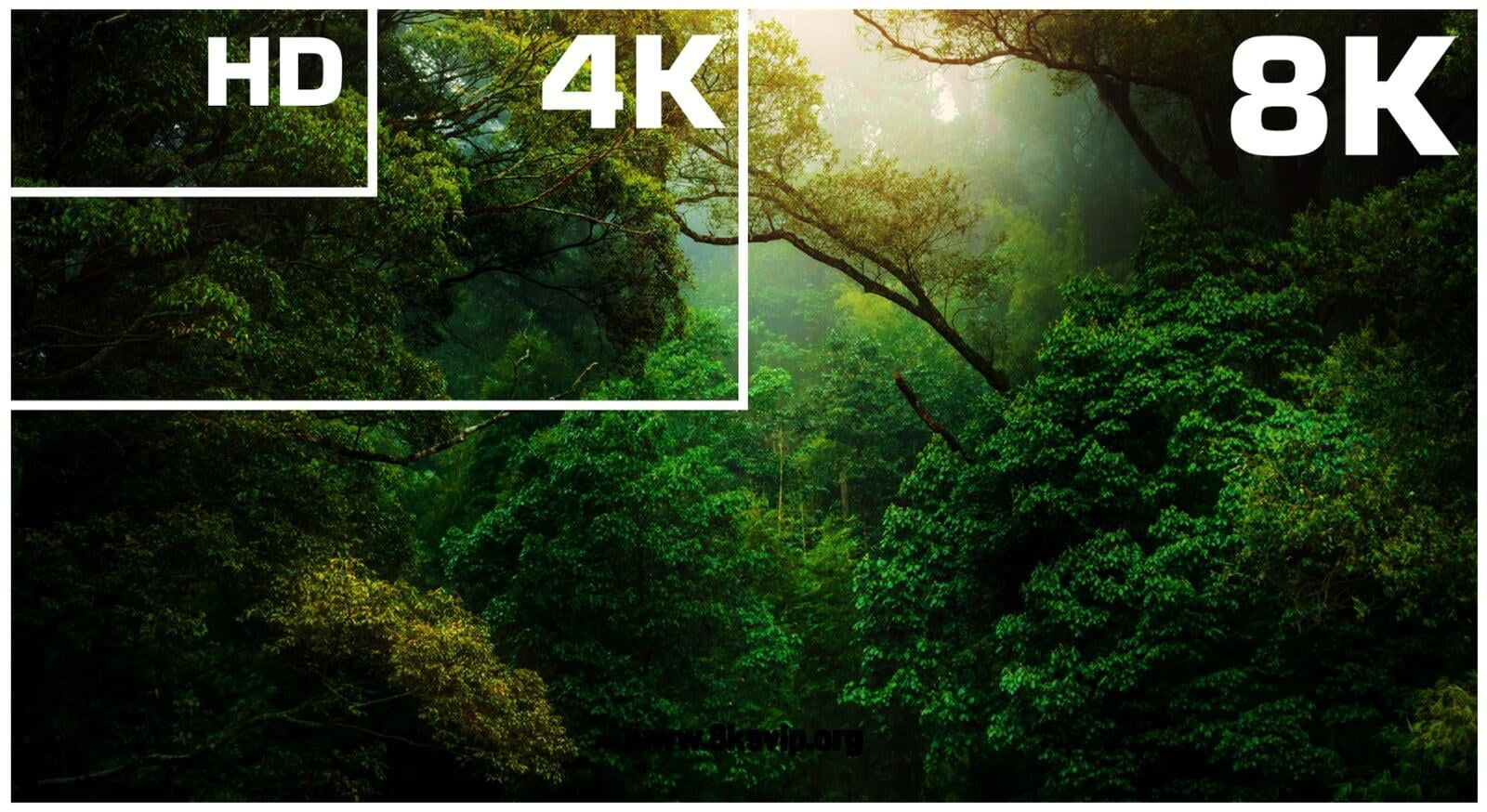
| characterization | JPG | PNG | WebP |
|---|---|---|---|
| compression loss (in digital technology) | be in favor of | unsupported | be in favor of |
| compression lossless | unsupported | be in favor of | be in favor of |
| Transparency Channel | unsupported | be in favor of | be in favor of |
| File size | moderate | larger | minimal |
| Browser Support | Excellent | Excellent | All modern browsers support |
At the same visual quality:
- WebP files are typically smaller than JPG files. Approximately 25%–35%
- Smaller than PNG 50% or more
![Image [5] - Why are Core Web Vitals still failing even after converting all images to WebP? The problem lies in this step.](https://www.361sale.com/wp-content/uploads/2025/12/20251220155352645-image.png)
2.2 The Real Impact of WebP on Web Performance
The value of WebP lies not in "format updates," but in:
- Image file size reduction
- Download time reduced
- Faster image decoding
These changes hit the most sensitive aspects of Core Web Vitals.
III. Actual Impact of Converting Images to WebP on Core Web Vitals
3.1 Impact on LCP (Most Direct and Obvious)
When the page LCP When an element is an image (a common scenario), converting that image from JPG/PNG to WebP typically results in the following changes:
- Reduced download time
- Images decode faster
- The largest content element finishes rendering earlier.
existThe first screen displays a large image under normal network conditions.Under these conditions, LCP can often be significantly improved.
The specific improvement varies by site and cannot be guaranteed as a fixed value, but in practiceLCP reduction is a reproducible result.The
3.2 Impact on INP (Indirect Only)
It is important to clarify that:WebP does not directly improve the INP metric.
INP is primarily determined by JavaScript execution, event handling, and main thread load.
However, in the following scenarios, WebP can serve asauxiliary function::
- The page contains multiple large images.
- Image decoding consumes a significant amount of time on the main thread.
- User interaction occurs before the page has fully finished loading.
WebP reduces decoding time,Reduce the probability of the main thread being blocked by imagesThis reduces the risk of INP deterioration, but it is not the primary means of INP optimization.

3.3 Impact on CLS (depending on whether it is configured correctly)
Special note:WebP itself cannot solve the CLS issue.
Whether CLS is qualified hinges on:
- Should space be reserved for images?
- Should width/height or CSS be set?
aspect-ratio
The sole purpose of WebP is:
- Reduce the time window during which images are not fully loaded
- Reduce the duration of layout changes
If the image does not have reserved space,Whether or not WebP is used, CLS may exceed the threshold.The
IV. Reproducible Method for Correctly Using WebP in WordPress
4.1 Plugin Solution (Most Reliable)
In WordPress, using established plugins to convert and output WebP is currently the most widely adopted solution.
Regardless of which plugin you use, you must verify the following three points:
- Can automatically generate WebP files
- The frontend actually loads WebP files (not just generates them).
- Provide fallback to original format for browsers that do not support WebP.
We recommend verifying this by navigating to Browser DevTools → Network → Img.
4.2 Special Considerations for LCP Images
- Do not enable Lazy Load for LCP images.
![Image [7] - Why are Core Web Vitals still failing even after converting all images to WebP? The problem lies in this step.](https://www.361sale.com/wp-content/uploads/2025/12/20251220155828649-image.png)
The green website appears more complete than the red website at 0.2 seconds.
- Do not preload images that are not on the first screen.
- preload is only applicable toExplicit, unique LCP image
Incorrect use of preload or lazy may instead lead to LCP Deteriorate.
![Image [8] - Why are Core Web Vitals still failing even after converting all images to WebP? The problem lies in this step.](https://www.361sale.com/wp-content/uploads/2025/12/20251220155726193-image.png)
V. Best Practices for WebP
WebP The effect can only be fully realized under the following conditions:
- Use images of the correct size (do not use oversized original images).
- Clearly distinguish between LCP images and non-above-the-fold images
- Set image dimensions correctly to prevent CLS
When is it absolutely necessary to use WebP?
If your website meets any of the following conditions:
- LCP exceeds 2.5 seconds
- The page features a prominent large image on the first screen.
- Traffic primarily comes from search engines.
- Hope for long-term improvement SEO and user experience
So.Converting images to WebP should be considered a fundamental optimization task that must be completed.

Link to this article:https://www.361sale.com/en/83685The article is copyrighted and must be reproduced with attribution.














![Emoji[wozuimei]-Photonflux.com | Professional WordPress repair service, worldwide, rapid response](https://www.361sale.com/wp-content/themes/zibll/img/smilies/wozuimei.gif)

![Emoticon[baoquan] - Photon Wave Network | Professional WordPress Repair Services, Worldwide Coverage, Rapid Response](https://www.361sale.com/wp-content/themes/zibll/img/smilies/baoquan.gif)


 简体中文
简体中文  English
  日本語
日本語  Français
  Español


No comments