





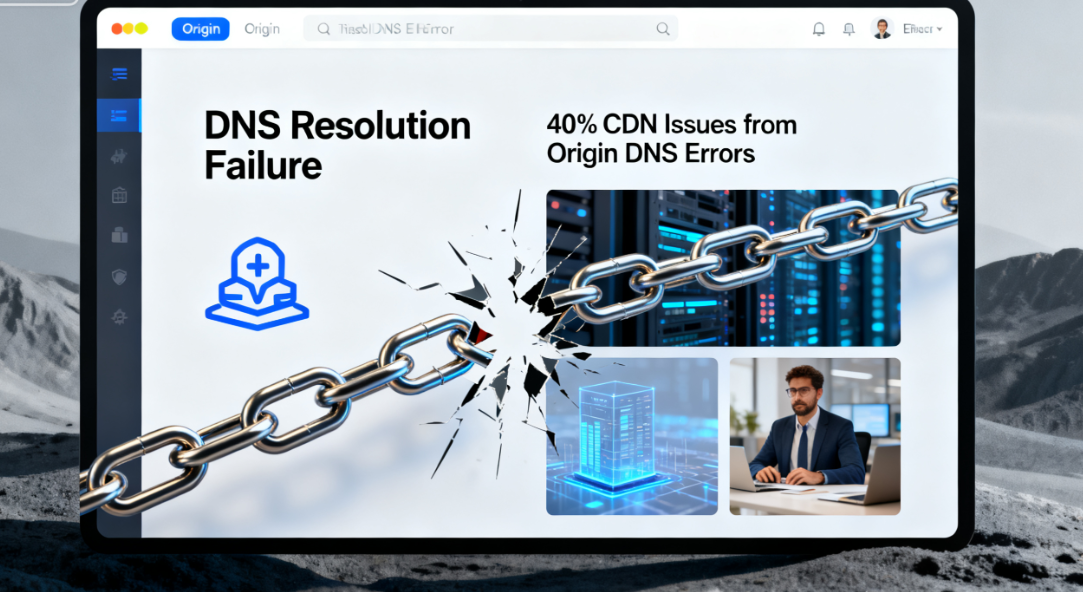
When a browser displays an Origin DNS error, it signifies a critical breakdown in the intricate addressing journey that begins with the user's click and aims to connect to the website's server. Data indicates that approximately 40% of CDN-related website failures stem from DNS resolution anomalies during the backhaul phase. Understanding the complete route of this journey and its failure points is fundamental to diagnosing and preventing issues.This article dissects the entire DNS resolution chain to pinpoint the exact origin of Origin errors within it.
Chapter 1: Anatomy of a Complete DNS Query
DNS resolutionIt is not a single query, but rather a hierarchical, multi-party collaborative process. Its core objective is to convert human-readable domain names into machine-readable IP addresses.
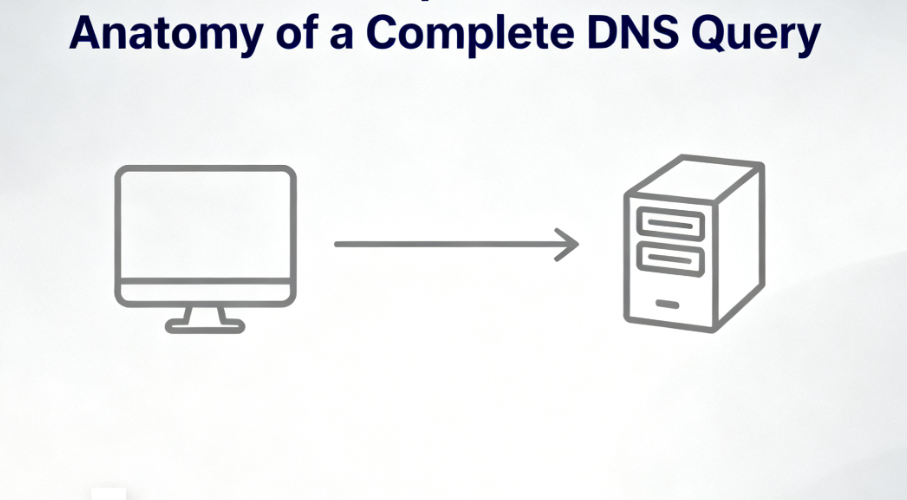
1.1 Initiating Queries: The Role of Recursive Queries
Users enter in the browser address bar www.example.com Press Enter. The browser first checks its own cache for an IP record for that domain. If none exists, the operating system sends the query to the pre-setRecursive ParserRecursive resolvers are typically operated by users' internet service providers or public DNS services. Their task is to complete the entire query process on behalf of the user until the final answer is obtained.
1.2 Recursive Authoritative Query: Root, Top-Level Domains, and Authoritative Domain Name Servers
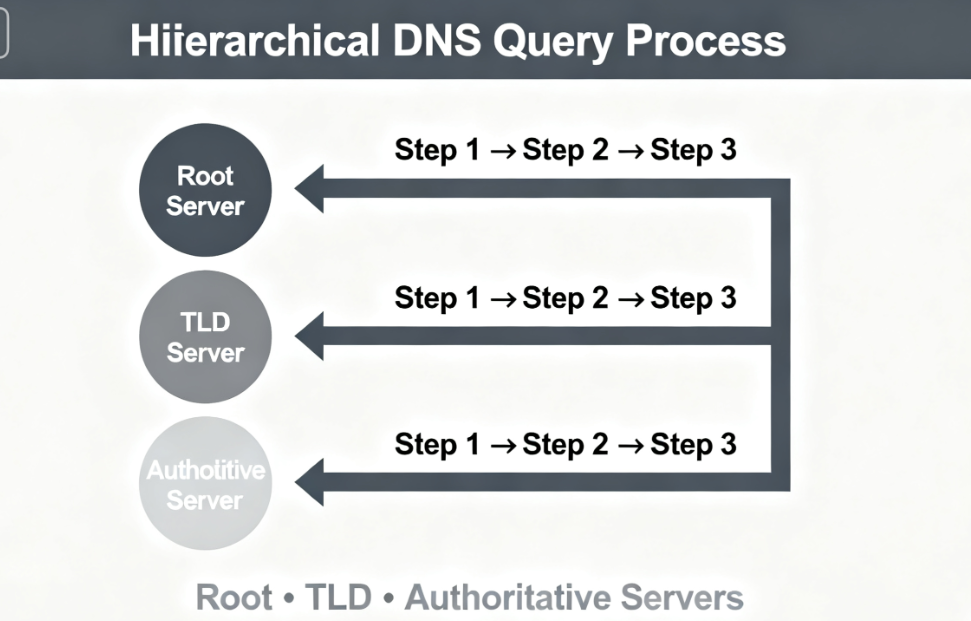
The recursive resolver itself does not store records for all domain names; it must query down the DNS hierarchy starting from the top.
- Step 1: ConsultationRoot Domain Name ServerThere are only 13 root server sets worldwide. They do not store specific domain name information but direct resolvers to servers responsible for corresponding top-level domains. For example, for
.comThe root server will return the responsiblecom.The top-level domain name server address for the domain. - Step 2: Query the top-level domain name serverThe parser then proceeds to
com.The TLD server issues the query. The TLD server manages the authoritative server information for all second-level domains under its jurisdiction and returns the responsibleexample.com(used form a nominal expression)Authoritative DNS Serverthe address. - Step 3: Consult the authoritative DNS serverThe parser ultimately directs to
example.comThe authoritative server initiates the query. This server holds the official version of all DNS records for the domain and returns to the recursive resolverwww.example.comThe corresponding final IP address.
1.3 Delivery and Caching of Results
The recursive resolver returns the obtained IP address to the user's operating system, which then passes it to the browser. The browser immediately initiates an HTTP connection to that IP address to load the website. Simultaneously, this query result is cached for a period of time both on the recursive resolver and locally on the user's device to accelerate subsequent repeated visits.
Chapter 2: Analytical Extensions Following the Introduction of the Origin Concept
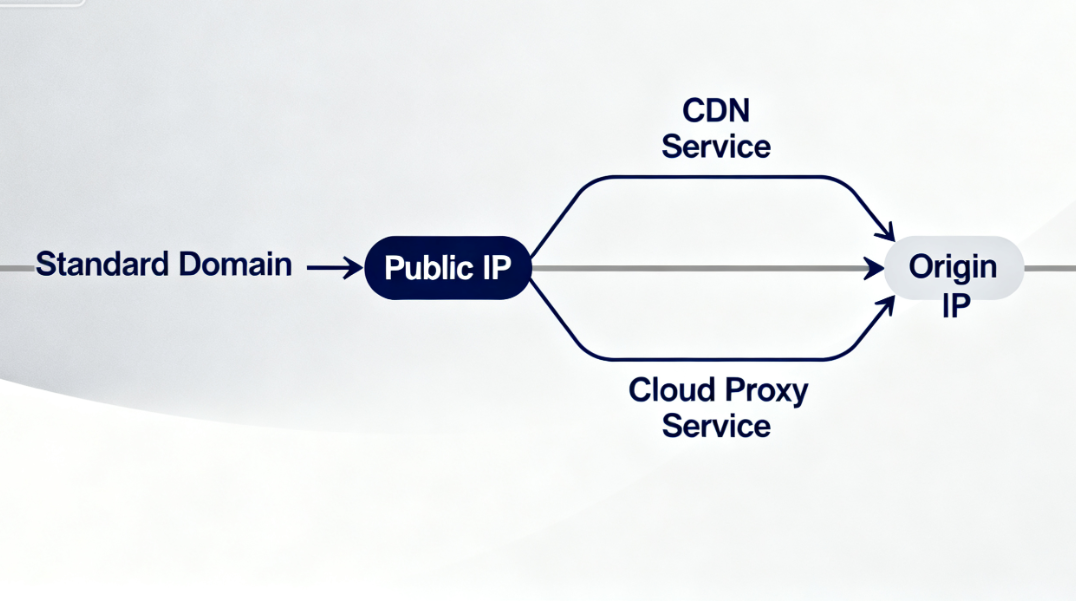
Standard domain name resolution concludes upon reaching the website's public IP address. However, in modern network architectures—particularly when utilizing CDNs or cloud proxy services—the resolution chain undergoes a critical extension, which is precisely where the concept of "Origin" comes into prominence.
2.1 Separation of Public IP and Origin Server IP
When a website uses a CDN, the final IP address (public IP) resolved by domain name resolution points to the CDN network's edge node, not the server storing the website's original data. The CDN edge node acts as a reverse proxy and caching layer.
2.2 Critical Second-Stage Analysis: CDN Origin Fetching
When CDN nodes need to retrieve uncached or dynamic content, they must contact the website'sOrigin serverThis connection is established based on the "origin server" information configured in the CDN settings. The "origin server" is typically defined as a hostname or IP address.
- Scenario OneSource server configuration as hostname (e.g.,
origin-server.example.comAt this point, the CDN node must initiate a request for this hostname.A brand-new, independent DNS resolutionto obtain the actual IP address of the origin server. This process is known as "Back to Source Analysis"The - Scenario TwoThe origin server is configured directly with an IP address. In this scenario, the CDN does not require DNS resolution and can connect directly.
Chapter 3: Precise Mapping of Chain Breakpoints and Origin DNS Errors
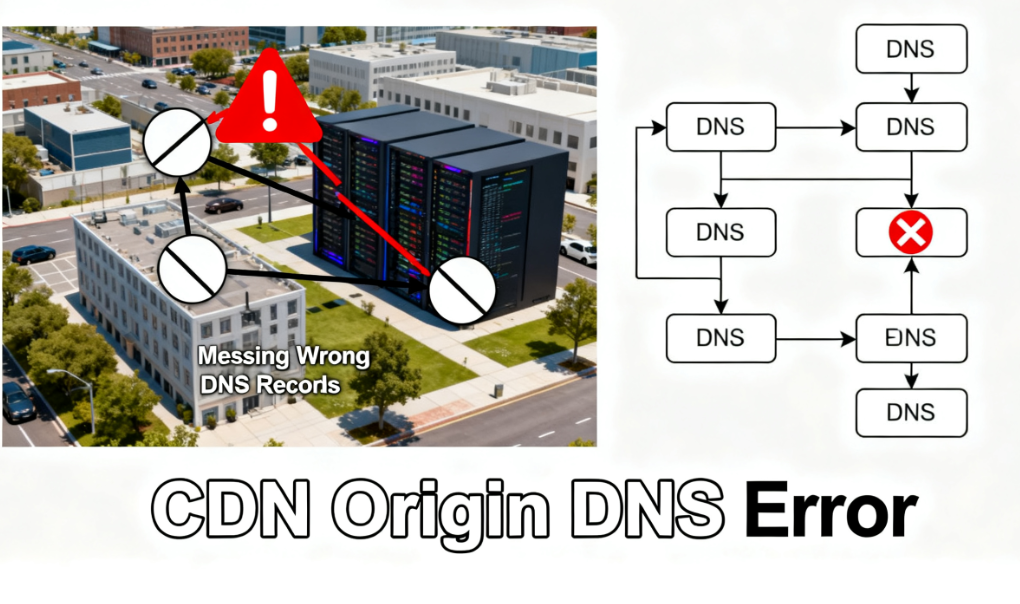
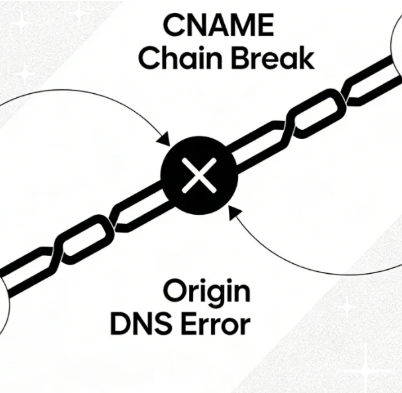
The Origin DNS Error does not occur during the initial resolution stage from the user to the CDN, but rather occurs duringDuring the second-stage resolution process of CDN (or equivalent proxy) origin fetchingThe following component failures will directly trigger this error.
3.1 Fault Point A: Missing or incorrect DNS records for the origin server hostname
This is the most fundamental root cause of the failure. When the CDN attempts to resolve the origin server hostname specified in the configuration, the DNS record for that hostname may:
- Does not exist: The corresponding A record has not been set on the authoritative server.CNAME recordThe
- Record value errorThe recorded IP address is not the currently valid origin server address.
- Record Type ConflictOther conflicting DNS record types exist.
At this point, the DNS query for the origin server's hostname returns NXDOMAIN(Domain name does not exist) or incorrect IP address prevents the CDN from locating the origin server, resulting in an Origin DNS Error being reported to the end user.
3.2 Failure Point B: DNS Reachability Issue with the Origin Server
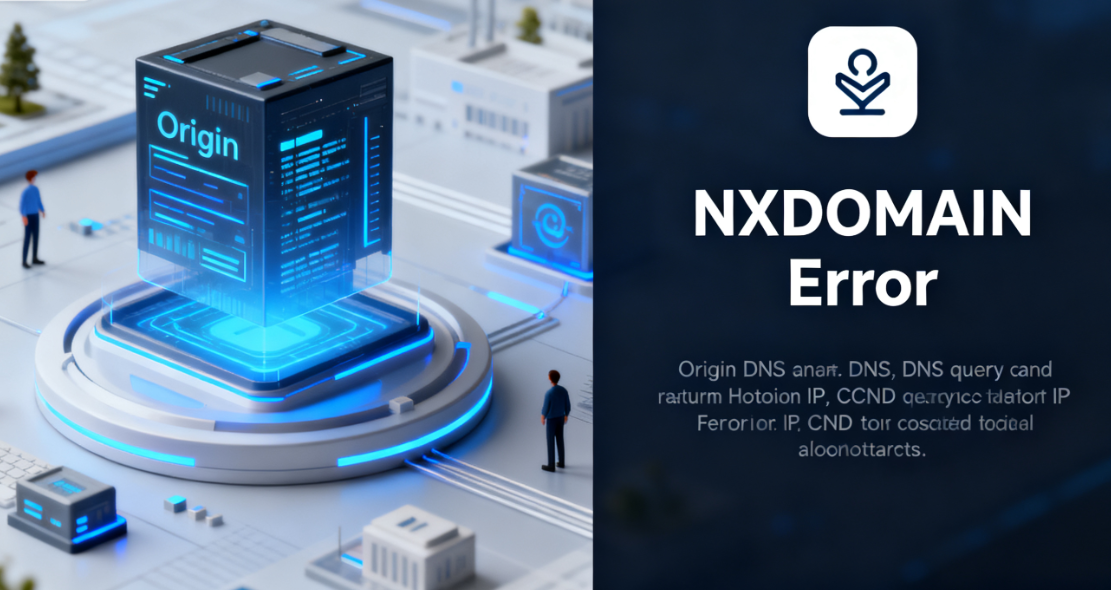
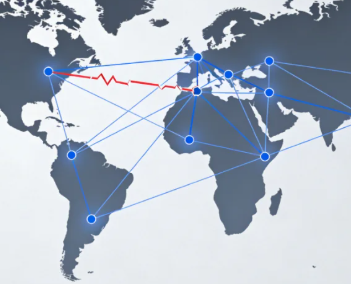
Even if the DNS records for the origin server's hostname are correct, the authoritative DNS server responsible for that hostname may itself experience failures, become unresponsive to queries, or encounter network routing issues. This prevents the CDN's recursive resolver from obtaining a response. Such unavailability at the DNS server level also results in resolution failure.
3.3 Failure Point C: DNS Propagation Delays and Cache Poisoning
After changing the origin server's IP address or related DNS records, it takes time for the global DNS system to propagate the updates. CDN nodes may fail to connect due to cached outdated origin server IP addresses. While this is typically temporary, it can cause intermittent errors during the propagation period.
Chapter 4: Principle-Based Fault Diagnosis Reasoning
Once you understand the chain described above, the diagnostic approach becomes clear.
4.1 Core Verification: Independent Testing of Source Hostname Resolution
utilization dig maybe nslookup Issue a DNS query directly for the origin server hostname specified in the CDN configuration. If the query fails, returns an incorrect IP address, or finds no record, the issue is pinpointed to failure point A.

4.2 Link Analysis: Tracing and Parsing Paths
utilization dig +trace The command can reproduce the complete resolution path for the source hostname. Observe at which level the query fails—whether at the root server, TLD server, or if there is no response at the authoritative server stage? This helps determine if the issue falls under the scope of failure point B.
4.3 Configuration Audit: Verify Consistency Between CDN and DNS Records
Systematically compare the origin server address settings in the CDN control panel with the actual record values corresponding to that address in the domain name DNS management panel. Ensure both are perfectly matched and that the record types are correct.
summarize
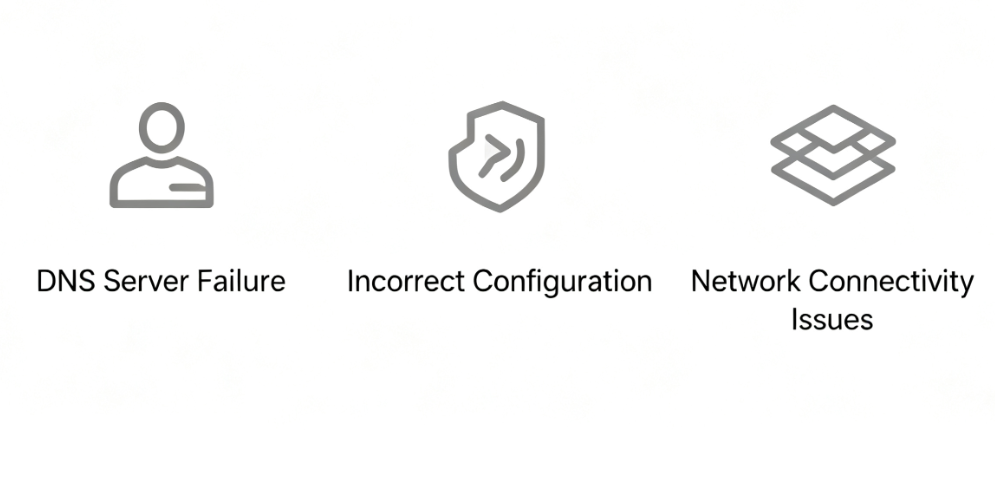
The root cause of the Origin DNS Error lies deeply embedded within the two-stage model of DNS resolution. The first-stage resolution directs users to the CDN entry point, while the critical failure point occurs during the second stage—specifically, when the CDN performs an independent DNS query for the origin server's hostname during backend retrieval, and this query fails.This failure may stem from errors in the origin server's hostname record itself, the malfunction of its authoritative DNS servers, or the lag effect caused by caching.Mastering this hierarchical analysis model transforms ambiguous error messages into precise coordinates, guiding troubleshooting directly to the DNS configuration of the source hostname. This achieves a fundamental leap from following steps to understanding the underlying logic.

Link to this article:https://www.361sale.com/en/81899The article is copyrighted and must be reproduced with attribution.












![Emoji[wozuimei]-Photonflux.com | Professional WordPress repair service, worldwide, rapid response](https://www.361sale.com/wp-content/themes/zibll/img/smilies/wozuimei.gif)

![Emoticon[baoquan] - Photon Wave Network | Professional WordPress Repair Services, Worldwide Coverage, Rapid Response](https://www.361sale.com/wp-content/themes/zibll/img/smilies/baoquan.gif)


 简体中文
简体中文  English
  日本語
日本語  Français
  Español


No comments