




In the content planning and search engine optimization of a new website, long-tail keywords often bring real and effective early traffic than big words. Long-tail keywords have low competition, clear search intent, and specific user needs, making it easier toGetting new sites ranked and exposedThe main purpose of this article is to explain how to use long-tail keywords in a systematic way. This article will be around the long-tail keywords to start the system description, so that webmasters can be more accurate in the actual operation of the content strategy.

First, why long-tail keywords become the first choice for new websites?
New websites usually lack history, have a small number of outbound links and weak brand awareness, making it difficult for them to compete with larger websites for big and popular terms in a short period of time. According to official Ahrefs research, the vast majority of web pages withNatural traffic comes from a large number of low search volume but highly accurate long-tail terms. Since long-tail keywords allow new sites to bypass high competition zones, they are more in line with user-specific scenarios and can more quickly establish a content structure that is relevant to the needs of the user, which improves the overall visibility of the site.
Second, the core difference between long-tail keywords and big words
In order to more visually compare the two, the following table summarizes six key differences so that newcomers can accurately determine the direction of their content strategy.
| comparison dimension | big words | long-tail keywords |
|---|---|---|
| Search Intent | Ambiguity, inconsistency of user purpose | concrete and unambiguous |
| competition intensity | Extremely high, requires a high weighted website | Low to medium, new sites can participate |
| Content requirements | Need for a large content system | It is sufficient to focus on answering specific questions |
| ranking cycle | Long and unpredictable | Relatively short, easier to generate rankings |
| Click-to-conversion rate | relatively low | Usually higher, with clear intent |
| Number of topics that can be covered | constraints | Very wide and scalable |
This structural difference suggests that new sites that consistently use long-tail keywords to build their initial content are more likely to form effective search portals and gradually build site authority.
Third, from the point of view of the user's intention to analyze: why is it easier to convert long-tail keywords?
The core reason why long-tail keywords are easier to convert is that user needs are more specific and user goals are clearer. InSearch Intent ClassificationIn this case, keywords with high clarity usually have a stronger match and a better chance of ranking. Take "cell phone" as an example, the user intent is broad and unclear; however, if it is "recommended camera phone for students' budget", the intent already includes the target group, budget awareness and functional needs, so it is more suitable for new sites to produce content.
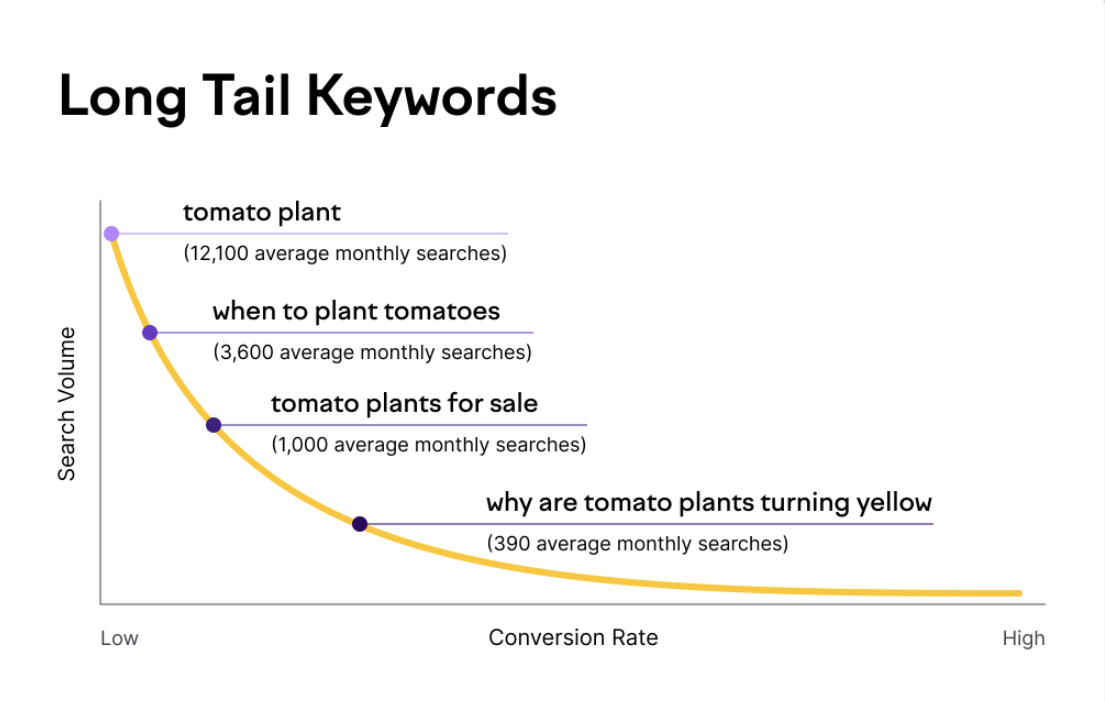
Users typically enter content with a scenario-based description before making a purchase decision, and this is where long-tail keywords come in. Highly scenario-driven terms often represent users in the decision-making stage, making the content more likely to lead to effective conversion actions such as clicking inquire, adding to cart or reading more related articles.
Fourth, why the authority strongly recommended that new stations prioritize long-tail keywords?
Several authoritative industry studies have pointed out that long-tail keywords have significant advantages for new websites and areA more cost-effective path to optimization::
- Broader sources of natural traffic: An analysis of Ahrefs shows that more than 90% pages rely on theLong-tail terms bring in most of the natural trafficThe
- Low competition means faster ranking feedback: New sites can rank for long-tail terms at a much lower cost when they have no outbound links and weight to back them up.
- Clear user intent for better content fulfillment: Google's official documentation shows thatSearch engine ranking The core is "to meet the user's intent", and long-tail keywords happen to be the most explicit.
- Easier to build content clusters and increase overall subject matter authority: Long-tail terms are plentiful and scalable, making them ideal for use as a base unit for content clusters.
Fifth, long-tail keywords how to help the new site to establish the subject authority?
Building Topical Authority usually requires a lot of content centered around a particular topic, and the diversity of long-tail keywords allows new sites to cut through multiple specific scenarios to the same main topic. The following table shows how it is constructed:
| main theme | Examples of long-tail keywords | Extendable article direction |
|---|---|---|
| running shoes | Recommended Running Shoes for Flat Feet | Foot Analysis, Running Shoe Selection Guide |
| running shoes | Summer Breathable Running Shoes Suggestions | Material Comparison, Seasonal Selection |
| running shoes | How to choose running shoes for newbies | Getting Started Guide, Misuse |
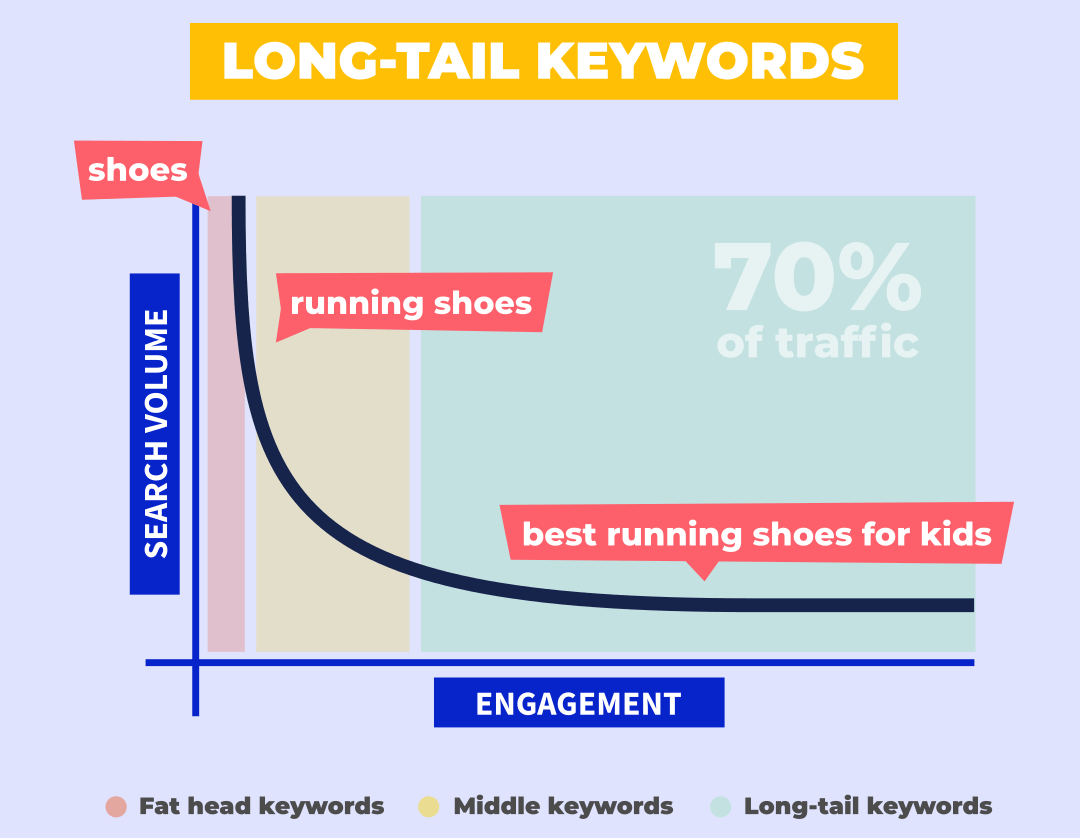
The highly segmented nature of long-tail keywords allows a site to quickly accumulate relevant pages early on, dramatically improving search engine understanding of the topic and thus increasing the chances of ranking for the topic as a whole. This structure is crucial for every new website looking to build depth of branded content.
Sixth, why are long-tail keywords more suitable as a starting point for content on a new site?
Due to the reality that new websites have limited resources, insufficient weight, and no historical ranking basis, long-tail keywords provide a low-threshold, high-return starting path. The following points show its actual value:
- Can bring in accurate traffic faster
Long-tail keywords tend to represent users with a clearer search purpose due to their specific needs, so the content matches better and is more likely to promote conversions. - Easy access to ranking feedback facilitates rapid iteration
New sites can use this feedback to adjust their content structure and graduallyPerfecting SEO StrategiesThe - A continuously scalable content system can be built
The number of long-tail words is huge, and new sites can continue to produce topics that are closely related to user needs, creating a content advantage at scale. - Reduce content production costs
Long-tail keyword content is usually more focused and less difficult and costly to write than the large content needed to cover big words, making it more suitable for novice teams to move forward.
Seven, conclusion: long-tail keywords is a new station efficient growth of key strategies
In summary, it is clear that long-tail keywords are better suited to new sites than big words because they allow new sites to enter the search ecosystem with lower competitive pressure, clearer intent matches, faster ranking cycles, and greater scalability. It helps sites get early traffic as well as being the foundation for building subject matter authority. Prioritizing long-tail keywords is a proven and highly valuable strategy for any new site looking to achieve steady growth in search.

Link to this article:https://www.361sale.com/en/82702The article is copyrighted and must be reproduced with attribution.




















![Emoji[wozuimei]-Photonflux.com | Professional WordPress repair service, worldwide, rapid response](https://www.361sale.com/wp-content/themes/zibll/img/smilies/wozuimei.gif)

![Emoticon[baoquan] - Photon Wave Network | Professional WordPress Repair Services, Worldwide Coverage, Rapid Response](https://www.361sale.com/wp-content/themes/zibll/img/smilies/baoquan.gif)


 简体中文
简体中文  English
  日本語
日本語  Français
  Español


No comments