




Many e-commerce stations do SEO, the product page is clearly written in a complete, but the conversion word is still not up. The common reason is that the site links to the "weight" and "intent" dispersed. This article centers around the product pageinternal chain strategyThe story of how category pages, collection pages and product pages link to each other, and then use a stable set of link paths to string them into a shopping guide line, so that users go smoothly, the search engine is also easier to understand the relationship between the page, so that furtherImprove Ranking for Converting KeywordsThe

1. product page internal linking strategy to solve what problem in the end
1.1 In-site pages in the "grab the same word", the ranking will be more difficult to stabilize
This will be the case with many e-commerce stations:
- Category pages want to rank "Men's Running Shoes"
- Collection page wants to rank "Lightweight running shoes for men"
- The product page again has "Men's Lightweight Running Shoes XX" in the title.
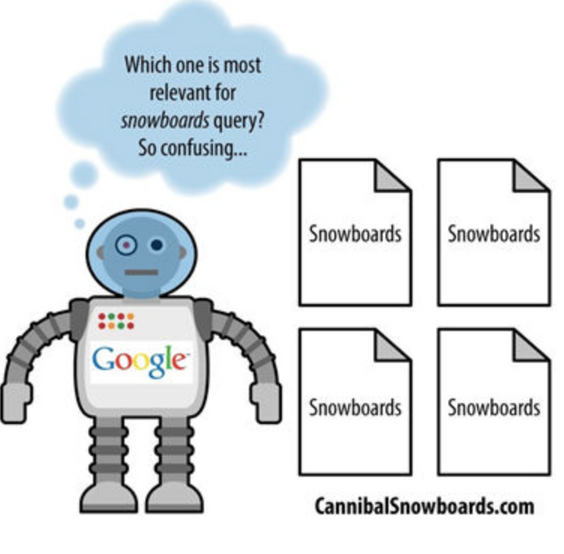
When three pages are emphasizing the same set of words, the search engine is difficult to determine "who should be the most row of the entrance page". If there is no clear hierarchical link between the pages, the result is often not together, or up and very unstable.
1.2 In-site linksThe task is to make the division of labor on the "entry page" clear.
It's pretty clear what the product page inbound linking strategy is going to do:
- Return the word "broad intent" to the category/gathering page
- Concentrate "strong purchase intent" words on product pages
- Let the links tell the search engines: which page is the upper level topic and which page is the specific product
Google has emphasized the importance of "link structure" and "descriptive anchor text".The essence is to make the site structure easier to understand. Internal links can help to create connections across pages, while anchor text should clearly state the content of the target page.
2. First of all, the three types of page division of labor set down: classification page, collection page, product pages
The following table can be used as a station division of labor "unified voice", the team to write titles, write descriptions, add links will not be easy to deviate.
| Page Type | Keywords better suited to take on | Main tasks of the page | Must link to where | Anchor Text Writingtypical example |
|---|---|---|---|---|
| category page(Category) | Category terms, demand terms (e.g. "men's running shoes") | Make thematic entrances to cover the needs of the crowd and filtering logic | Points to collection page, representative product page | "Men's Running Shoes Hot Sellers" "Lightweight Running Shoe Collection" |
| Collection page (Collection/thematic/screening landing) | Words in scenarios, attribute words (e.g. "lightweight running shoes for men") | Aggregate the same intent to help users narrow down their choices | Category page at the top, product page at the bottom | "Lightweight Running Shoe Recommendations" "Commuter Friendly Running Shoes" |
| Product | Model words, strong purchase intent words (e.g. "XX size 42 black") | Converting Undertakings and Resolving Pre-Purchase Questions | Linking back to collection/category pages, interlinking to the same series of products | "Return to Lightweight Running Shoe Collection" "Different colorways in the same collection" |
3. The three main internal links of the "most converting words".
3.1 Link A: Category Page → Collection Page → Product Page
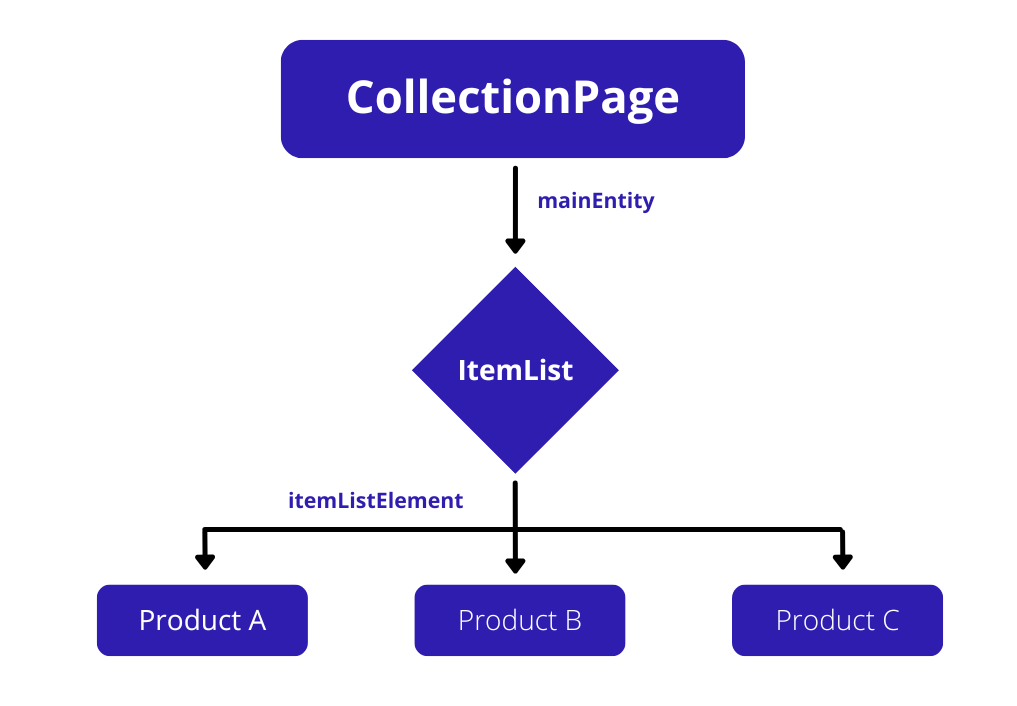
This link is suitable for most e-commerce sites because it best fits the user's decision path. Users usually enter from the broad categories first, then narrow down with attributes, and finally look at specific styles. The product page inlink strategy does two things in this link:
- Categorized pages make the "logic of choice" clear and place the most important collection pages in a prominent position.
- The collection page organizes the "filtered best answers" and links to the product pages as a clear comparison portal.
3.2 Link B: product page → return to collection page → re-divert to similar products
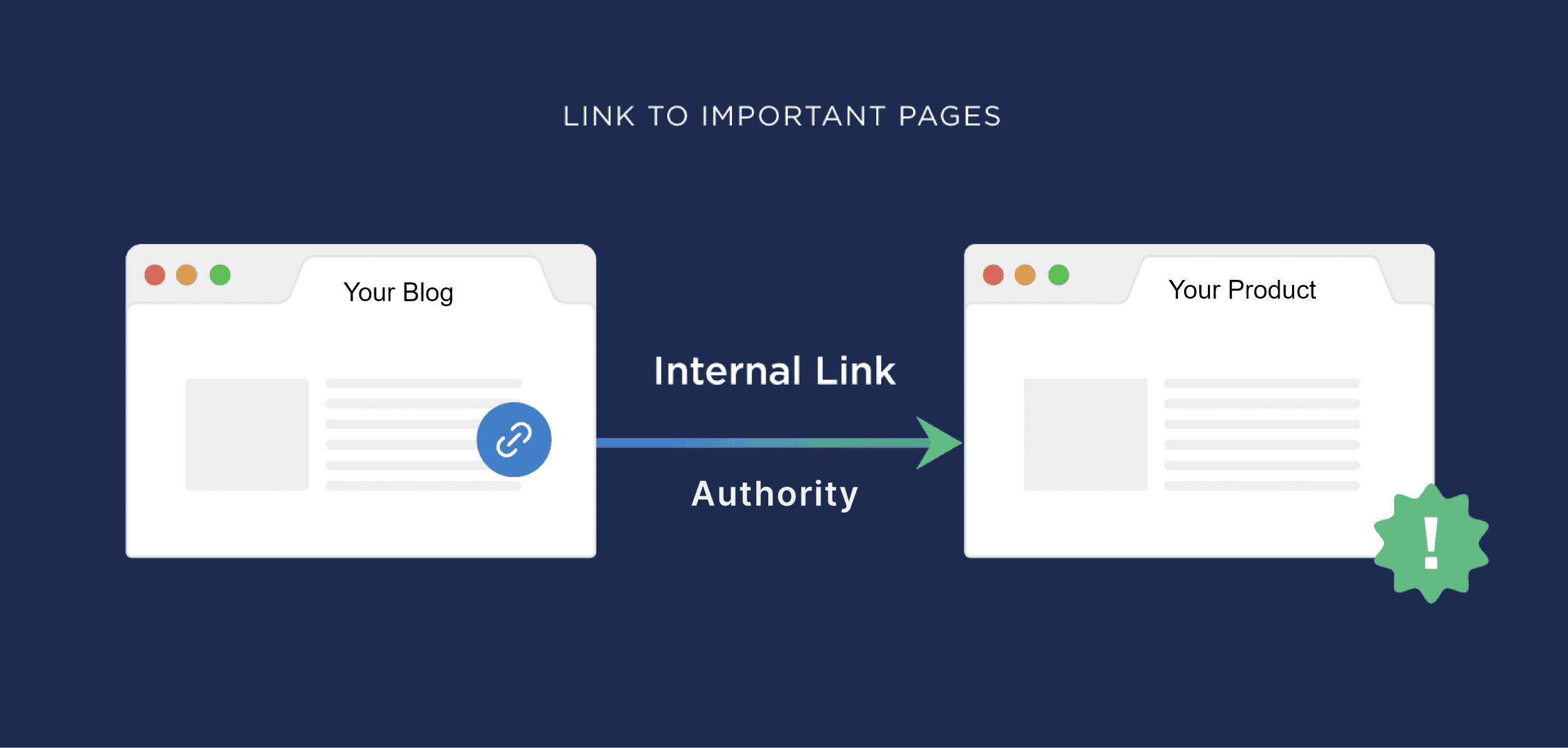
The inner link of product page is often neglected, but it is very crucial for "conversion word ranking". The reason is very simple: the product page is more likely to get stay, add purchase, inquiries and other strong signals, and if these signals through the internal link back to the collection of pages, the collection of pages is more likely to be stable to undertake the word.
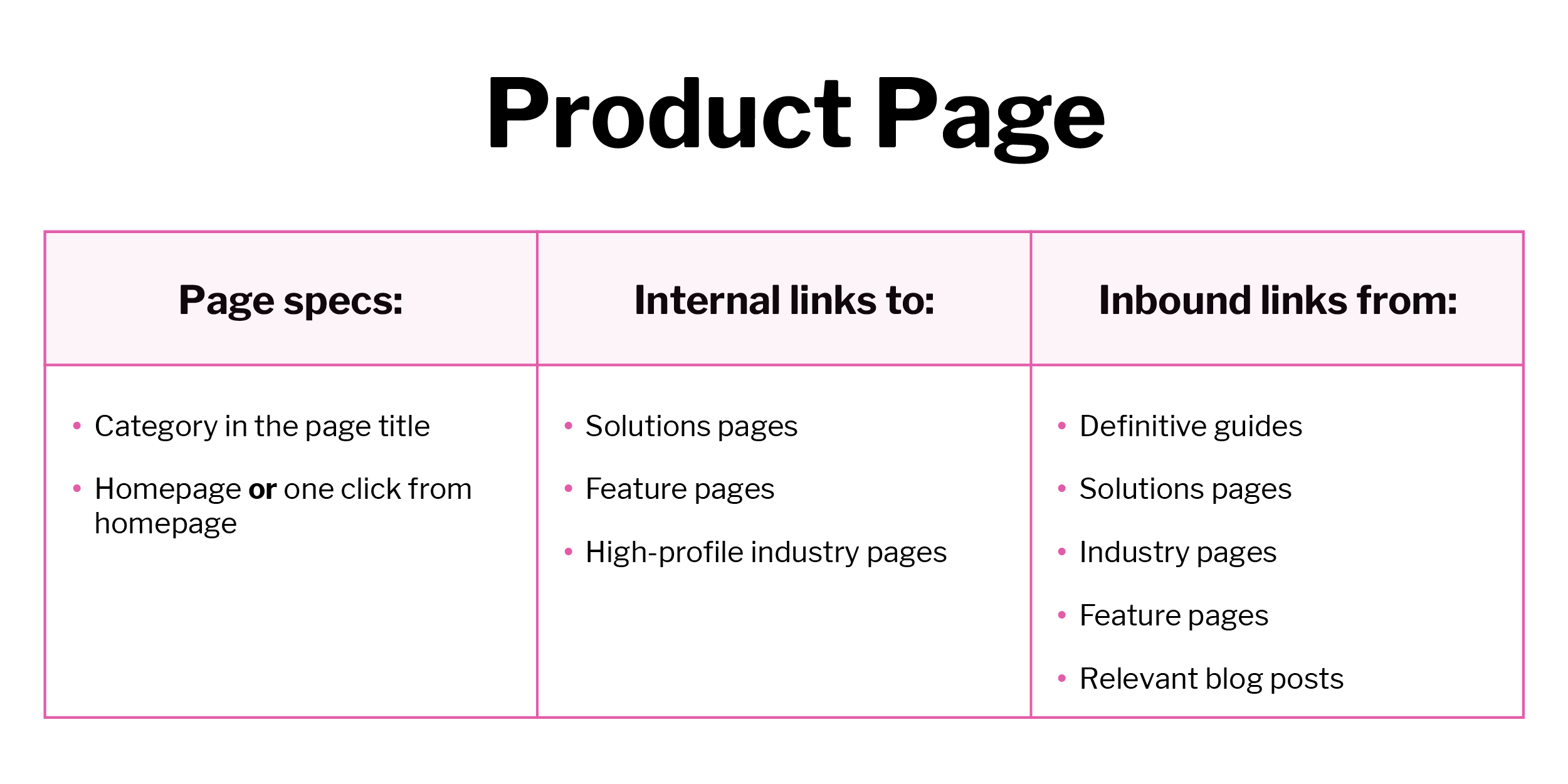
Product pages are recommended to keep at least three types of backlinks:
- Return to parent assembly page (consent map)
- Return to the category page (same topic)
- Pointing to similar models in the same series (same brand, same function, different specifications)
3.3 Link C: Content Page/Tutorial Page → Collection Page/Product Page
Many sites can get long-tail traffic from tutorial articles, but the traffic does not convert. The practice that really works is to let the tutorial page to "choose the conclusion" to the collection page, the "recommended models" to the product page.
4. anchor text and link position how to put, only natural and effective
4.1 Anchor text should "describe clearly", not just write "click here".
Anchor text should be descriptive, relevant to the target page, and also expected by the reader. When it comes down to e-commerce pages, anchor text can be more like real guide talk:
- Replace rigid keyword stacking with "series/use/attributes".
- For the same target page, make small changes to the anchor text to keep it natural
4.2 Keywords are placed in these positions, which are stable and do not look hard
The common "cost-effective position" of the product page's internal linking strategy is basically fixed, it isProduct Page OptimizationThe important part of the focus is to write like a normal editor, not an SEO template.
| appearing position | SEO role that can be provided | A more natural way to fit in | Writing focus |
|---|---|---|---|
| breadcrumb navigation | Clarify hierarchical relationships and strengthen thematic pathways | Use real classification names, not heaps of words | Classification nomenclature should be harmonized, and the hierarchy should not be messed up |
| Introduction to the first screen of the product page | Reinforce the core intent to help understand the topic | Expressed in terms of "People + Usage + Key Attributes". | Resolve purchase questions first, then add information |
| Module title (e.g., "Recommended Series") | Give internal links a clear semantic meaning | Keep the title short, but say what it is | Don't be vague in your title and avoid "recommended" generalizations. |
| Citation links to specification/FAQ paragraphs | Provide context to increase relevance | Use "If you need xxx, check out the xxx series" | Links have to be there for a reason, don't stick them in hard |
| Filtering instructions area of the collection page | Make collection pages more like landing pages | Explain the screening logic and string it to the product | First tell how to choose, then give pointable answers |
5. Points where newcomers are most likely to get it wrong, and more stable practices
5.1 The number of links is not the more the better, the key is "pointing to whether consistent".
With pages stuffed with links, users get lost and search engines have a harder time determining focus. You can rephrase the question: which 3 entrances do you want to push the most on this page? If you can't answer, the links will be hard to stabilize.
5.2 Don't let filter pages become "infinite combinations of thin pages"
Filtered portfolio pages that are heavily indexed will have a bunch of similar pages on the site diluting each other. A more stable way is:
- Only a small number of "actionable" collection pages (e.g., combinations of attributes with high sales volume and clear requirements) are retained
- Other screening results are based on user experience, not forced to do SEO landing
5.3 The same set of converted words, to specify the "only main page"
When you decide that a conversion term will be taken up by the product page, let the category page and the collection page "vote" for it with internal links, instead of writing the same set of titles yourself.
6. How to check that the structure is actually working
After the product page internal linking strategy is done, it is not recommended to just go by feel. A more steady way to check is to look at three things:
- Whether important product pages on the site can be reached from the home page or category pages within 3 clicks.
- Can the collection page be pointed to consistently (category pages, content pages, product pages all have links pointing to it)
- Whether the product page has "upper level backlinks" and "same series mutual links", and the anchor text is a readable sentence
Summary:
When category pages are responsible for topic entry, collection pages are responsible for intent aggregation, and product pages are responsible for conversion undertakings, theIn-site linksIt will become a clear path, rather than a bunch of scattered jumps. The value of the product page link strategy in the "each link is to help the page division of labor", as long as the division of labor is stable, anchor text is clear, the path is consistent, the conversion of word rankings will usually be more stable, and the subsequent expansion of the product is also easier to replicate this method.

Link to this article:https://www.361sale.com/en/84343The article is copyrighted and must be reproduced with attribution.












![Emoji[wozuimei]-Photonflux.com | Professional WordPress repair service, worldwide, rapid response](https://www.361sale.com/wp-content/themes/zibll/img/smilies/wozuimei.gif)

![Emoticon[baoquan] - Photon Wave Network | Professional WordPress Repair Services, Worldwide Coverage, Rapid Response](https://www.361sale.com/wp-content/themes/zibll/img/smilies/baoquan.gif)


 简体中文
简体中文  English
  日本語
日本語  Français
  Español


No comments