




enoughinternal chainDid quite a bit, butRanking ImprovementNot obvious, the problem is often in the "link text written like a human language". How to write the anchor text of the internal chain, the core is to let the reader understand at a glance point past what will see, while allowing the search engine to be more clear about the relationship between the theme of the page.Google also explicitly mentions: Links are used to discover the page and understand the context of the content, and anchor text should be easier for users and search engines to understand.
First, the inner chain anchor text in the end in the "help who" to solve the problem
1. To users: reduce decision-making costs
Anchor text is not a decoration, but a "signpost". Readers can see the anchor text and determine whether it is worth clicking on.
2. To search engines: complementary semantic clues
Google will discover more pages through crawlable links, and refer to the anchor text to understand the general theme of the linked page. Therefore, the internal link anchor text how to write, the essence of the relationship between the page to write "label", but to be natural and credible.
3, to the site structure: the weight and the theme strung together
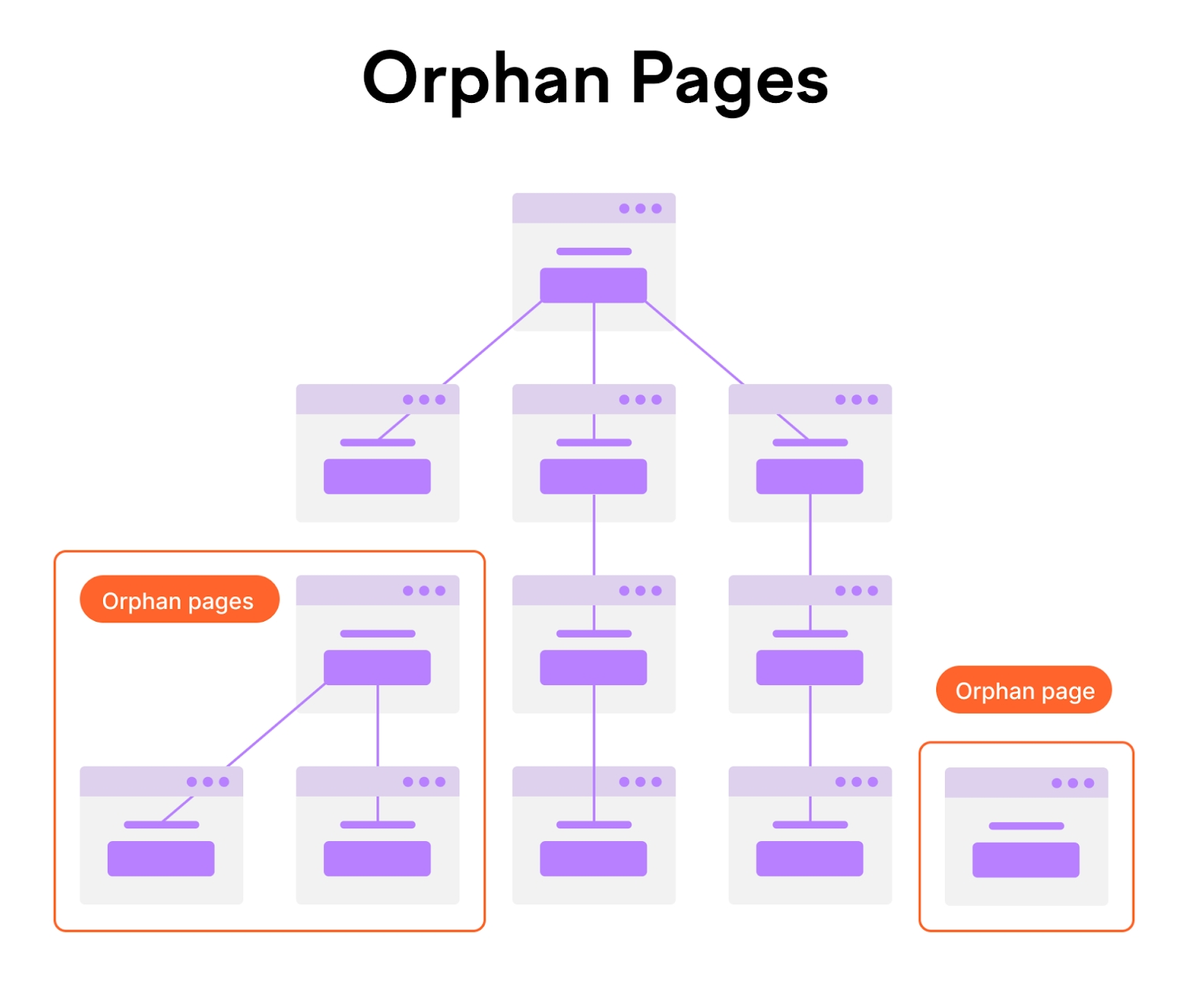
Internal linking puts important pages in a position where they can be found more easily, theReduction of "orphan pages"The
Second, how to write anchor text within the chain is considered "natural".
1. Speak like a reader first, then write like an SEO
Natural anchor text usually fulfills three things:
- Semantic clarity: tap to match content
- Sentence smoothness: no awkwardness in putting in the original sentence
- Medium length: generally 4-12 characters are more palatable (according to Chinese custom)
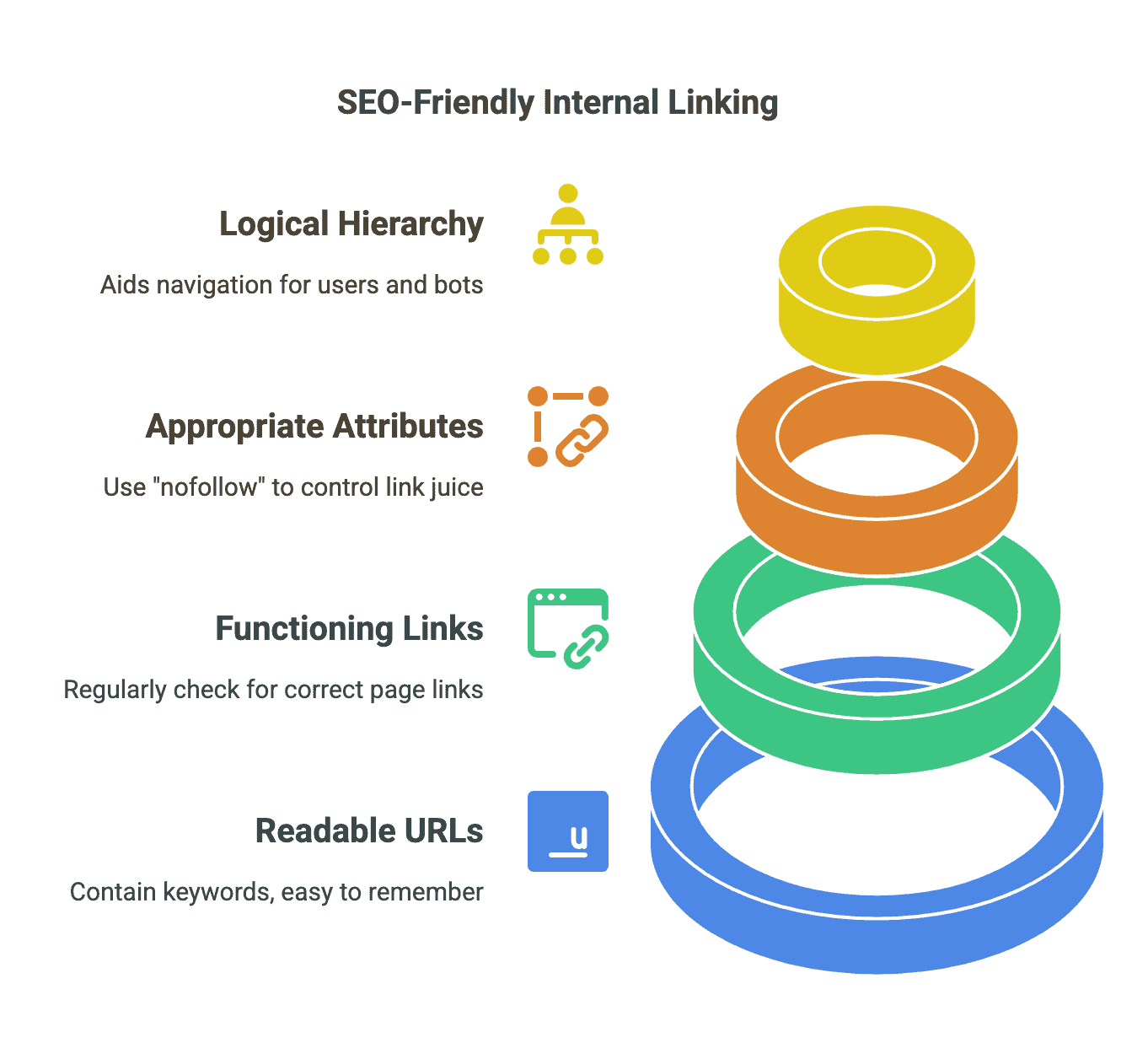
This is the most overlooked step when writing anchor text for internal links: make sure it's readable first, then talk about keywords.
2. Putbyword"Nested in sentences" rather than hard-wired
A more natural way to write this would be "keyword + specific qualification", for example:
- "List of ways to write anchor text for internal links"
- "Example of anchor text for internal links on a product page"
- "Avoiding over-optimizedAnchor Text Writing"
This makes the subject clearer and more like a real writing scenario. Writing internal link anchor text is not the same as using the same exact phrase every time.
3. Avoid generalized words
"Click here, see more, learn more" is not informative and semantically weak in the user experience. A better approach would be to spell out "where to go".
Third, the keywords in the end where to put the most effective
The following table combines the "position, role, writing style focus" into a list that can be used at a glance, so that it is easy to directly follow the rewrite and add internal links.
| appearing position | Primary SEO Role | Recommended ways to integrate | Writing focus |
|---|---|---|---|
| Within body paragraphs (contextual links) | Reinforcing thematic relevance and supplementing semantic cues | Embedding sentences with "keywords + qualifiers" | Context must match and readers read smoothly |
| Near subheading (first paragraph under H2/H3) | Reinforcement of paragraph themes to enhance readability | Bring out key words or synonymous expressions naturally in the first sentence | Title and anchor text mean the same thing |
| List item (list of points) | Improve readability and ease of focus | Use phrase-based anchor text to point to tutorial/definition pages | Listings do not stack the same anchor text |
| Graphic illustrative text (in tables) | Structured presentation to enhance understanding | Anchor text with "scene words + keywords" | Let the reader know what the click solves |
| Related Articles Module (Site Recommendations) | Improve deep browsing and distribution weighting | Use more specific article title keywords | Avoid uniform template words across the site |
If you want to summarize in one sentence: the keywords are preferred to be placed in the "body of the sentence can be explained", and then consider the modularity of the recommended position.
Fourth, more stable anchor text type collocation (more natural to mix by type)
1、Anchor text type
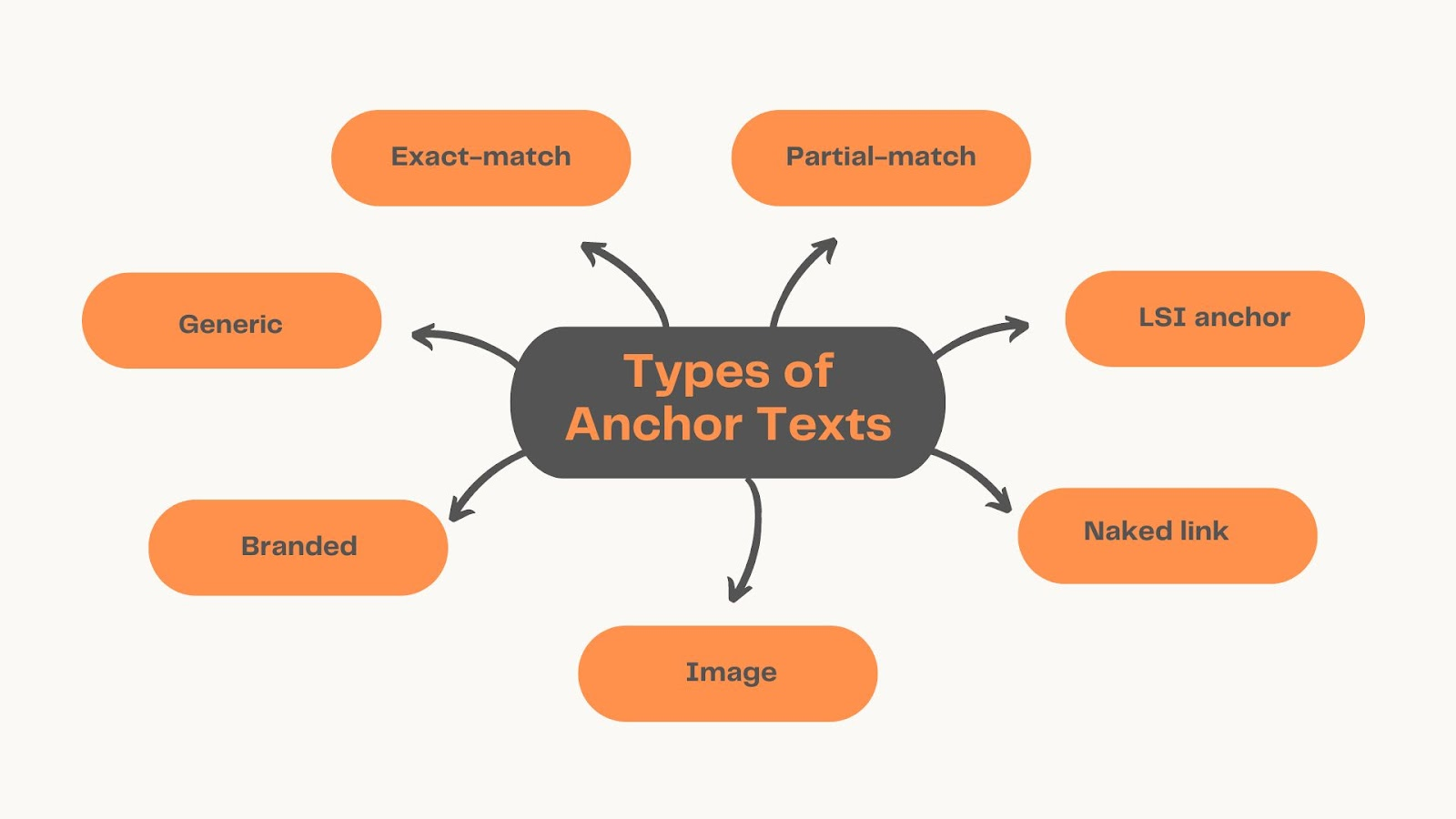
In order to avoid excessive homogenization of anchor text, anchor text can be divided into the following table these types of rotation. Each category has a different SEO role and applicable scenarios, the combination is more like the real content editing process, but also more conducive to the theme page stable accumulation of relevance:
| Anchor Text Type | Where to put it | SEO features that can be provided | Incorporate writing style (more natural) |
|---|---|---|---|
| Exact match | Core tutorial page, definitions page, main text pointing to main text | Reinforcement of thematic consistency on target pages | Put it in a sentence as a clear guide to avoid repeating it throughout the paragraph |
| Partial match | In article body paragraphs, in list items | Balancing relevance and naturalness | Use synonymous expressions or add qualifiers to make the sentence flow smoothly |
| Semantically related LSI anchor | Breakdown of problem paragraphs, additional explanatory paragraphs | Extending semantic coverage and enhancing thematic clusters | Write in "problem-solution action-scene" style. |
| Branded | Column pages, feature pages, branded entry pages | Improve site navigation semantics and column weighting | Tied to the name of the section or topic |
| Generic | End of explanatory paragraphs, citation supplements | Reducing the risk of repetition and enhancing reading coherence | Use the expression "point to resources", but avoid using the same set of words throughout the site. |
| Naked link | Resource-based pages, tool pages, end-of-text references | Clear URL pointing, suitable for resource referencing | Use only when strictly necessary, quantity control |
| Image Anchor Image | Icons, step-by-step screenshots, comparison chart below | Conveying relevance through image links | The key is in the alt text and the diagrams are written |
2. A more stable combination approach (easy to land)
- Main page and core tutorial page: "exact match, partial match" as the main, a small amount of interspersed "semantic relevance, brand words".
- Narrative area of the article body: "partial match, semantically related, generic words" rotation, to avoid consecutive appearances of the same sentence anchor text.
- Resource area and illustration area: use "bare link, image anchor" when you need to cite it, and complete the subject with an alt and an illustration note, keeping it in line with the "Naked Link, Image Anchor".How to write anchor text for internal links"The same semantic range.
This combination can reduce the risk of "anchor text mechanical repetition", so that the writing of internal link anchor text is more like the real content editing process.
V. Writing process that can be directly applied
1) Determine the target page to push first (product page, category page, tutorial page)
2) Write 3 sets of anchor text alternatives for the target page: Precision, Scene, Narrative
3) Go back to the upstream article and put the anchor text in the sentence that "explains it".
4) Check three things:
- Do readers know what they can get by clicking on
- Is the anchor text consistent with the first screen of the landing page
- Whether the anchor text is repeated too much on the same page
To do this step, the internal link anchor text can be stabilized basically "natural and effective".
Summary:
A truly effective internal link does not rely on the number of links, but on the fact that "every click has a clear reason". By writing the anchor text as a comprehensible statement, placing the keyword in a context that explains it, and using a type of collocation to avoid mechanical repetition, the anchor text of the internal link will change from an "SEO action" to a "part of the content structure".

Link to this article:https://www.361sale.com/en/83970The article is copyrighted and must be reproduced with attribution.














![Emoji[wozuimei]-Photonflux.com | Professional WordPress repair service, worldwide, rapid response](https://www.361sale.com/wp-content/themes/zibll/img/smilies/wozuimei.gif)

![Emoticon[baoquan] - Photon Wave Network | Professional WordPress Repair Services, Worldwide Coverage, Rapid Response](https://www.361sale.com/wp-content/themes/zibll/img/smilies/baoquan.gif)


 简体中文
简体中文  English
  日本語
日本語  Français
  Español


No comments