




When optimizing content rankings, many pages aren't "unwritten."bywordThe issue isn't the content itself, but rather overly monotonous writing styles, incomplete coverage of page concepts, and paragraphs lacking supporting vocabulary. This article focuses on optimizing semantically related terms, breaking down the approach into two distinct strategies—"Topic Coverage" and "Paragraph Landing Points"—and providing a step-by-step process you can implement immediately.

1. Semantically related wordsWhat problem does optimization solve?
Search engines don't just look for whether a specific word appears; they also determine whether a page genuinely addresses the same type of question. GoogleHow Search WorksThe documentation states that the system understands the meaning and context of queries rather than performing literal matches.
Therefore, the core objective of semantic keyword optimization is to ensure that a page "clearly communicates one thing" and to make it easier for systems to confirm the correspondence between the page and the user's intent.
1.1 Keyword MatchingDoes not equal intent matching
Under the same topic, users may phrase their questions differently. If the page only repeats the main keyword, two types of issues are likely to arise:
- Concept explanations are incomplete and lack key subtopics.
- The paragraph is too vague; readers still don't know what to do after reading it.
1.2 "Related terms" are not just randomly selected synonyms.
Many people confuse semantic keyword optimization with "synonym substitution." However, for more stable rankings, the better approach is to categorize related terms into three groups based on keyword expression patterns, ensuring these groups complement each other within the same article.
| Category (matches image) | What problem do these types of words solve? | The best place to integrate into the article | Key Writing Points and Common Pitfalls |
|---|---|---|---|
| long-tail keywords Long-Tail Keywords | Delve into the topic in detail, clarify the boundaries, and ensure the page addresses more specific needs. | H2/H3 Subheadings, Step Paragraphs, List Items, Concluding Further Reading | The key is to be "more specific," not "longer." The common pitfall is to pile on numerous variations without adding new information. |
| Question-based keywords Question Keywords | Align with search intent by directly addressing the most frequently asked questions from readers. | H2/H3 Use questions, FAQ modules, and opening questions at the start of each paragraph. | The key is to present the conclusion first, then provide the explanation. Common pitfalls include only posing the question without answering it, or giving overly vague responses. |
| Conversational Keywords Conversational Keywords | Stay true to authentic expression, making content feel more like people asking questions and seeking answers. | Opening introduction, paragraph transition sentences, case scenario descriptions, concluding reminders | The key is "natural readability." The pitfall is excessive colloquialism leading to unclear expression or incomplete information. |
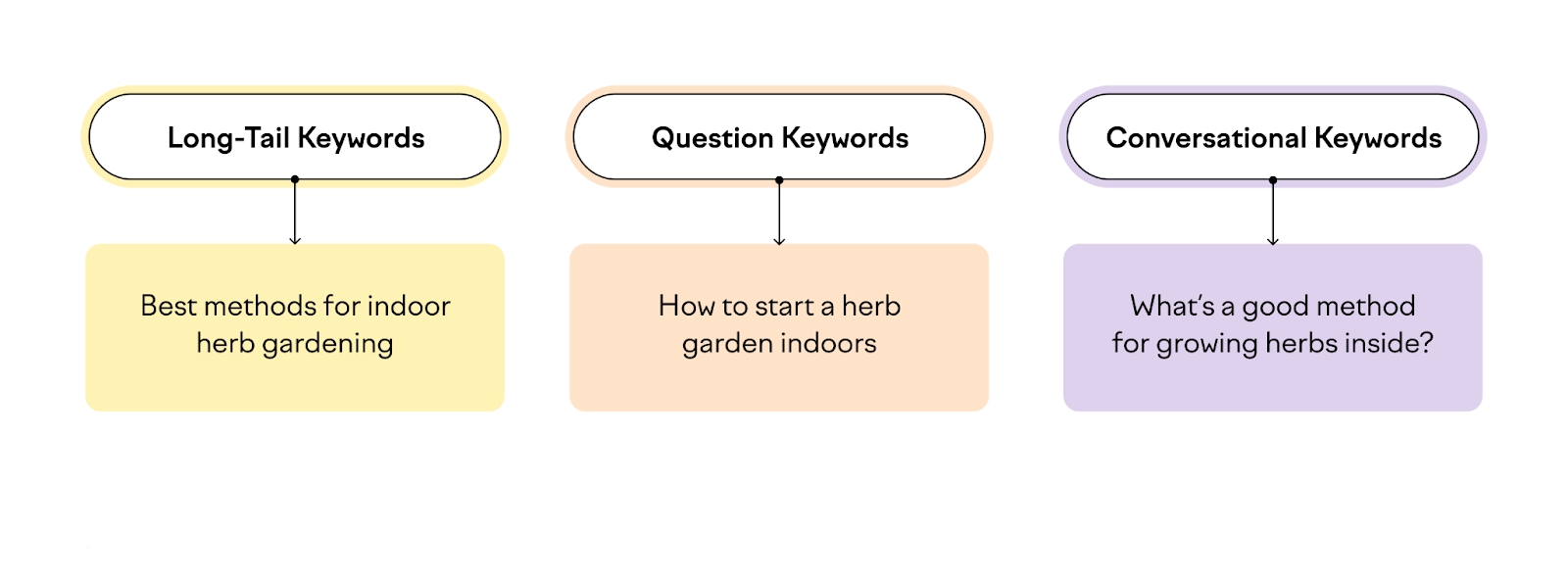
2. Two Main Approaches to Semantically Related Word Optimization: Topic Coverage and Paragraph Placement
When creating content, many pages aren't "too short"—they're "too inaccurate." What truly secures stable rankings usually comes down to two things: pages that cover the topic comprehensively and paragraphs that address the question precisely. The latter half of semantic keyword optimization relies on advancing along these two main threads.
2.1 Topic Coverage: Use long-tail keywords to comprehensively cover the topic.
Long-tail keywords function more like "conditional searches." They don't merely expand the vocabulary; instead, they break down topics into actionable segments. In Semrush's explanation of long-tail keywords, it emphasizes that they are often more specific and better express user intent.
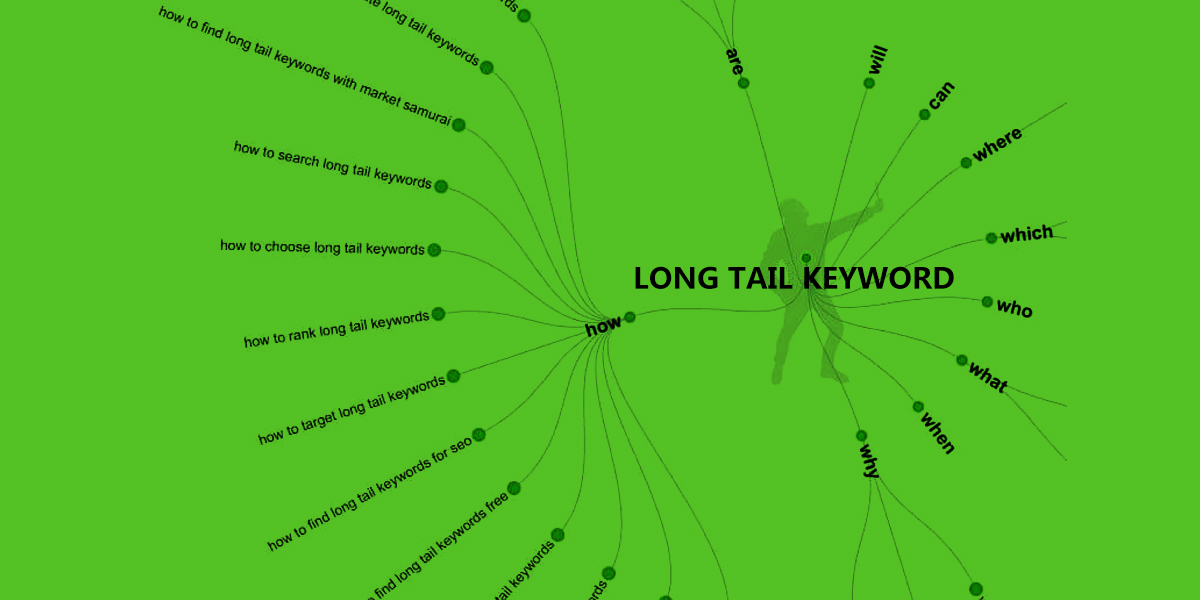
During the "topic coverage" phase of semantic keyword optimization, long-tail keywords can serve as source material for content outlines. Common coverage points include:
- Defining Boundaries: What this concept includes and excludes
- Scope of Application: Suitable for which scenarios, unsuitable for which scenarios
- Choosing Between A and B: When to Select Which Option
- Operational Steps: Key Milestones from Preparation to Execution
- Troubleshooting Checklist: Common Causes of Failure and Verification Methods
Including these coverage points will make the page information more complete and better align with the "user-first" content requirements.
2.2 Paragraph Placement: Use questions and conversational words to pinpoint questions accurately.
Theme coverage addresses "comprehensive coverage," while paragraph focal points address "pinpointing key points." The problem-type keywords and conversational-style keywords in the screenshot correspond precisely to two common paragraph focal point approaches.
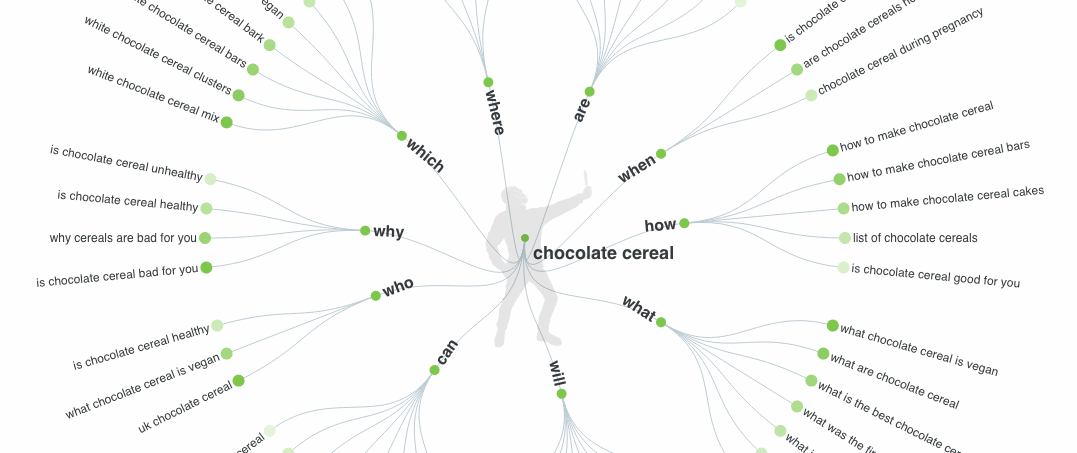
The value of question-based keywords lies in their direct articulation of what users want to ask within the search query itself. You can use the question filter in tools to specifically identify these types of query words. Conversational keywords more closely resemble everyday speech and are commonly found in voice searches or more colloquial questions.
When using these two types of words in a paragraph, a common approach is:
- Use question words as subheadings: Make it clear at a glance what each paragraph is about.
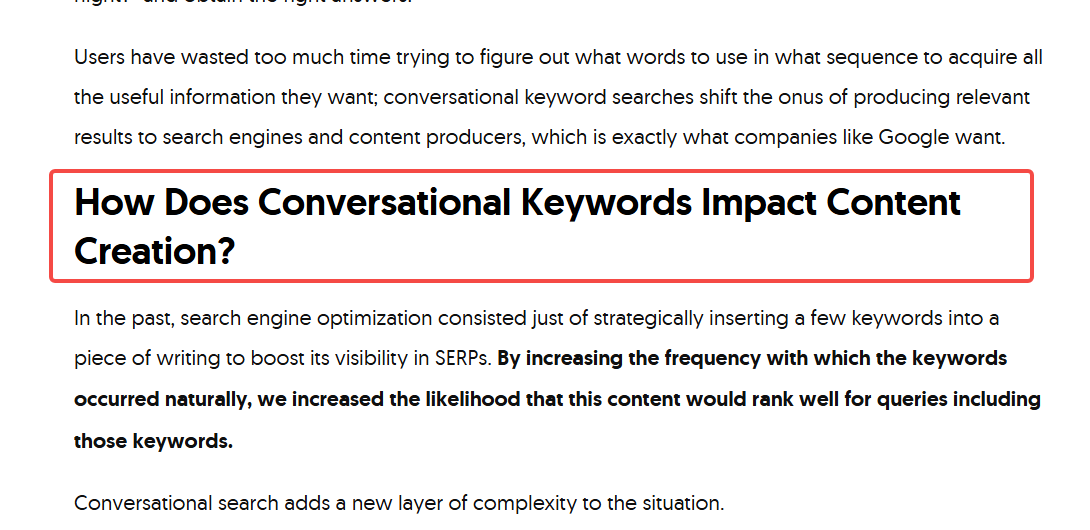
- Start with conversational language: Make paragraphs sound like genuine explanations, not forced jargon.
- End with a "concluding sentence": Provide readers with an actionable judgment or next step.
This approach also reduces the risk of mechanical repetition. Google's spam content policy explicitly states that "keyword stuffing" is an improper practice, commonly characterized by word-stuffing, unnatural phrasing, and context-disconnected content.
Therefore, semantic keyword optimization isn't about cramming words in; it's about ensuring each paragraph has a problem, an explanation, and a clear takeaway.
2.3 How the Three Word Categories Divide Labor: A Single Chart Explains It All
| Keyword Type (Screenshot Classification) | Tasks in Semantic Related Word Optimization | The most suitable location to appear | Writing Essentials (Simplified Version) |
|---|---|---|---|
| long-tail keywords Long-Tail Keywords | Break down the topic into smaller parts to ensure comprehensive coverage. | H2/H3, Paragraph Key Points, Checklist | Organize expressions using "condition + object + goal" |
| Problem Keywords Question Keywords | Clarify the user's question and pinpoint the relevant paragraph. | Subheadings, FAQs, Opening Sentences | First, present the conclusion, then provide the explanation and steps. |
| Conversational Keywords Conversational Keywords | Enhance naturalness and align with authentic expression. | Paragraph opening, transition sentence, concluding sentence | Be conversational yet precise; avoid empty rhetoric. |
At this point, the "structural framework" for semantic keyword optimization is complete: long-tail keywords ensure comprehensive coverage, while question-based and conversational keywords ensure precision.
3. A reusable implementation process: From "one main term" to "three related categories"
To ensure semantic-related word optimization can be reliably reused, follow this four-step process. Each step produces "actionable content" rather than merely generating a list of words.
3.1 Defining the "Page Role" of the Primary Subject
The same word may be written differently on different pages. There are three common page roles:
- Definitional: Explaining concepts and boundaries
- Tutorial-style: Provide steps, tools, and verification methods
- Solution-Oriented Approach: Comparative Selection and Implementation Strategy
Once page roles are defined, related terms won't get scattered.
3.2 Handle three distinct categories of words, each performing only its specific function.
- Long-tail keywords: Used to fill coverage gaps, not intended for headline clickbait.
- Problem keywords: Used for section headings or FAQs, not intended to be repeatedly scattered throughout the main text.
- Conversational Keywords: Used to ensure natural expression; not intended to replace professional terminology.
This division of labor makes semantic-related word optimization more stable and easier to write like a natural article.
3.3 Turn "problem words" into paragraph headings and "long-tail keywords" into paragraph content.
A useful approach is:
Each H2 addresses a core issue, while each H3 tackles a specific sub-issue. Long-tail keywords are used to fill in details, problem-oriented keywords to define titles, and conversational keywords to craft introductory explanatory sentences.
3.4 Perform an Anti-Cramming Check
There are only three key points to check:
- Avoid repeating the same phrase within the same sentence.
- Avoid starting multiple consecutive sentences in a paragraph with the same opening structure.
- Every keyword that appears must explain "what problem this section is solving."
The goal of this step is straightforward: avoid the common pitfall of keyword stuffing. Semantically related terms are optimized to this extent.The page generally flows more smoothly, resembling human writing.

Link to this article:https://www.361sale.com/en/84860The article is copyrighted and must be reproduced with attribution.

















![Emoji[wozuimei]-Photonflux.com | Professional WordPress repair service, worldwide, rapid response](https://www.361sale.com/wp-content/themes/zibll/img/smilies/wozuimei.gif)

![Emoticon[baoquan] - Photon Wave Network | Professional WordPress Repair Services, Worldwide Coverage, Rapid Response](https://www.361sale.com/wp-content/themes/zibll/img/smilies/baoquan.gif)


 简体中文
简体中文  English
  日本語
日本語  Français
  Español


No comments