




Do content clusters, the most likely to get stuck is not the choice of words, but "how the word is divided into pages, how to connect the pages". Do this thing clearly, in order to make the same theme under the page each other weighted, the formation of a clear hierarchy, which is exactly the keyword cluster internal chain structure to solve the problem.
One,Keyword Cluster Internal Link StructureWhat exactly does it solve?
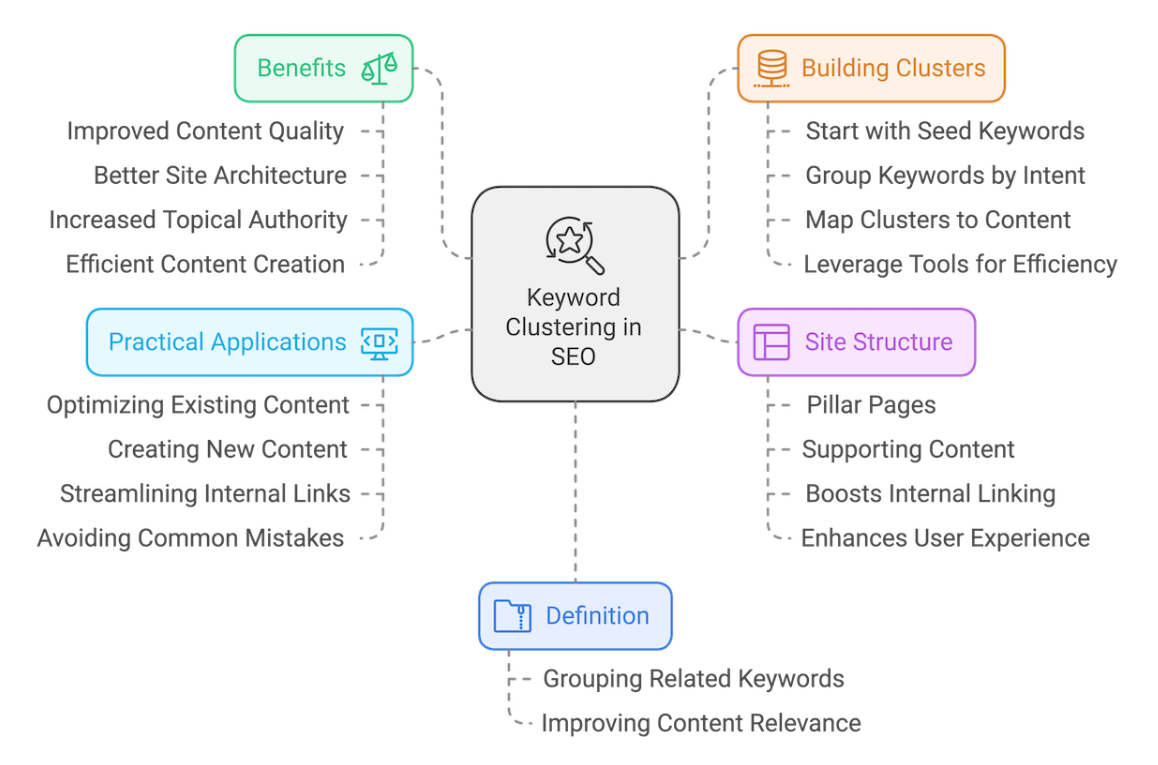
1.1 Why "a set of words" cannot fit into "an article"
Words under the same topic often correspond to different search intents: some people want to know the definition, some want to compare options, some want the procedure. Stacking all the words onto one page can lead to:
- Page themes become wider and main keywords are not focused
- Paragraphs are written to make up words, making it hard for the reader to scan through them.
- Internal chain can not express the hierarchy, page weight is difficult to concentrate
the reason whyKeyword ClusterThe core of the internal link structure is to break down the "intent" into pages and write the "relationship" into links.
1.2 Three common page roles for keyword clustering
A well-established keyword cluster internal linking structure usually consists of three types of pages:
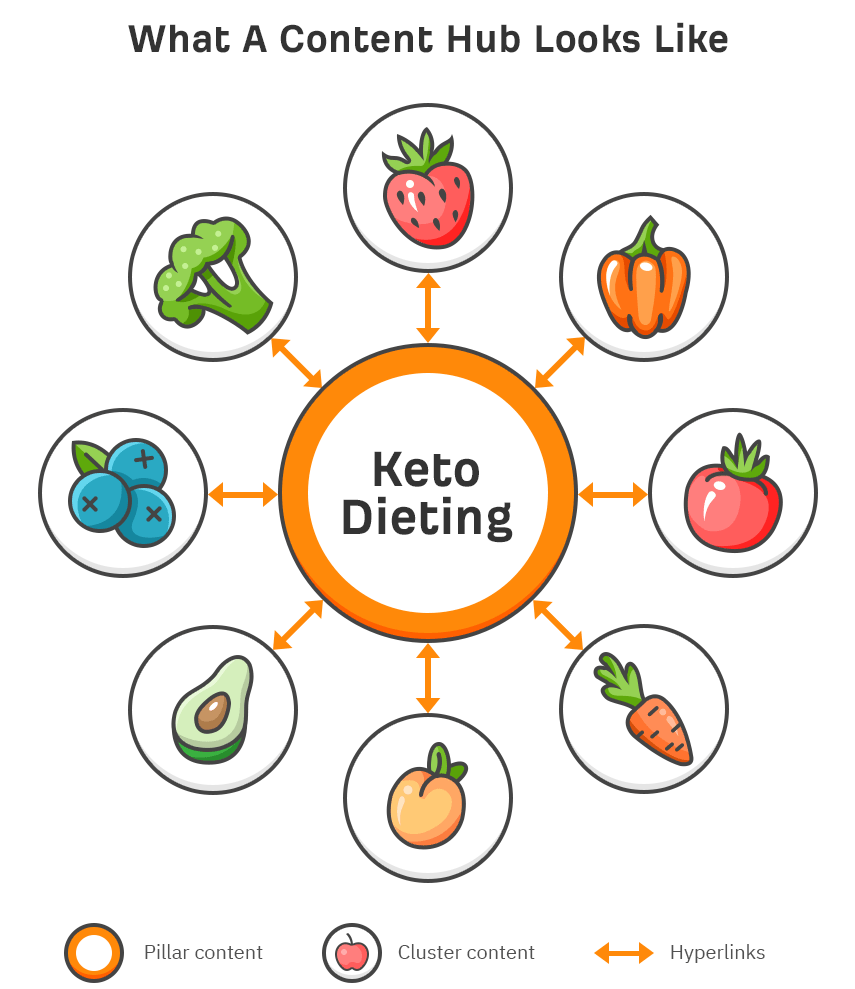
- Trunk page (Hub): Covering the whole picture of the subject, taking on the core and broadest words
![Image [3] - Keyword cluster internal link structure: a set of words corresponds to a set of pages with links](https://www.361sale.com/wp-content/uploads/2025/12/20251223162932597-image.png)
- Branch page (Spoke): Solve a clear sub-problem by taking on medium and long-tailed words
- Supplementary page (Support): Supplemental information, case studies, FAQs to take on finer long-tail terms
Second, from "keywords" to "page" allocation rules
2.1 Start by grouping keywords by "intent".
Grouping keywords on the same topic by intent is more stable than grouping them by word form. Common grouping methods:
- define a class: what it is, concepts, explanations
- method class: how to, steps, process
- Comparative: A vs B, which is better, difference
- scenario-based: Who it's for, where it's used, what to look for
- Utility Tools: what to use, templates, checklists
This step is done, keyword clusters within the chain structure of the "page skeleton" is basically out.
2.2 "One page, one main question", carrying only one main keyword per page
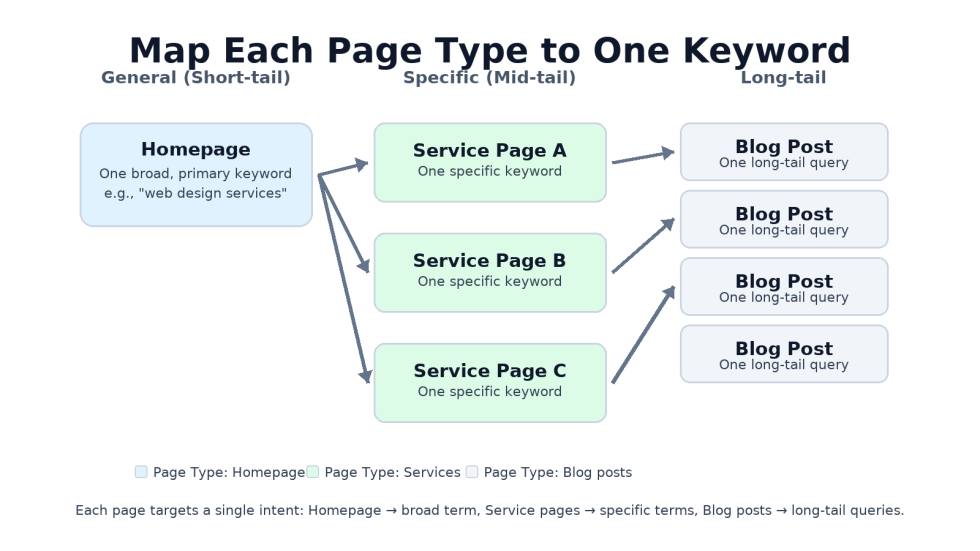
The page level suggests adhering to two hard rules:
- Serves only one "main issue" per page (title can be stated in one sentence)
- Each page carries only one "main keyword", the rest of the words to do semantic expansion (synonyms, proximity, scene words)
This way the main page won't be robbed of its subject by the branch pages, and the branch pages won't be written as a mishmash.
Third, the link how to connect: write the hierarchy to the search engine to see
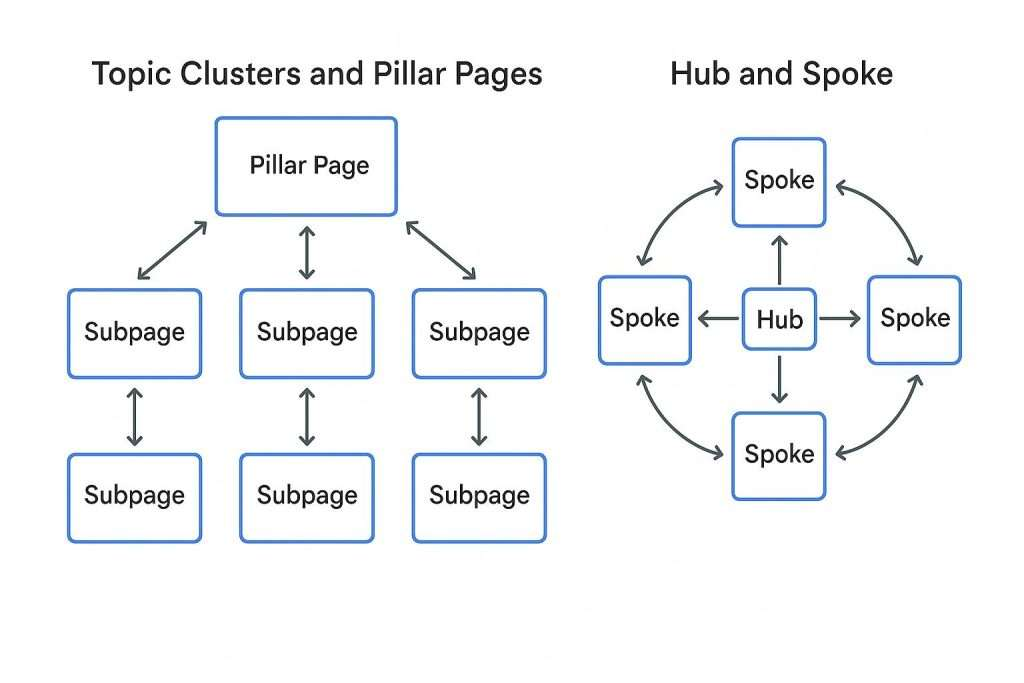
3.1 Hub to Spoke: Using "directory-style" inbound links to connect topics
It is recommended to fix a "sub-topic navigation area" on the main page, and each sub-topic links to the corresponding branch page.Internal links are used to cross-reference on-site content, and suggests that anchor text be descriptive and easy to understand.
3.2 Spoke back to the Hub: using the "finger back" to tell who the main entrance is
Each branch page should have at least one "back to main page" link, with a recommended location:
- End of first screen of text (after the reader understands the definition/question)
- Closing summary paragraph (leading back to the general overview of the topic)
This pointing back makes the keyword cluster structure more like a "tree" rather than a scattering of points.
3.3 Spoke interlinks: only "strongly relevant" links, avoid full interlinks
Branch pages can be linked to each other, provided two conditions are met:
- After reading A, the reader will indeed naturally want to read B
- Anchor text that accurately describes the content of B, without the use of generic words like "click here/see more" (Google doesn't recommend overly general anchor text either).
Fourth, the keyword clusters within the chain structure of the page and link example table
Using the same theme as an example: "keyword clusters within the link structure" split into executable pages.
| Page Roles | Page subject (heading direction) | Main Keyword Carrying | Typical long-tail words(natural integration) | must-do internal link | Anchor Text Writing Essentials |
|---|---|---|---|---|---|
| Hub Trunk Page | Topic Overview: How a set of words corresponds to a set of pages and links | Keyword Cluster Internal Link Structure | Keyword cluster building, content cluster internal linking, site structure planning | Chain to All Spoke + Important Support | Use clear subtopics, short and accurate |
| Spoke, branch page A. | How to differentiate pages by intent for the same subject matter | Intent Grouping Keywords | Definitional Keywords, Method Keywords, Comparison Keywords | Back to Hub + Links to related branch pages | Using "question phrases" is more natural. |
| Spoke. Branch B. | Hub page how to write: directory area and how to choose the words of the undertaking | Hub Page Keyword Layout | Hub page structure, theme overview page writing style | Back to Hub + chain to corresponding branch | Expression with "sub-theme + action" |
| Spoke. Branch C. | How to lay the internal chain: Prioritization from important pages to general pages | internal chain priority | Station weight distribution,Internal Link Path Design | Back to Hub + Strong interlinked correlation | Avoid the same anchor text over and over again |
| Support Supplement | Anchor text templates with a list of common mistakes | Anchor Text Templates | Anchor text examples, anchor text writing style | Referenced by Hub/Spoke | Anchor text descriptions should fit the landing page theme |
This table can be used directly as a working draft for building a keyword cluster internal linking structure: first set the page, then the links, then the anchor text style.
V. Checklist for writing and publishing
5.1 Before every new page goes live, go through at least these four items
- Whether the main keyword of the page is unique, whether it runs through the title and the core paragraph
- Whether there are at least 2 relevant internal links pointing to it (from Hub or branch pages)
- Is there 1 internal link back to the Hub (to build the hierarchy)
- Is the anchor text "descriptive, readable, and not overly keyword-stacked" (Google's recommendations emphasize that anchor text should be descriptive and concise).
5.2 Three of the easiest "fake clusters" to step into
- Just a bunch of articles, no Hub trunk page
- Site-wide interlinking, all page weights are diluted
- Anchor text is highly repetitive and links look like template splices
Avoid these, the keyword cluster internal link structure can be upgraded from "content stacking" to "ranking system".
Sixth, the conclusion: the page relationship is written clearly, more important than writing a few more
When a set of keywords is broken up into clear pages and written with internal links to hierarchies and associations, it's easier for search engines to understand the structure of the topic, and easier for readers to follow the path and read deeper. In the long run, a stable keyword cluster internal link structure tends to bring more sustainable natural traffic than sporadic updates.

Link to this article:https://www.361sale.com/en/84132The article is copyrighted and must be reproduced with attribution.

















![Emoji[wozuimei]-Photonflux.com | Professional WordPress repair service, worldwide, rapid response](https://www.361sale.com/wp-content/themes/zibll/img/smilies/wozuimei.gif)

![Emoticon[baoquan] - Photon Wave Network | Professional WordPress Repair Services, Worldwide Coverage, Rapid Response](https://www.361sale.com/wp-content/themes/zibll/img/smilies/baoquan.gif)


 简体中文
简体中文  English
  日本語
日本語  Français
  Español


No comments