




When doing content selection.How keywords are turned into article topicsOne of the fastest ways to do this is to think of the questions that appear in a PAA (People Also Ask) as "validated search intent." A PAA is essentially a set of questions related to the original query that are displayed on the search results page, with short answers and links to the sources of the web pages from which they came; and the questions The questions are constantly expanding, and the more you click, the more you get.

This means that you don't need to guess what the user wants to ask, PAA has already laid out the "frequently asked questions", and all you have to do is systematize them into writable questions,Rankable, Converting ArticlesTopics.
1. Understand the PAA first: why is it suitable for selection?
A PAA usually appears as an "expandable list of questions", each of which is accompanied by a snippet of an answer, similar to a curated summary, from a web page that the user can click on and jump to.
The value of PAA for content curation is threefold:
- Problematic natural banding intentions: Behind the questions are usually "what do you want to solve, how to choose, and where to step on the pitfalls".
- liable (to)Do long-tail coverage: The same topic will give rise to many subdivided inquiries, which is suitable for a topic matrix.
- Can be directly extrapolated to the structure of the article: The question itself could be an H2/H3 subheading to minimize "writing off-topic".
2. Capturing PAA keywords and questions: two practical approaches
In the implementation of "How keywords are turned into article topics"Before, collect the raw materials completely.
2.1 Manual acquisition (most stable, closest to real SERPs)
The operative point is "Tap-Extend-Record":
- Search for your core subject line first
- Issues that open the PAA, triggering the loading of more issues (the PAA is dynamically generated and constantly expanding)
- Record the original sentence of the question in the table, suggesting at least 3-5 rounds of expansion.
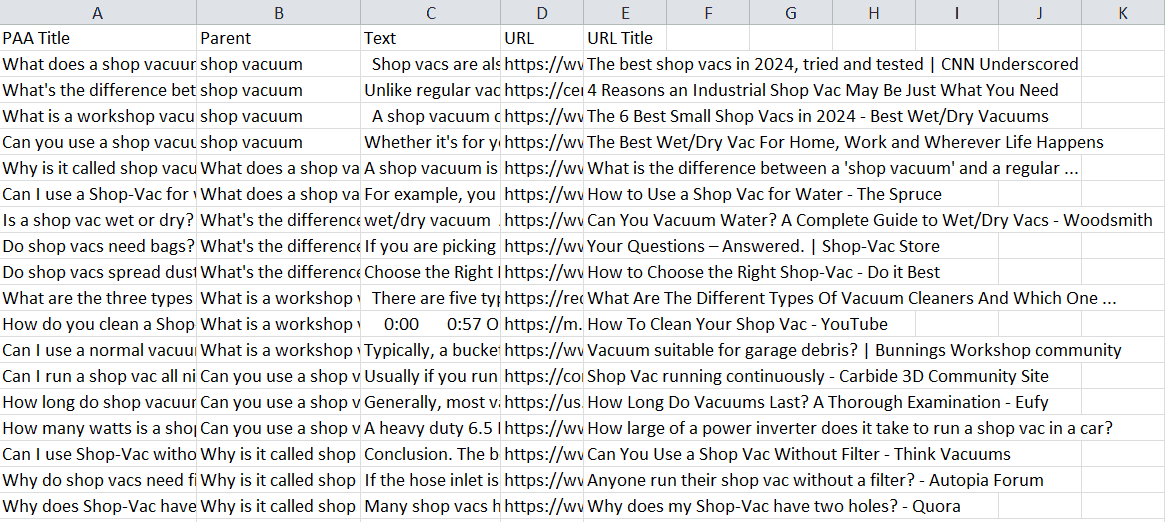
2.2 Tool Acquisition (Faster Visualization and Grouping)
If you need to structure the problem into a tree or diagram, use a specialized PAA visualization tool (e.g., tools like AlsoAsked present PAA problems in a hierarchical manner).
Tip: Tools are a means to efficiency, and ultimately it comes back to "is the intent of the question aligned with your product/business".
3. How to turn keywords into article topics: four steps to turn questions into writable "topic sentences"
The following four-step method, we recommend that you fix into SOP, you will find that "how to turn keywords into article topics" no longer rely on inspiration, but on the process.
3.1 Step 1: "Standardize" PAA issues
Many PAA problems may seem different, but they are really just different ways of expressing themselves. You need to harmonize them into three elements:
| key constituent | What are you extracting? | Example (model structure only) |
|---|---|---|
| boyfriend | Product/Category/Function Point | "Product Description" "Size" "Material" |
| movements | What Users Want to Do | "How to write," "How to choose," "Whether it's a good fit." |
| prerequisite | Scenarios/crowds/restrictions | "newbie," "summer," "small house." |
With standardization, you can rewrite questions as "topic sentences", for example:
- Original question: XX How to choose?
- Topic Sentence: XX Buying Guide: Making Decisions by (Scene/Budget/Size)
3.2 Step 2: Sorting buckets by "search intent" (rather than by terminology)
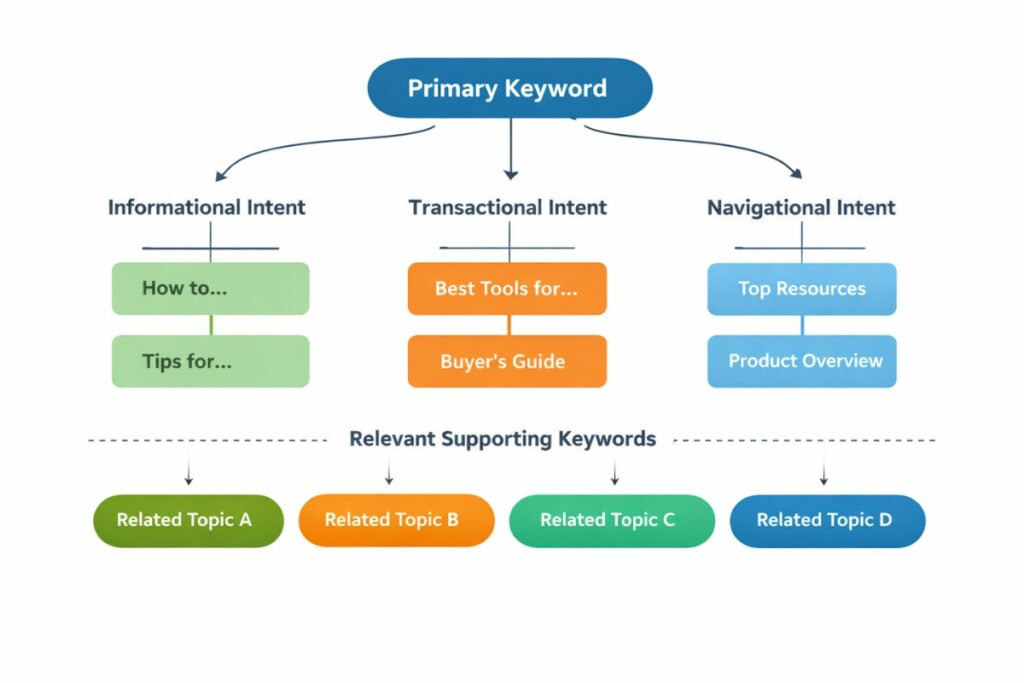
Split all the questions into 4 buckets, with a later article corresponding to a main bucket that will be more focused:
- Definitions and concepts: What is it and what is the difference
- Methodology and steps: what to do, how to fix it
- Comparison and Selection: A vs B, which is better
- Risk and pitfall avoidance: will it, is it worth it, common mistakes
This step will significantly improve the stability of "How to turn keywords into article topics" because you are writing around intentions, not sentences.
3.3 Step 3: Merge synonymous questions to identify "unique core keywords"
Common patterns of tautological problems:
- "How..." vs "How..."
- "Is it worth it..." vs "Is it necessary..."
- "Who it's for..." vs "What demographic to use it for..."
After the merge, there is only one "unique core keyword" for each article (the one you gave me this time is How keywords are turned into article topics), and the rest put into the H2/H3 and body of the article assemantic expansionThe
3.4 Step 4: Mapping questions to "article type templates"
Different intents fit different article forms. You can just apply the mapping table below:
| PAA Intent Bucket | The most stable type of article | Title template (with direct keyword replacement) |
|---|---|---|
| Defining concepts | interpretive | "What the hell is (the key word)? 3 minutes to tell." |
| methodological step | tutorial-based | "(Keyword) Hands-on process: follow these 5 steps." |
| Comparative choices | comparative | "(A) vs (B): pick by 4 scenes" |
| Risk avoidance | list type | "(Keyword) 8 common pitfalls: check yourself against" |
4. Turning PAA directly into an essay outline: How does a writing structure get off the ground?
To make the article more accessible and to hit the problem scenarios, it is recommended that you use the PAA questions directly as subheadings (H2/H3).Ahrefs The advice also explicitly mentions that subheading a question and giving a short, direct answer at the beginning of a paragraph is more likely to be captured as a summary answer.
You can use this "fixed format" for every article:
- Conclusion in the first 2-3 sentences of the first paragraph(Direct answer to the main question)
- H2 Use of problematic sentences(High Frequency Questioning from PAA)
- For each H2, give the short answer first, then expand on the details.(list first, short paragraphs)
- Use the table to make comparisons and choices(Reduction of fragmented expressions of "words on a line")
- FAQ Wrapping Up(Continuing the chain of inquiry from the PAA)
5. Demonstration with a "mini-topic matrix": from PAA to list of topics
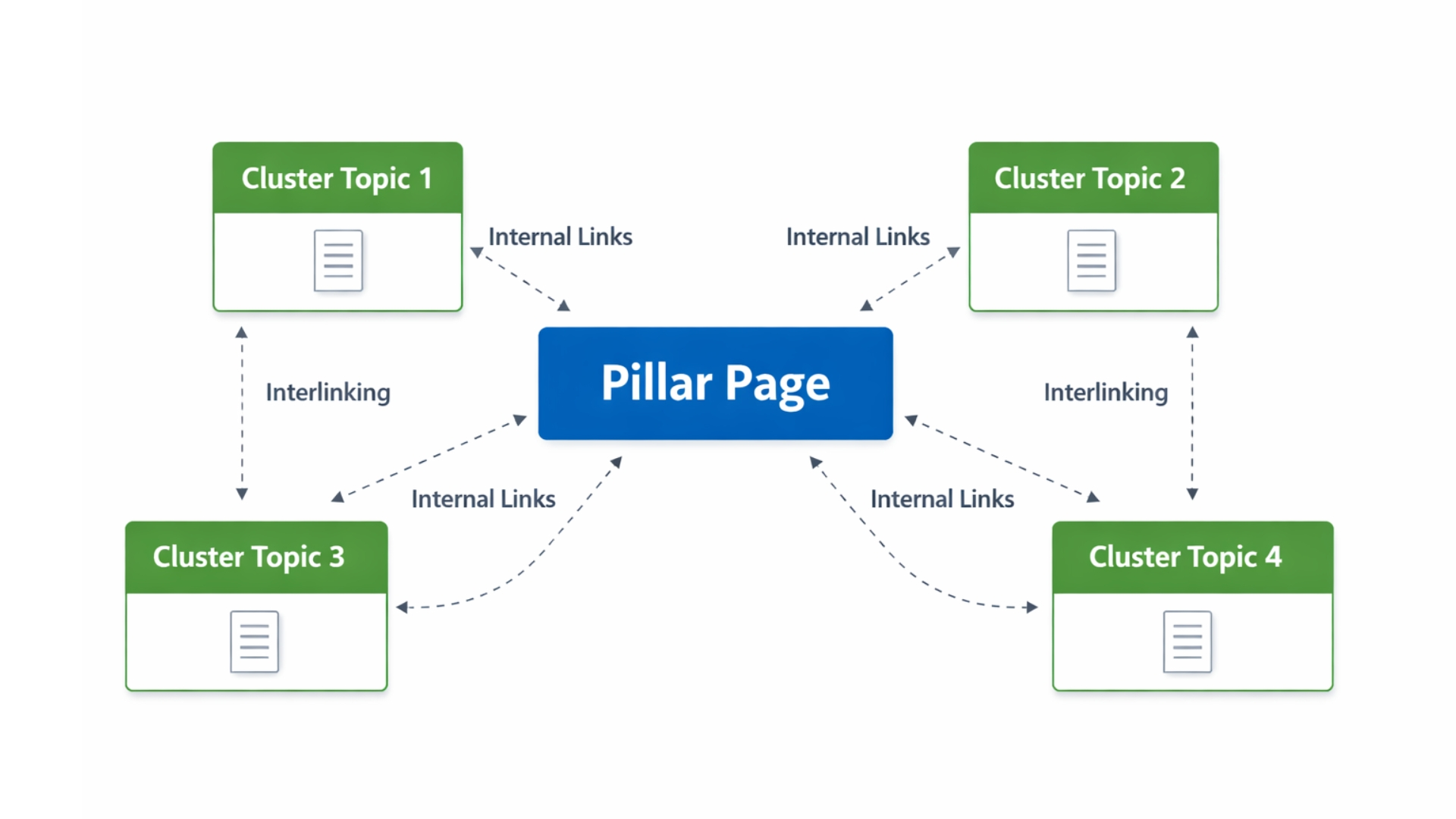
Here's a reusable model matrix for you (you can just replace "product/industry words"). It shows "How keywords are turned into article topics"The final landed form.
| Article topic (theme) | The only core keyword | Description in Chinese (writing perspective) |
|---|---|---|
| How PAA keywords are converted to article topics: from question to selection matrix | bywordHow to turn into an article topic | General methodology article on collection, grouping, theming and structure, suitable for column entry pages |
| What if PAA issues are too scattered? How to merge tautological questions without losing traffic | Consolidation of PAA issues | Teach users to aggregate "different ways of asking" into a main theme and to cover variants of the question in the text |
| Using PAA for Article Headlines: How to Change a Question into a High-Click Headline | PAA Title Writing | Solve the problem of "too long a question, not like a title" by giving a template title that can be applied. |
| PAA becomes article structure: H2/H3 How to line up to cover more questions | PAA Article Structure | Use questions as subheadings, short answers at the beginning of the paragraph + list expansion to emphasize readability and coverage |
| How to make a topic page for PAA's Question Chain?Pillar + Cluster combination writeups | PAA Topic Matrix | Make a string of follow-up questions into a topic page + sub-articles to form a closed loop of internal links and increase the weight of the topic |
summarize
PAA is the "list of questions users really ask" in search. All you have to do isCollect questions → group them by intent → turn them into article headings and subheadings, it will be possible to quickly make a selection matrix that is easier to rank and more relevant to the needs.

Link to this article:https://www.361sale.com/en/86469The article is copyrighted and must be reproduced with attribution.




















![Emoji[wozuimei]-Photonflux.com | Professional WordPress repair service, worldwide, rapid response](https://www.361sale.com/wp-content/themes/zibll/img/smilies/wozuimei.gif)

![Emoticon[baoquan] - Photon Wave Network | Professional WordPress Repair Services, Worldwide Coverage, Rapid Response](https://www.361sale.com/wp-content/themes/zibll/img/smilies/baoquan.gif)


 简体中文
简体中文  English
  日本語
日本語  Français
  Español


No comments